Key Takeaways
Pitch decks start the fundraising conversation, but professional investor due diligence requires a secure document environment.
Standard email and shared drives lead to version chaos and accidental intellectual property leaks.
Permission Groups and Granular Permissions enable staged disclosure as investor interest develops.
Dynamic watermarks and secure preview protect proprietary technology while tracking administrative access.
Real-time Reports & Insights provide engagement metrics to help founders prioritise warm leads.
Securing venture capital requires more than an impressive pitch deck. When institutional investors begin formal due diligence, startups must provide verifiable proof of their legal, financial, commercial and technical claims.
The main challenge is sharing highly confidential information without losing control of your files. Transitioning from scattered folders to a structured virtual data room (VDR) allows founders to protect their business secrets, organise disclosures and track investor engagement.
What Is a Fundraising Data Room?
A fundraising data room is a secure, centralised repository where a startup stores and shares confidential documents with prospective investors during due diligence. It acts as a transaction-governance layer, replacing insecure file sharing with controlled access.
The data room holds your ultimate source of truth, including audited financials, legal incorporation files, capitalisation tables and patent structures. It facilitates a streamlined review process for analysts, VC partners and legal advisers without exposing the business to competitive leaks.
For growth-stage and venture-backed startups, using a VDR is standard practice. It demonstrates operational maturity to institutional investors and establishes clear boundaries between daily files and highly confidential corporate records.
When Does a Startup Need a VDR for Fundraising?
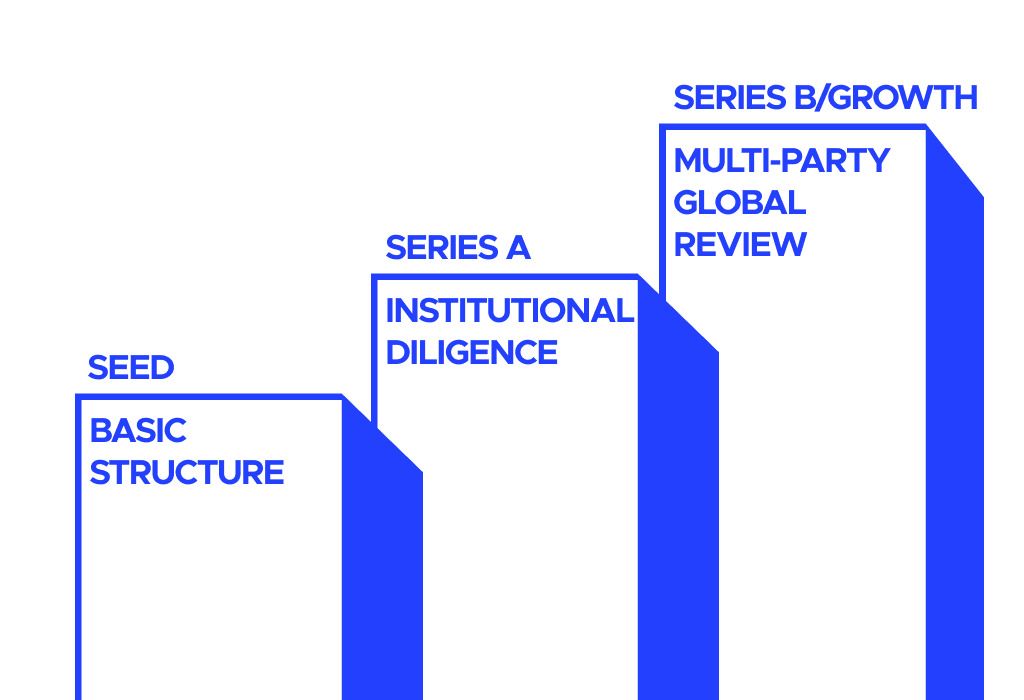
Startups require a virtual data room when transitioning from casual conversations with angel networks to formal due diligence with venture capital funds. Setting up the room early prevents administrative delays and shows operational maturity.
Seed Stage: Safe for basic pitches, but VDR setup should begin here to protect early structures.
Series A / VCs: Secure, structured VDR required for intense institutional audits.
Series B & Growth: Enterprise-grade VDR needed for complex, multi-party global compliance.
Setting up the workspace before sending investor invitations prevents last-minute file collection and keeps the funding round organised.
What Documents Should Be Included in a Fundraising Data Room?

An investor data room must contain a structured, logical collection of corporate, financial, commercial and legal records. Organising these files early ensures due diligence progresses without administrative delays.
Founders should organise their files into clean folders based on standard due diligence requirements:
Corporate & Cap Table: Incorporation certificates, company bylaws, SAFEs, convertible notes and shareholder lists.
Financials: Historical balance sheets, tax returns, operating budgets and future financial models.
Intellectual Property: Patent filings, trademarks, software architecture and signed employee IP assignments.
Commercial & HR: Enterprise customer agreements, pipeline reports, employment contracts and contractor agreements.
Legal Compliance: Prior litigation records, compliance filings, insurance policies and key corporate leases.
Organising these files in one secure place is essential for systematic fundraising document control.
Why Email and Generic Shared Folders Become Risky

Email and generic shared drives lack access controls, activity tracking and document protection, creating severe security and leakage risks. Relying on these tools can lead to competitive exposure and disrupted funding rounds.
Email attachments create permanent, uncontrolled copies. Once sent, you cannot revoke access or prevent forwarding. Shared folders also lack centralised permission control, causing version confusion when files change.
A dedicated data room for startup fundraising replaces these insecure methods with a single, highly secure and fully trackable deal environment.
How a VDR Helps Manage Investor Access
A virtual data room centralises files, permissions and participant activity inside one secure workspace, eliminating the need for disjointed links. This ensures version consistency across all global users.
With Boundeal, approved venture capital analysts, partner networks and legal advisers work from the same folder structure. When you update a file, it updates globally for everyone instantly. The platform integrates key controls:
Automated Confidentiality Agreements
Dynamic Watermarking and Secure Browser Preview
Real-Time Investor Reports and Audit Trails
Export Index Document Archiving
How Permission Groups and Granular Permissions Support Staged Disclosure

Permission Groups and Granular Permissions allow founders to restrict document visibility based on investor seriousness and deal stage. This ensures highly confidential files are shared only when an investor is ready to commit.
Permission Groups: Categorise participants into teams (e.g., angels, VC analysts, lead investors and legal advisers) with tailored visibility.
Granular Permissions: Define specific file actions, enabling view-only web browser previews while disabling original PDF downloads.
These controls keep your startup fundraising data room secure. You can share basic historical data early, holding back sensitive customer contracts until receiving a formal term sheet.
How Confidentiality Agreements Help Protect Sensitive Information
A project-level Confidentiality Agreement can require participants to accept specified terms before they begin reviewing documents in the data room. This creates a consistent entry point for investors, advisers and other approved users and helps founders apply the same onboarding procedure across the fundraising process.
The feature supports access discipline by confirming that participants have acknowledged the project terms before working with confidential materials. However, it should complement rather than replace a separately negotiated NDA, legal advice, data-protection requirements or other confidentiality procedures relevant to the fundraising round.
How Watermarking and Secure Preview Reduce Uncontrolled Sharing
Secure preview and dynamic watermarking prevent unauthorised sharing by making files uncopyable and traceable to the viewer. These features keep your proprietary data inside the platform.
Secure browser-only previews disable printing, copying and downloading for high-risk files. Meanwhile, dynamic watermarking overlays the viewer’s email address, IP address and timestamp on every page, discouraging screenshots and leaks.
How Reports & Insights Help Founders Understand Investor Engagement

Reports & Insights and detailed audit trails track investor activity in real-time, helping founders measure interest and prioritise active leads. They show which folders attract the most attention and where diligence has stalled.
Reports & Insights: Identify active VC analysts and highly reviewed folders (e.g., IP or financials).
Detailed Audit Logs: Provide an unalterable history of file views, downloads and timestamps.
If a VC team spends hours on your financials, it indicates a strong interest. These engagement signals allow founders to prioritise high-probability leads.
How Export Index Supports a Structured Record
The Export Index tool downloads the complete folder and document hierarchy as an Excel table, providing an unalterable record of all shared disclosures. This sheet is essential for final post-closing records.
Reconstructing diligence history manually is slow and inaccurate. The Export Index provides an official log of how the VDR was organised and what files were presented, protecting the startup in future audits and providing a clean foundation for later rounds.
FAQ
What is the difference between a virtual data room and standard cloud storage?
Standard cloud storage lacks transaction-focused security. A VDR provides granular permissions, dynamic watermarking, audit trails, confidentiality agreements and activity tracking to protect sensitive data during audits.
When should a startup set up its fundraising data room?
Founders should set up their VDR before contacting venture capital funds. Having documents organised and ready early demonstrates operational maturity and maintains competitive tension during the round.
What are the most common startup fundraising pain points?
Common pain points include managing scattered files, version confusion, repeated investor questions and protecting proprietary IP. Founders also struggle to track investor interest during due diligence.
How can founders protect their intellectual property in a VDR?
Founders can use secure browser-only previews and dynamic watermarking. They can also use staged disclosure, holding back sensitive technical files or customer contracts until investors present a term sheet.
Can a VDR show which venture capital funds are most interested?
Yes. A professional VDR provides real-time Reports & Insights and audit trails. You can see when investors log in, which files they open and how much time they spend analysing specific folders.
Conclusion
Fundraising readiness is about maintaining robust document control. As investors begin due diligence, founders must protect their proprietary intellectual property, cap tables and financial forecasts. By utilising a centralised VDR equipped with Permission Groups, Granular Permissions, dynamic watermarking and real-time activity reporting, startups can manage their fundraising rounds securely. These professional controls build investor trust, accelerate due diligence and help founders close deals successfully.