Key takeaways
Fundraising usually takes months, not weeks, and preparation quality affects how smoothly each stage moves.
Investor outreach is only one part of the process; meetings, diligence, negotiation, and closing also take time.
A signed term sheet is a major milestone, but it is not the same as money in the bank.
Series A and Series B timelines vary with readiness, investor process, deal complexity, and market conditions.
A prepared data room can reduce avoidable friction in document sharing, access management, and investor due diligence.
Founders cannot control investor decisions, but they can control document readiness, ownership clarity, and response speed.
A realistic fundraising timeline depends on more than investor interest. Documentation, diligence questions, investor approvals, and legal closing all affect the schedule. Founders often underestimate the work that happens after the first meetings. Planning stage by stage helps teams prepare early, protect their runway, and avoid delays caused by missing information.
What Determines How Long Fundraising Takes?
There is no single answer to how long fundraising takes. Startup fundraising moves through preparation, outreach, meetings, diligence, term sheet negotiation, and closing, and each stage can expand or contract.
Key variables include:
Funding stage. Seed, Series A, and Series B involve different levels of evidence, governance, and investor review.
Business model complexity. Regulation, IP, technical dependencies, or complex revenue models can require deeper review.
Revenue traction. Clear, reconcilable metrics make it easier for investors to test assumptions.
Investor fit. A focused list reduces time spent with funds that do not match the round.
Market sentiment. Financing conditions and sector appetite can affect the pace of investment.
Existing relationships. Previous conversations can reduce the time needed to establish context.
Document readiness. A clean cap table, financial model, material contracts, and corporate records reduce avoidable back-and-forth.
Warm introductions, strong metrics, and an organized investor data room can support momentum, but none guarantees a fixed closing date.
A Realistic Startup Fundraising Timeline
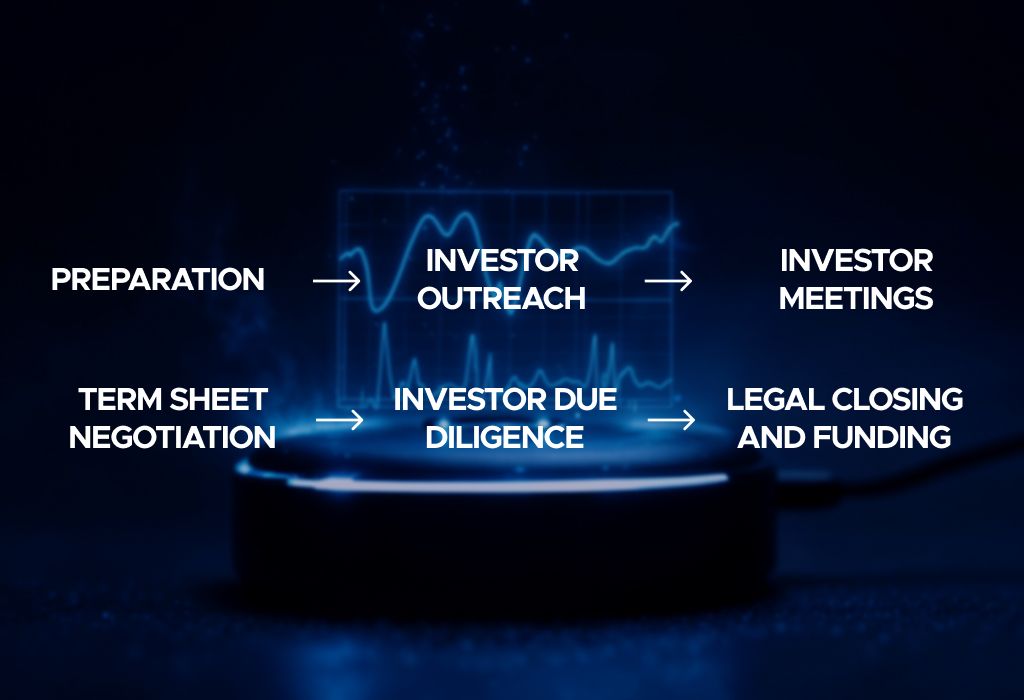
Founders should treat any startup fundraising timeline as a planning framework, not an industry rule. A 2025 Wefunder guide uses two to six months from preparation to cash in the bank as a practical range, not a promise.
Stage 1: Preparation
This stage is about defining the raise, sharpening the narrative, and making sure the underlying materials support the story presented to investors.
Founders should prepare:
pitch deck;
financial model;
cap table;
core corporate and legal records;
initial investor target list.
Common delays include conflicting metrics, incomplete records, and disagreement within the founding team about fundraising objectives.
Stage 2: Investor Outreach
Founders build an investor pipeline and start conversations with funds, angels, or other potential backers that fit the stage, sector, and expected check size.
Key activities include:
building and prioritizing the investor list;
requesting warm introductions where available;
preparing outreach messaging;
scheduling initial calls;
refining the pitch based on early feedback.
Common delays include poor investor fit, weak introductions, and scheduling gaps.
Stage 3: Investor Meetings
Interested investors begin testing the company’s market opportunity, team, traction, economics, and growth assumptions.
Founders should be ready to provide:
clear KPI definitions;
product and customer evidence;
revenue and retention data;
explanations of unit economics;
consistent answers to recurring investor questions.
Inconsistent metrics, unclear assumptions, or slow responses can interrupt momentum at this stage.
Stage 4: Term Sheet Negotiation
Once an investor is prepared to move forward, the parties may begin negotiating the principal economic and governance terms of the investment.
Discussions can cover:
valuation;
investment amount;
board representation;
liquidation preferences;
investor rights;
other economic and governance provisions.
Founders should review cap table scenarios and involve appropriate legal advisers before agreeing to material terms.
Stage 5: Investor Due Diligence
Due diligence allows investors to verify the information presented during the fundraising process. It may begin before a term sheet and continue after one is signed.
Founders may need to provide:
historical financial information;
cap table records;
material customer and supplier contracts;
employment and IP documentation;
corporate records;
product, technical, or operational information.
Missing files, conflicting versions, and unanswered diligence questions are common sources of avoidable delay.
Stage 6: Legal Closing and Funding
A signed term sheet does not complete the transaction. The parties still need to finalize definitive documents, satisfy closing requirements, and complete the transfer of funds.
This stage can involve:
legal drafting and review;
corporate approvals and resolutions;
disclosure materials;
investor KYC information;
signatures;
syndicate coordination;
banking and wire-transfer steps.
Legal comments, missing approvals, unresolved conditions, or incomplete signatures can extend the closing process.
The fundraising process is not always linear. Diligence can overlap with investor meetings and continue after the term sheet. The objective is not to force every round into a fixed schedule, but to reduce avoidable gaps in documentation, communication, and decision-making.
How Long Does It Take to Close a Funding Round?
Investor interest and closing are different milestones. Founders looking for the average time to close a round should treat any benchmark as a reference, not a universal rule. A verbal commitment or term sheet does not put cash in the bank; diligence, documents, approvals, signatures, and funding steps still remain.
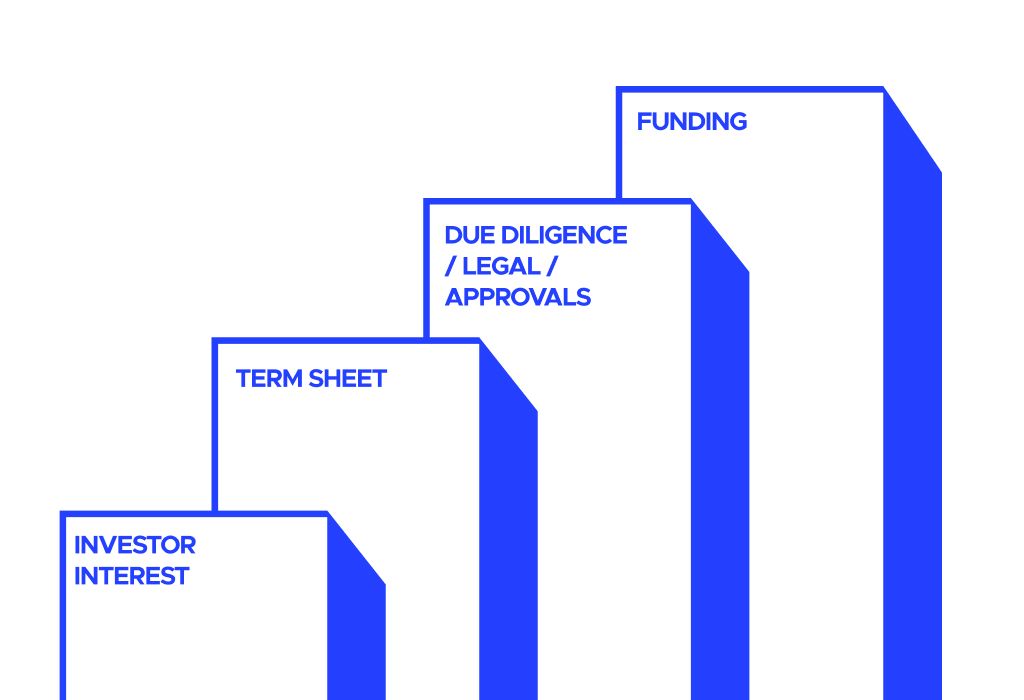
For Series A, legal negotiations and deal closing can last six to eight weeks after the term sheet is signed. This is a useful reference point, not a universal average across all rounds.
Common post-term-sheet delays include:
additional due diligence;
investor approvals;
lead investor and syndicate coordination;
negotiation of definitive documents;
unresolved IP, cap table, tax, or corporate issues;
closing conditions, signatures, and transfer of funds.
Founders should plan a runway around a process measured in months rather than assume that a signed term sheet resolves the financing need.
How Long Does Series A Funding Last?
The question “how long does Series A funding last?” can mean either the duration of the fundraising process or the runway created by the round. These are different measures.
The Series A fundraising process
There is no reliable universal duration for a Series A raise. Timing depends on the investor pipeline, market conditions, company readiness, and diligence depth.
Investors at this stage test product-market fit, revenue traction, unit economics, customer retention, and repeatable growth. Cap table accuracy and consistent records also matter. Carta describes Series A as an institutional funding stage where investors look for factors such as product-market fit, traction, and growth potential.
The post-term-sheet stage can itself be substantial. Series A legal negotiations and closing may take six to eight weeks after signing.
Series A runway
Series A runway should be modeled from burn rate, hiring plans, revenue assumptions, and the milestones required for the next financing or a path to sustainability. A fixed 18- or 24-month rule can be misleading when the operating plan differs.
The better question is whether the round gives the company enough time to reach its next milestones.
How Long Does Series B Funding Last?
Series B also has two timelines: the fundraising process and the operating runway created by the capital. Both are company-specific.
The Series B fundraising process
Series B review usually places greater emphasis on the scalability and quality of growth. Founders should be ready to explain growth efficiency, market expansion, forecasting, and management reporting.
Carta notes that by Series B, companies need to demonstrate how the business has developed since the previous round and show evidence of sustainable growth rather than rely on a universal stage benchmark.
There is no defensible universal rule that Series B fundraising should take a fixed number of months. Investor mix, transaction structure, and market conditions can materially change the process.
Series B runway
Carta advises founders to calculate Series B runway from burn rate and the goals the company wants to achieve, such as hiring, international expansion, or a new product launch.
It also reported that companies raising Series B in Q1 2025 had waited a median of 2.8 years since Series A. This is not a recommended runway. It shows why the interval to the next financing may not follow a simple rule of thumb.
Why Fundraising Delays Happen
Not every delay means investors have lost interest. Many delays appear when investors begin testing the company’s records and assumptions in detail.
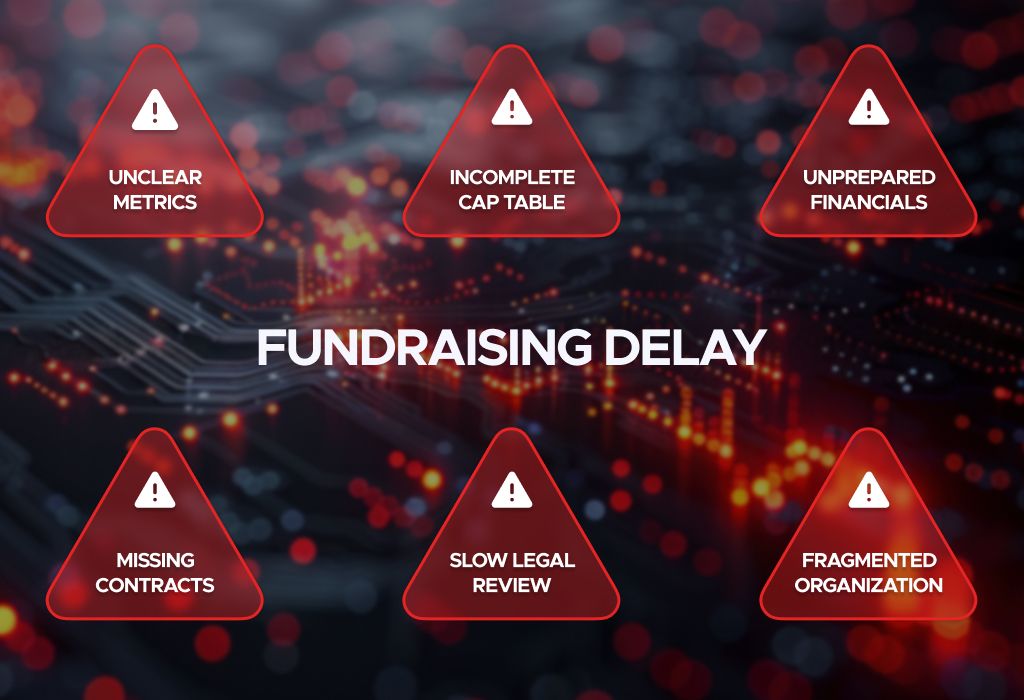
Common avoidable sources of friction include:
Unclear metrics. Pitch-deck numbers do not reconcile with management or accounting data.
Incomplete cap table. Options, SAFEs, notes, or historical grants are recorded inconsistently.
Unprepared financials. Historical statements, forecasts, or assumptions cannot be explained quickly.
Incomplete contracts. Material commercial, employment, or IP agreements are missing or hard to locate.
Slow legal review. Questions remain open because documents or decision-makers are unavailable.
Fragmented organization. Different file versions sit across email threads, drives, and internal tools.
Unclear ownership. Investors do not know who owns a diligence request or when an answer will arrive.
Before active outreach, founders should reconcile key metrics, review the cap table, identify material contracts, prepare the financial model, confirm IP documentation, and assign owners for investor questions.
How a VDR Helps Founders Keep Fundraising on Track
A virtual data room does not guarantee a faster fundraising process. Its practical value is reducing avoidable friction around document organization, confidentiality, participant access, and repeated diligence requests.
Founders can prepare materials before investors request detailed information. Boundeal VDR can support this workflow as a secure infrastructure for fundraising and investor review. The functions below are confirmed on Boundeal’s VDR product page.
Documents provides structured folders, uploaded files, built-in search, and secure document preview.
Participants let administrators invite users, remove participants, and adjust access levels.
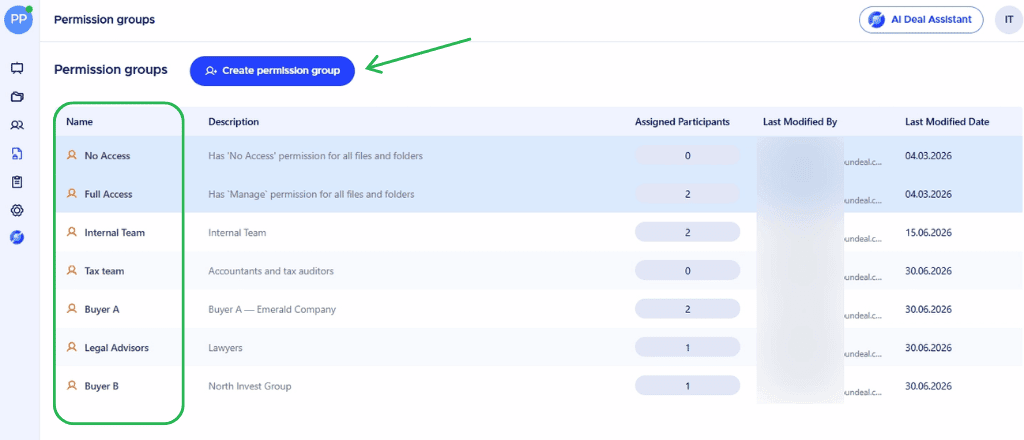
A Confidentiality Agreement can require acceptance of confidentiality terms before participants work with project documents.
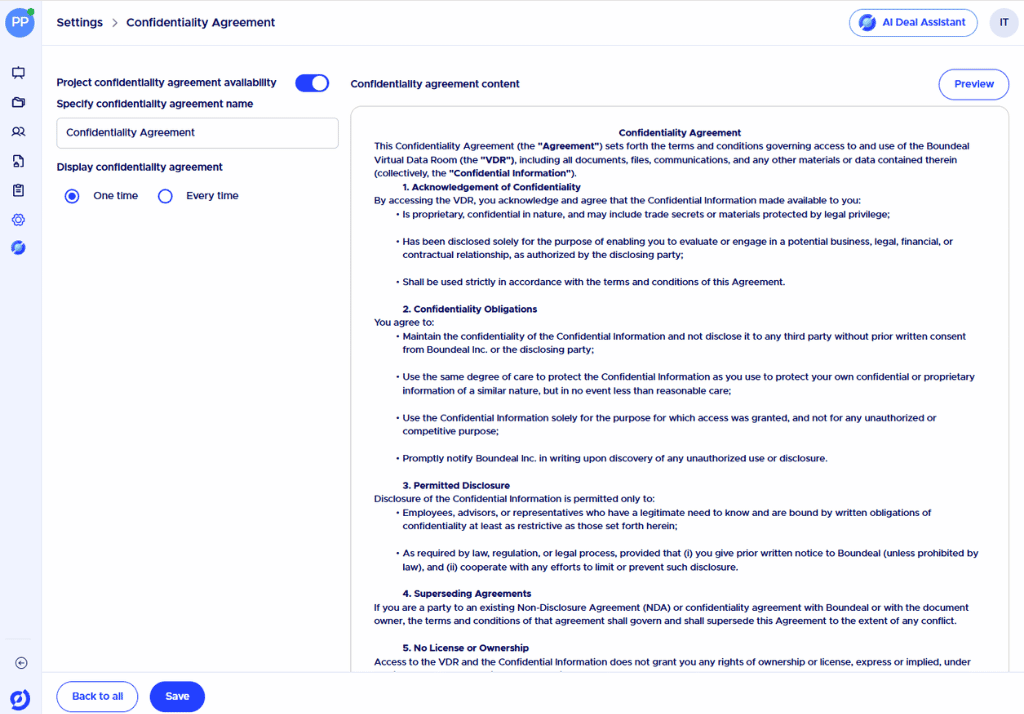
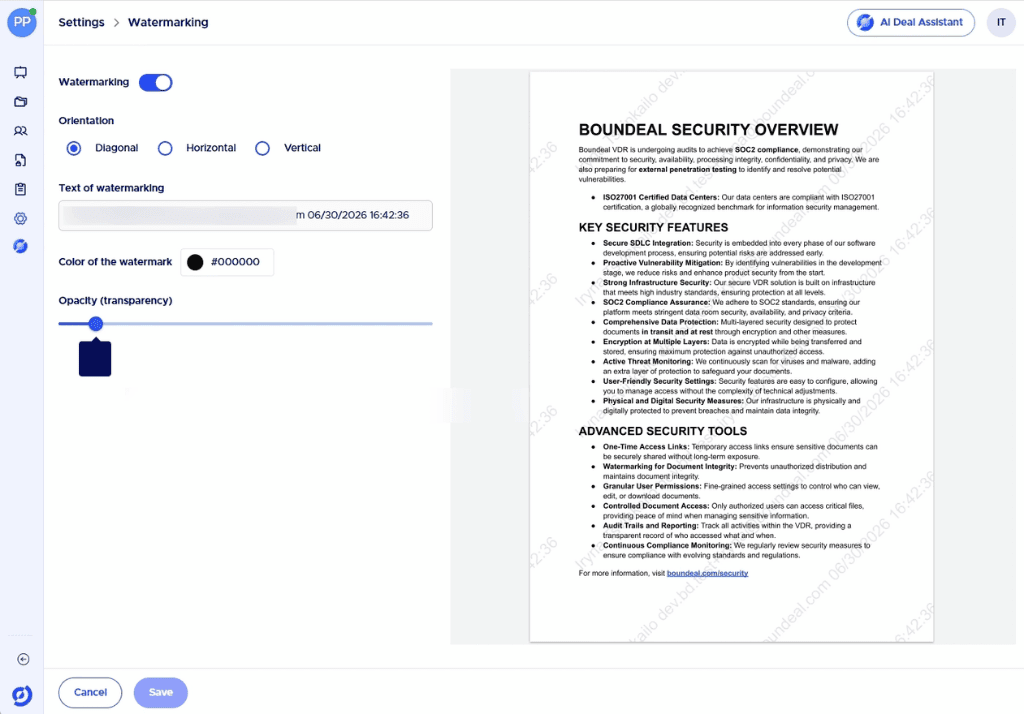
Watermarking applies dynamic watermarks to view-only previews to help reduce unauthorized sharing, copying, or distribution.
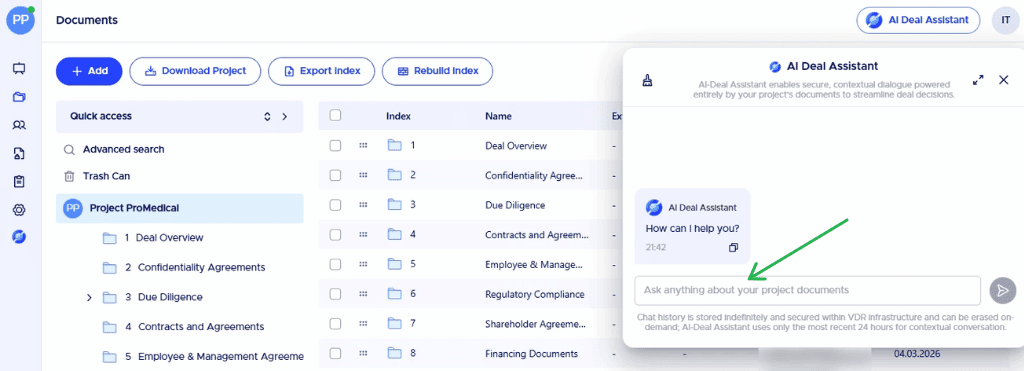
AI Deal Assistant helps users work with document context, find relevant files, and get an overview across large document sets.
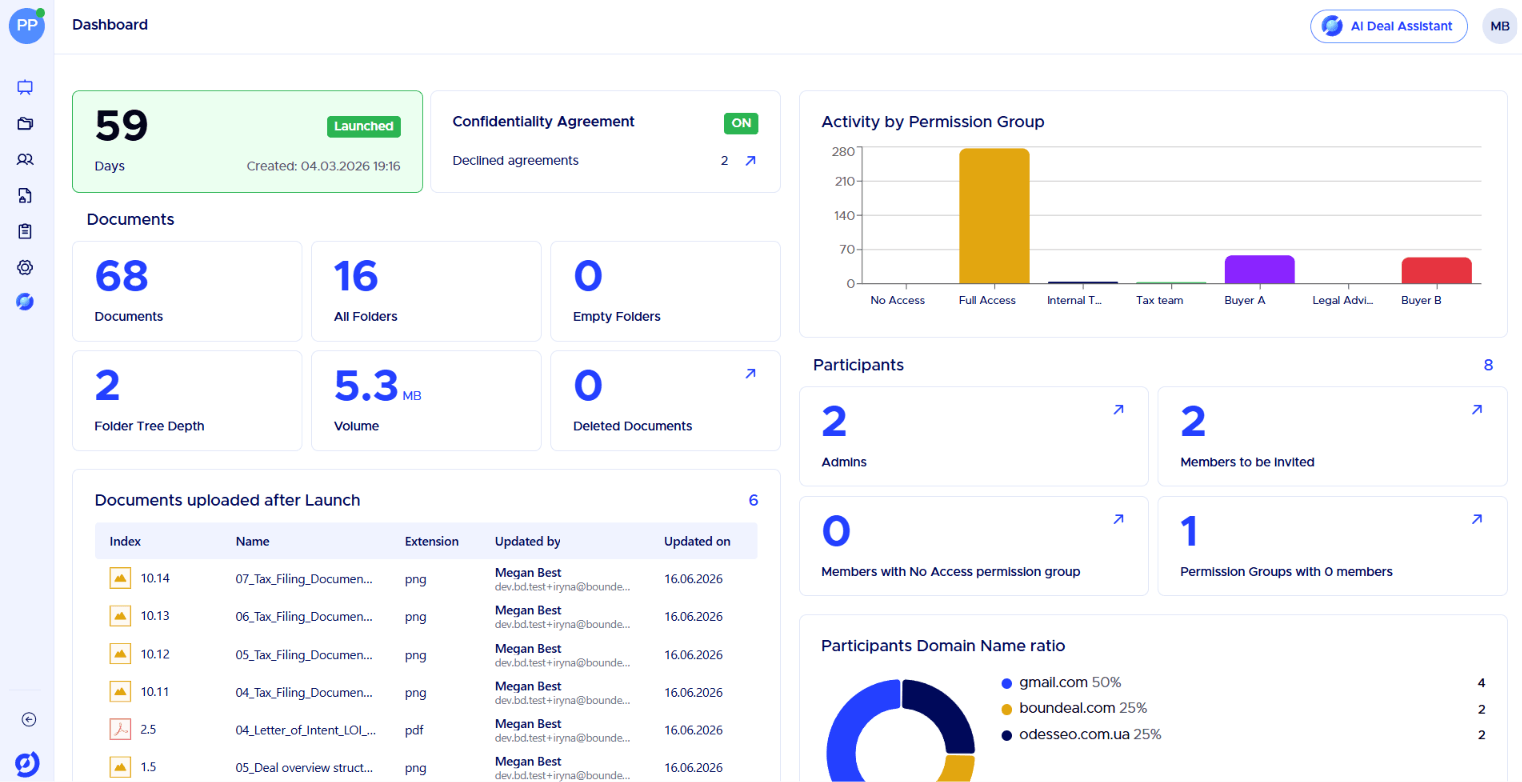
Project Dashboard gives administrators a central view of documents, participants, and overall project status.
A VDR cannot make an investor approve a deal. It can help founders keep sensitive materials organized, control access, and respond to review requests with less document-management friction.
FAQ
How long does fundraising take for a startup?
Fundraising should generally be planned in months rather than weeks. A 2025 Wefunder guide gives a practical range of 2 to 6 months from preparation to cash in the bank, while stressing that timing varies.
What is a typical fundraising timeline for founders?
There is no single timeline that applies to every startup. Founders should plan for preparation, outreach, meetings, diligence, term sheet negotiation, and closing, with enough runway for individual stages to take longer than expected.
How long does it take to close a funding round?
Closing can continue after a term sheet is signed. Series A legal negotiation and closing can take six to eight weeks after signing, but other transactions may move faster or slower.
How long does Series A fundraising take?
There is no universal Series A duration that founders should treat as a rule. Investor availability, traction, diligence depth, documentation, and legal negotiations all influence timing.
How long does Series B fundraising take?
Series B timing also varies by company and investor process. Because a review can cover growth efficiency, forecasting, expansion, and management reporting, founders should prepare the evidence before active outreach.
Can a data room shorten the fundraising process?
A data room can reduce avoidable delays in document sharing and access management, but it cannot guarantee a faster close. Its main value is giving investors structured access while founders retain control over confidentiality and permissions.
Conclusion
How long fundraising takes depends on preparation, investor decision-making, diligence, and closing mechanics, rather than on a single universal timetable. Founders cannot control every approval or market condition, but they can control document readiness, diligence, ownership, and access structure. A structured VDR can support investor readiness by reducing avoidable friction in sensitive document review. That makes the process easier to manage even when the closing date remains outside the founder’s full control.