Key takeaways
Investors expect a data room to make financial, legal, commercial, and operational claims easy to verify during due diligence.
A strong investor data room combines complete documents with logical folders, clear naming, current versions, and consistent metrics.
Access should match the stage of investor review rather than giving every participant the same documents from the start.
Confidentiality terms, controlled access, secure previews, and watermarking help protect sensitive materials during investor review.
Clear structure reduces search friction and helps investors connect fundraising claims with supporting evidence.
Boundeal VDR supports document organization, participant access, confidentiality controls, navigation, and overall project visibility.
An investor data room is more than a folder of company files. It is a structured review environment where investors verify fundraising claims, examine risks, and access supporting evidence. Investors expect clarity, completeness, controlled access, and fast navigation. Preparing that environment before deeper diligence begins helps founders respond consistently without losing control over sensitive information.
What Is an Investor Data Room?
An investor data room is a secure, organized space for sharing fundraising, financial, legal, commercial, and operational documents with prospective investors. It helps investors review evidence behind the pitch while founders manage access to sensitive information.
A shared cloud folder may work for internal collaboration, but investor review requires more control. Founders need to decide who receives access, which materials are available, and when sensitive documents become visible.
A fundraising data room, therefore, combines document organization with controlled delivery. It should help investors find supporting files without forcing the team to resend documents across email threads and separate links.
Why Investors Ask for a Data Room
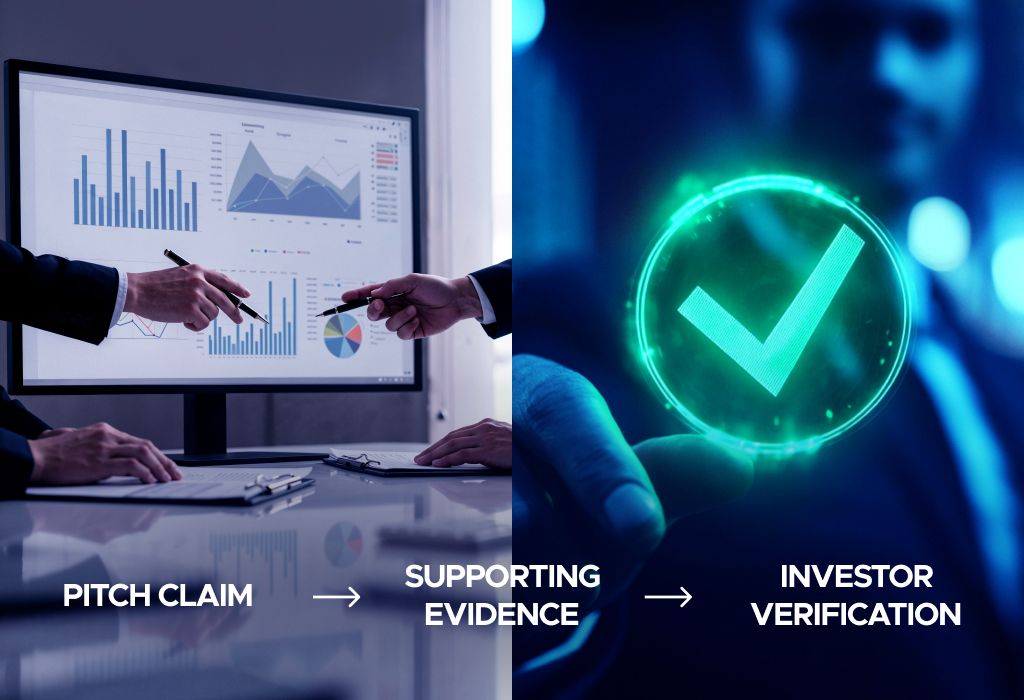
Investors usually request a data room when a fundraising conversation moves from initial interest toward verification and due diligence. The goal is to test whether pitch claims are supported by financial records, contracts, ownership documents, product information, and other evidence.
The review commonly covers:
Financial diligence: historical performance, financial models, revenue assumptions, and key metrics.
Legal review: corporate records, ownership, material agreements, IP, and legal risks.
Commercial review: customer concentration, contracts, retention, pipeline, and market assumptions.
Operational review: team structure, key dependencies, policies, and execution capacity.
Poor organization creates unnecessary questions, especially when the same metric differs across documents.
A well-prepared data room does not guarantee an investment or faster close. It can make evidence easier to find and reduce avoidable friction in document management.
Investor Data Room Checklist
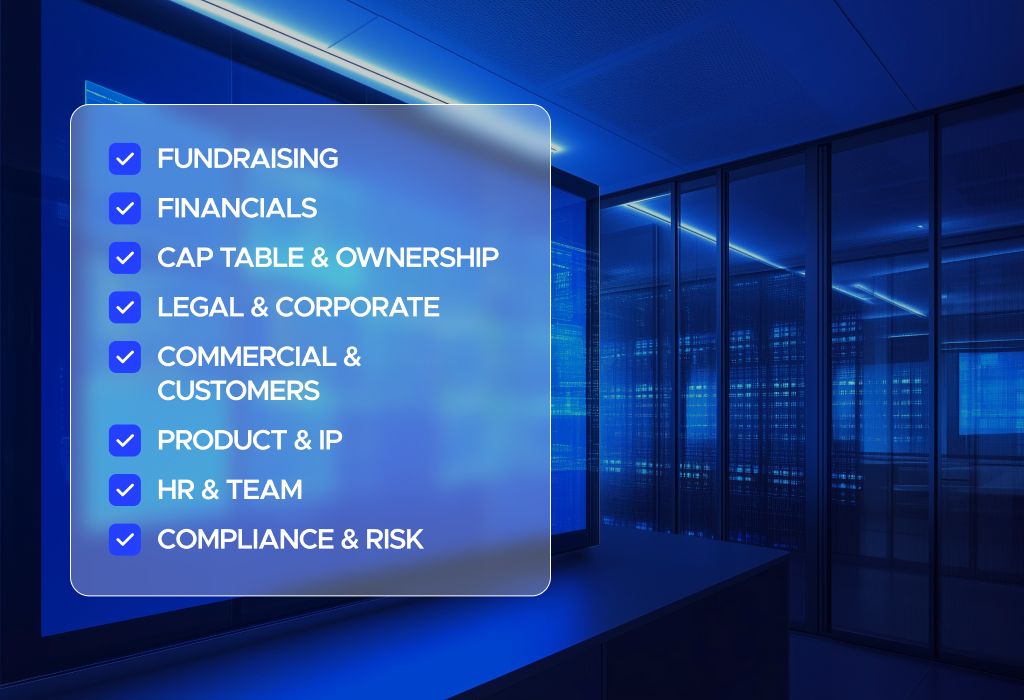
The exact contents depend on the company's stage, jurisdiction, industry, and the depth of diligence.
Company Overview and Fundraising Materials. This section may include the current pitch deck, executive or company overview, fundraising plan, use of funds, product or market presentation, and relevant investor updates.
Financial Model and Management Accounts. Investors may expect to review the current financial model, historical financial statements, or management accounts, budget versus actual performance, revenue breakdowns, operating metrics, and relevant tax, audit, or banking documents. Figures should reconcile across the pitch deck, model, and underlying records.
Cap Table and Ownership Documents. Relevant materials may include the current cap table, share or stock issuance records, option plan documentation, SAFEs, convertible notes or equivalent instruments, shareholder or investor rights documents, and valuation documentation where relevant.
Legal and Corporate Documents. This section can include incorporation and constitutional documents, relevant board and shareholder approvals, shareholder agreements, material financing agreements, litigation or dispute information, and applicable licenses or registrations. Founders should prioritize current, executed documents rather than unnecessary drafts.
Customer and Commercial Materials. Depending on the business model, founders may provide standard customer terms, selected material customer contracts, retention or cohort data, sales pipeline information, and details of major supplier or commercial dependencies. Sensitive customer information should be shared only when appropriate for the review stage.
Product and Intellectual Property Materials. Useful documents may include IP assignment agreements, patents, trademarks, or domain documentation, where applicable, the product roadmap, technical or architectural overviews, and relevant software or licensing information.
HR and Team Documents. This category may include an organizational chart, profiles of key executives, standard employment agreements, contractor agreements, and information on incentive or option plans. Personal employee information should be shared only when necessary.
Compliance and Risk Materials. Depending on the company’s industry and jurisdiction, investors may review privacy policies, regulatory permits or licenses, security certifications, insurance documents, and material risk policies.
What Investors Expect from Data Room Structure
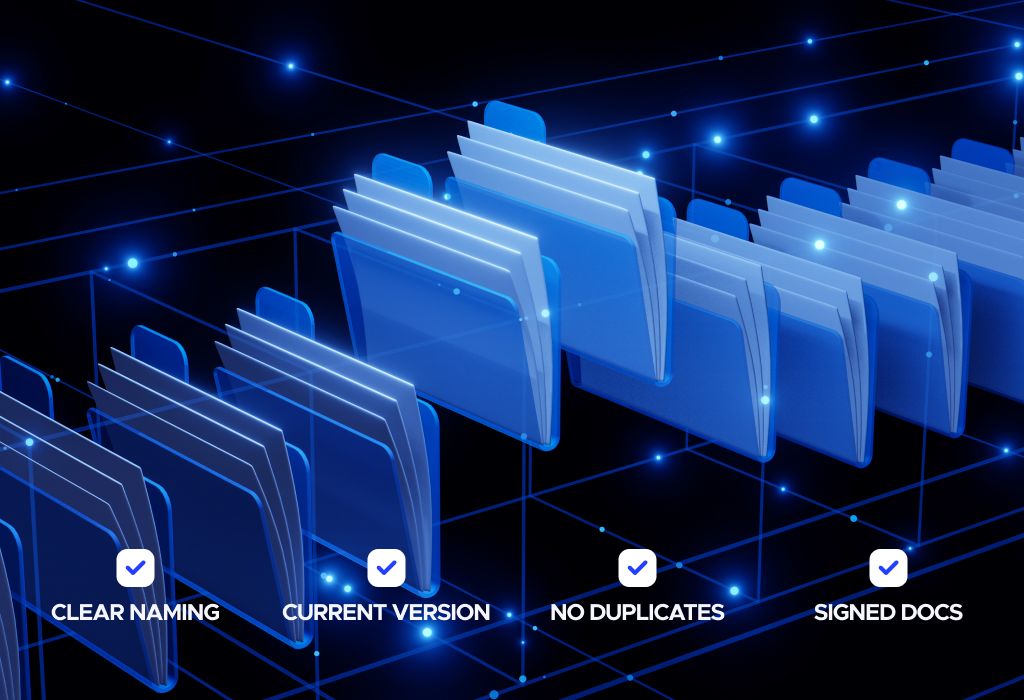
Investors need to know where information is located and whether the version they are reviewing is current.
A practical folder structure can follow diligence logic:
Company Overview and Fundraising
Financials
Cap Table and Ownership
Legal and Corporate
Commercial and Customers
Product and IP
HR and Team
Compliance and Risk
Use clear file names that identify the document and, where useful, its date or reporting period.
Version control matters because duplicate or conflicting files make it unclear which information is authoritative.
Before granting access, review the room for:
outdated versions;
unexplained duplicates;
missing signature pages;
unclear file names;
metrics that do not reconcile.
A good structure should make it easy to move from a high-level statement to the supporting evidence.
How to Deliver a Data Room Without Losing Control
Controlled delivery means deciding who can see sensitive documents, when access begins, and what level of information is appropriate. Not every investor needs identical access.
Initial Review
Share high-level fundraising materials such as the pitch deck, company overview, and other non-sensitive context.
Active Diligence
Expand access to relevant financial, commercial, ownership, and corporate information when an investor moves into serious review.
Deep Diligence and Closing
Provide sensitive legal, customer, IP, HR, and closing materials when they are genuinely required by confirmed participants and advisers.
This staged approach reduces unnecessary exposure and reliance on public links or uncontrolled email attachments.
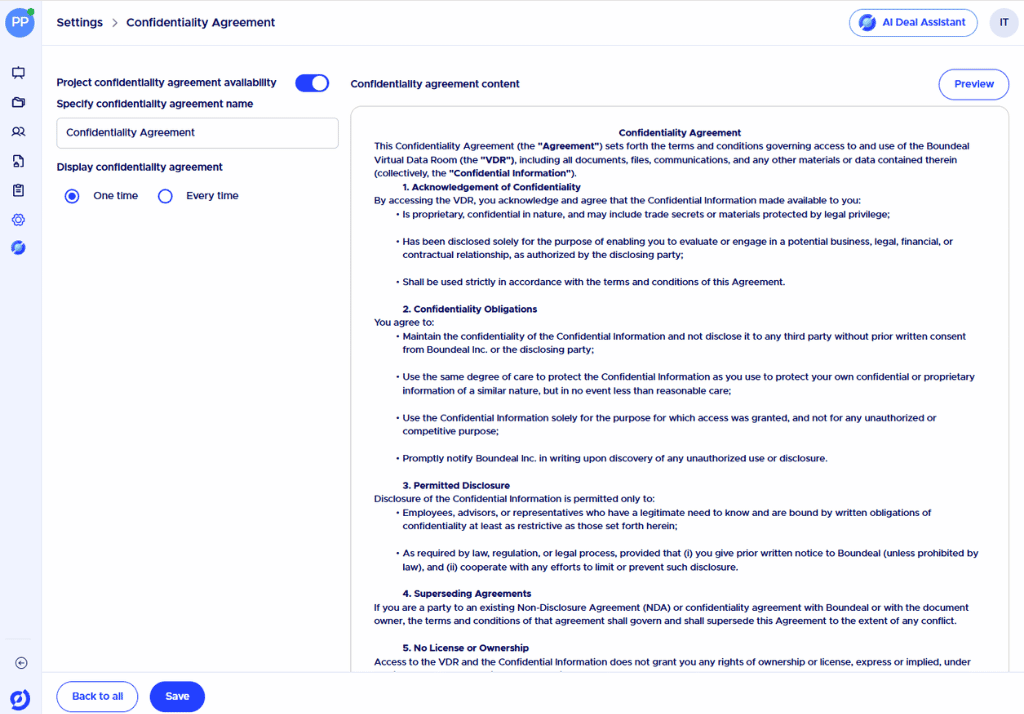
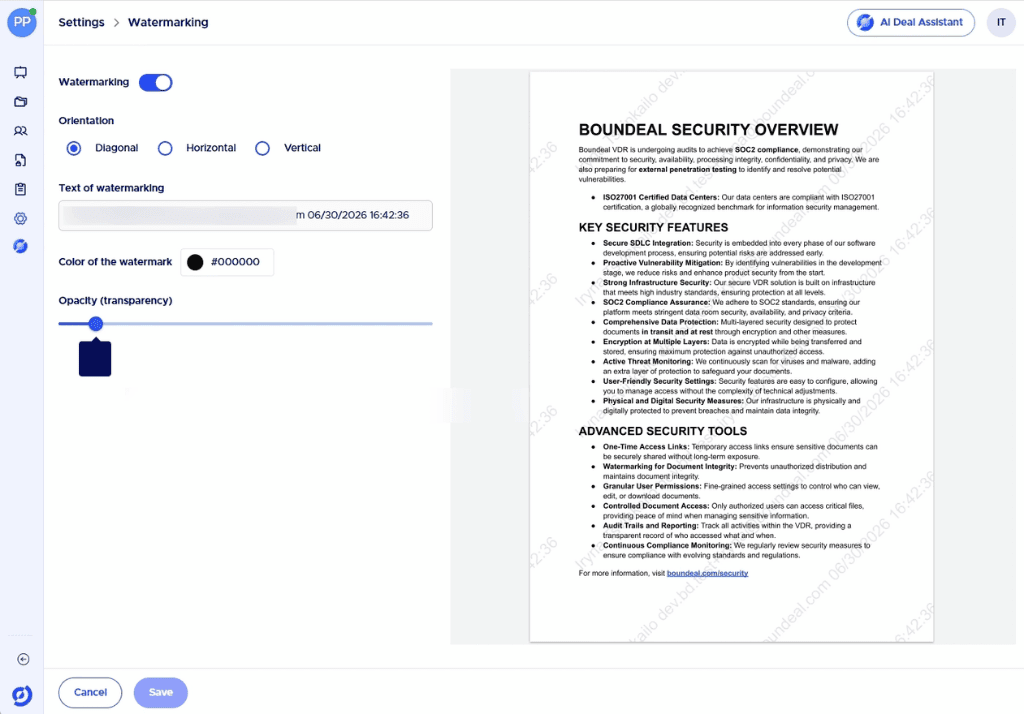
Confidentiality terms can be required before participants begin working with project documents. For sensitive view-only previews, dynamic watermarking can help reduce the risk of unauthorized sharing, copying, or distribution.
How Boundeal VDR Helps Deliver an Investor-Ready Data Room
A VDR provides infrastructure for organizing documents and managing investor access without turning fundraising into a chain of separate folders, links, and attachments.
Boundeal VDR supports this workflow through six relevant functions:
Documents: Organize folders, document types, and uploaded files; use built-in search; and provide secure document previews.
Participants: Invite participants, remove users, and adjust access levels as the investor group or review stage changes.
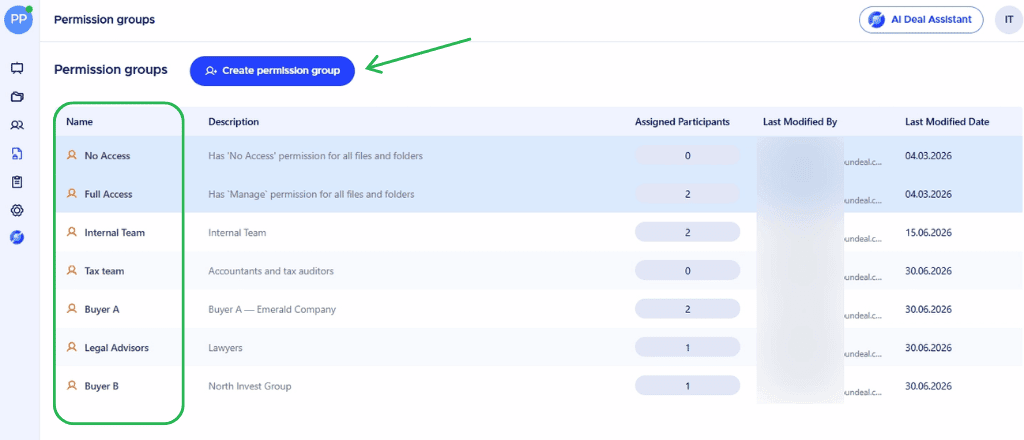
Confidentiality Agreement: Require participants to accept confidentiality terms before they start working with project documents.
Watermarking: Apply dynamic watermarks to view-only previews to help reduce unauthorized sharing, copying, or distribution.
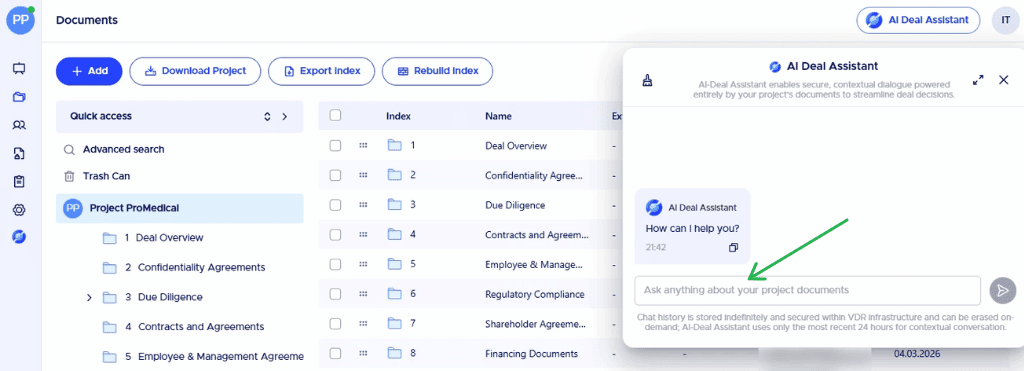
AI Deal Assistant: Work with document context, find relevant files, and get an overview across large document sets.
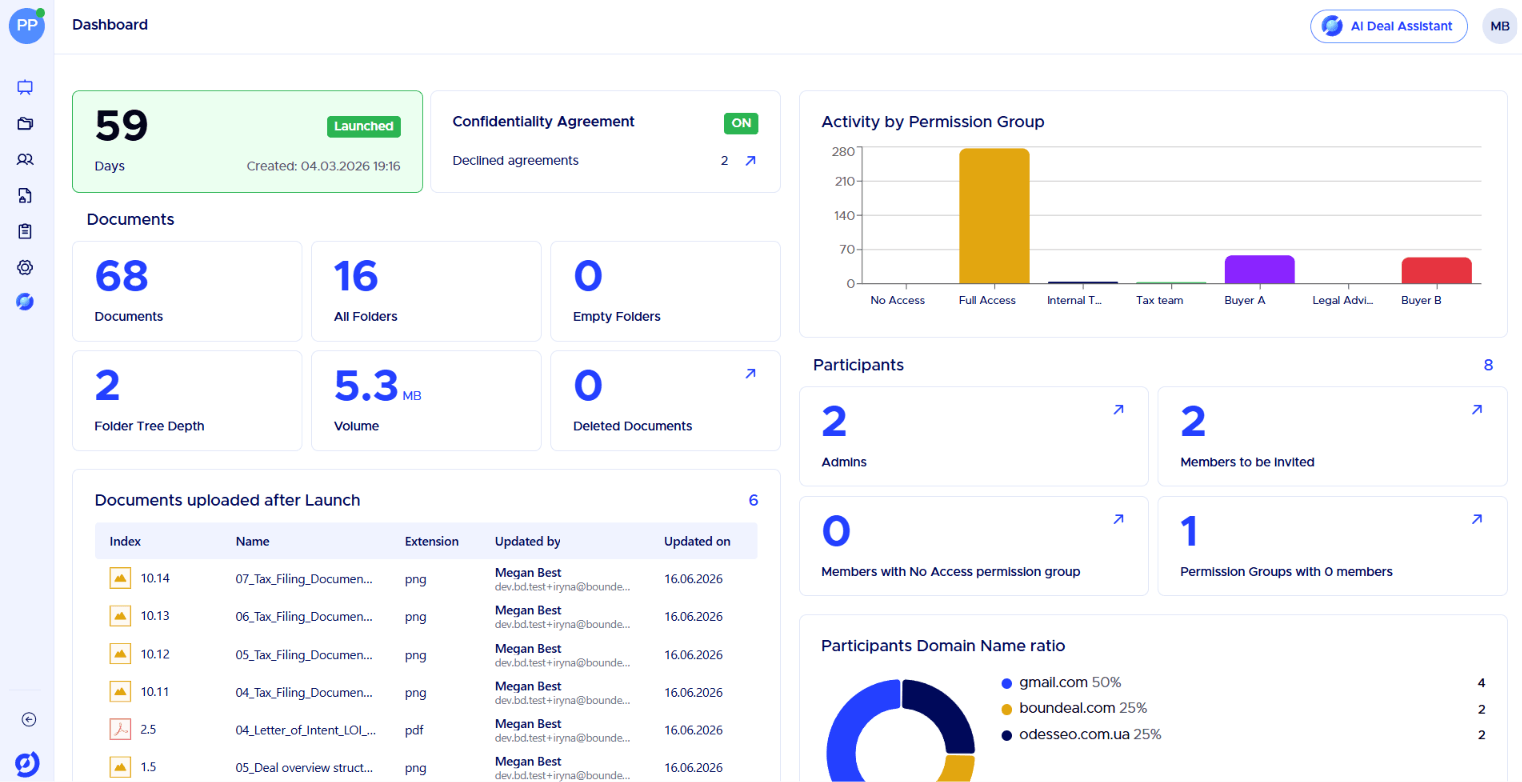
Project Dashboard: Provide administrators with a central view of documents, participants, and the overall project status.
These functions do not replace investor relations, legal advice, or diligence. Their role is to provide a structured environment for document delivery, access, confidentiality, and navigation.
Common Mistakes Founders Make with Investor Data Rooms
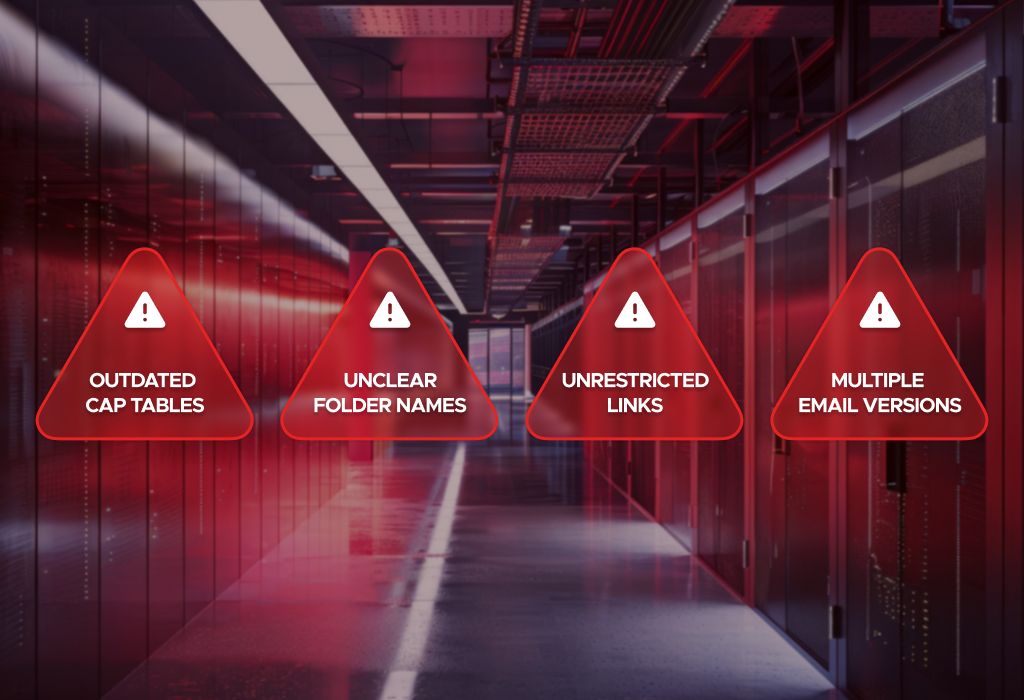
Common mistakes include:
Missing or unclear financial models: assumptions behind forecasts are difficult to verify.
Outdated cap tables: recent grants, convertible instruments, or ownership changes are missing.
Unclear folder names: internal shorthand makes it difficult for external reviewers to identify documents.
Unrestricted links: sensitive information is shared more broadly than necessary.
Multiple email versions: investors or advisers may review conflicting files.
Inconsistent metrics: KPIs do not reconcile with financial or operational records.
No confidentiality step: sensitive materials are disclosed before relevant confidentiality terms are accepted.
Assigning ownership of the data room, setting naming rules, reconciling metrics, and reviewing access before diligence can reduce these problems.
FAQ
What is an investor data room?
An investor data room is a secure, organized environment for sharing financial, legal, commercial, and operational documents with prospective investors. It gives investors structured access to evidence while allowing founders to manage sensitive information.
What should be included in an investor data room?
An investor data room should contain documents needed to verify fundraising claims and assess relevant risks. Typical categories include fundraising materials, financials, cap table records, legal documents, customer information, IP, HR, and applicable compliance materials.
When should founders prepare a fundraising data room?
Founders should prepare the core fundraising data room before detailed investor diligence begins. Early preparation gives the team time to reconcile metrics, identify missing documents, and decide what to share at each review stage.
How detailed should an investor data room be?
The level of detail should match the company’s stage and the investor’s diligence needs. Early review may require core materials, while deeper diligence can justify more detailed financial, legal, commercial, and operational documentation.
How do investors use a data room during fundraising?
Investors use the data room to verify statements made during fundraising and review supporting evidence. The documents can also support financial, legal, commercial, operational, and internal investment review.
How can a VDR help manage investor access?
A VDR can help founders organize documents and manage participant access in one controlled environment. Confidentiality acceptance, view-only watermarking, secure previews, and access-level management can reduce sharing friction without giving every participant identical access.
Conclusion
An investor data room turns fundraising claims into documents that investors can review and verify. Document completeness matters, but structure, version control, confidentiality, and participant access are equally important.
Boundeal VDR can support this process by organizing fundraising materials and providing tools for controlled access to documents, secure review, and project visibility. It helps founders deliver investor-ready materials without replacing diligence, legal advice, or investor decision-making.