Key Takeaways
Buy-side refers to institutional investors like pension funds, hedge funds, and asset managers, who are focused on acquiring assets for their portfolios and maximizing long-term value.
Sell-side involves investment banks, brokers, and consultants, who represent companies seeking to sell assets and focus on achieving the highest possible sale price.
The key differences between the two sides lie in their goals, strategies, and approaches to asset evaluation, with the buy-side focusing on long-term returns and the sell-side aiming for immediate maximum value.
In M&A transactions, the buy-side’s role is to secure assets at favorable terms, while the sell-side aims to structure deals that optimize the value of the sale.
Due diligence plays a critical role: the buy-side typically conducts thorough financial and strategic assessments of potential acquisitions, while the sell-side focuses on presenting the asset in the best possible light.
The world of investment banking is dominated by two main sides: buy-side and sell-side. These two sides play vastly different roles in financial transactions, particularly in mergers and acquisitions (M&A). Understanding the dynamics of each side is crucial for anyone involved in corporate finance, as their influence on deal structure, negotiations, and final outcomes is profound. In this article, we will break down the key distinctions between buy-side and sell-side, explore how they operate, and discuss their roles in the context of M&A transactions. Let’s talk about the difference between the buy side and the sell side.
What is Buy-Side in Investment Banking?

So, what is the buy side and sell side? The buy-side in investment banking refers to institutional investors primarily engaged in asset acquisition. These investors include pension funds, hedge funds, private equity firms, and asset management companies. Their objective is to manage funds on behalf of clients or themselves by acquiring securities that are expected to increase in value over time.
Buy-side firms evaluate potential investments by focusing on long-term growth and profitability. Their strategies are deeply analytical, involving financial modeling, due diligence, and a comprehensive understanding of market trends and industry performance. The buy-side often conducts extensive research and evaluation before making an acquisition.
For example, when a buy-side investor looks at a company for acquisition, they might perform an extensive valuation using discounted cash flow (DCF) models, examining the company's potential for growth, operational efficiencies, and market position. A buy-side firm will typically look for companies that fit its portfolio strategy and promise steady returns.
What is Sell-Side in Investment Banking?

In contrast, the sell-side in investment banking refers to institutions that help companies sell their assets, whether through public offerings, private sales, or mergers and acquisitions. The sell-side includes investment banks, brokerages, and consulting firms that act as intermediaries, working on behalf of the company seeking to sell or exit a position.
The primary goal of the sell-side is to obtain the highest possible sale price for the assets or company being sold. Sell-side firms are responsible for preparing offerings, marketing the asset, and coordinating with potential buyers. They often create pitch books, provide valuation support, and manage the auction process. Their strategies focus on presenting the asset in the most appealing way to potential buyers while ensuring compliance with regulatory requirements.
A sell-side advisor would prepare a company for sale by creating a marketing document that outlines the company’s financial performance, growth prospects, and competitive advantages. They would then seek to market the asset to potential buyers, often involving a bidding process to ensure the asset sells at the best possible price.
Key Differences Between Buy-Side and Sell-Side
The buy-side and sell-side in investment banking are two fundamental sides involved in financial transactions, particularly mergers and acquisitions (M&A). Below, we explore the key distinctions between the two.
Objective: Buy-side firms aim to purchase assets for long-term returns, while sell-side firms focus on maximizing the sale price for their clients.
Evaluation of Assets: Buy-side investors conduct detailed financial analysis, while sell-side analysts present the asset in the best possible light to potential buyers.
Motivation: Buy-side firms are driven by steady growth and risk mitigation, while sell-side firms are motivated by closing deals quickly and securing the highest sale price.
Impact on Deal Price: Buy-side investors seek to negotiate a fair price based on future potential, while sell-side firms aim to maximize the sale price by attracting competitive offers.
How Buy-Side vs Sell-Side Affects M&A Transactions
The buy-side vs sell-side investment banking both work towards closing the deal; their approaches and priorities often differ. So we examine how these differences affect the transaction process and outcomes.

Role in Transaction Structure
The buy-side typically seeks to structure the deal to minimize risk and align with its long-term objectives. They often negotiate terms such as earn-outs, contingent payments, or post-deal arrangements to ensure the acquired asset fits within their broader investment strategy. In contrast, the sell-side aims to achieve the highest possible upfront payment and prefers cash transactions or fixed-price deals that provide immediate liquidity.
Impact on Negotiations
On the buy-side, firms usually adopt a more cautious approach during negotiations. They focus on avoiding overpayment and securing favorable terms that will yield long-term benefits. In comparison, the sell-side tends to be more aggressive, pushing for a higher sale price and sometimes accelerating the deal's closing process to capitalize on market conditions.

Due Diligence and Asset Presentation
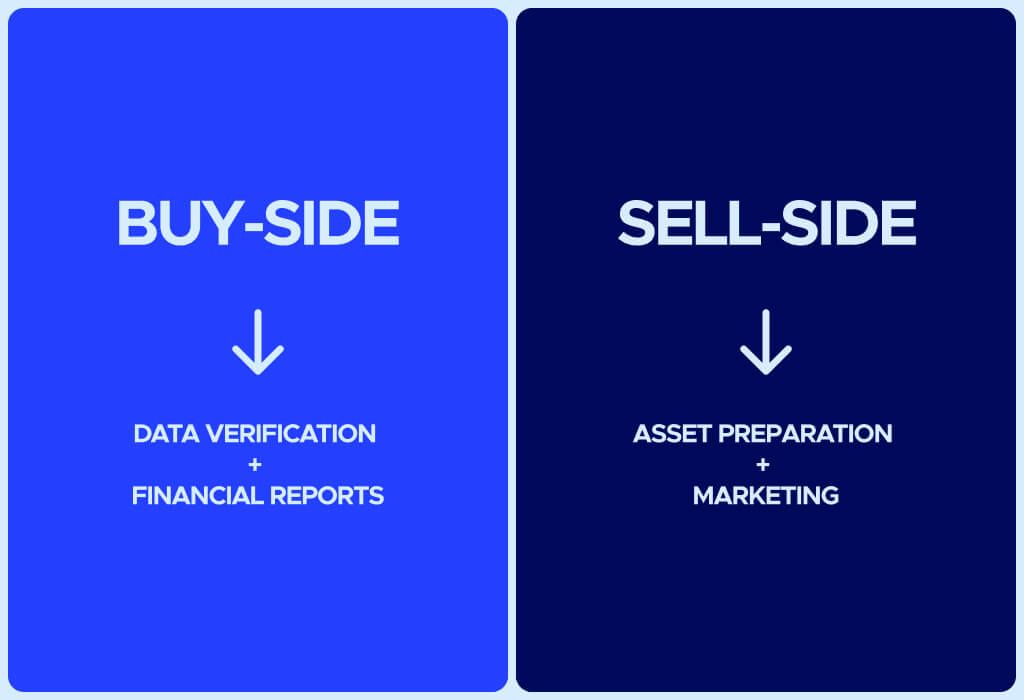
For the buy-side, due diligence is an essential part of the process. This involves a thorough investigation into the financial health and strategic fit of the target company. The buy-side will assess financial data, operational efficiency, market position, and potential risks. On the other hand, the sell-side focuses on presenting the asset in its best light, highlighting positive financials and future growth potential to attract buyers.
Post-Transaction Impact
After the deal, the buy-side is primarily concerned with integrating the acquired company and ensuring it meets its expected returns. The focus shifts to long-term value creation and achieving synergy between the buyer and the target company. For the sell-side, their role concludes once the deal is closed. They have no further responsibility in the integration process, having achieved their goal of selling the asset at the best possible price.
Financial and Strategic Roles
What about buy side vs sell side in finance? The financial and strategic roles of the buy-side and sell-side are central to how they approach mergers and acquisitions and other financial transactions. Let's explore the financial and strategic considerations that drive the behavior of the buy side vs. the sell side in M&A transactions.
Financial Considerations
The buy-side is deeply focused on the target company's financial health. This includes assessing key metrics such as EBITDA, cash flow projections, and return on investment (ROI). They conduct a detailed valuation analysis, reviewing financial documents such as tax filings, income statements, and historical performance, to ensure the investment aligns with their financial strategy. In contrast, the sell-side uses financial modeling to highlight future earnings and growth potential. They aim to justify the asking price by showcasing the target company's profitability and the financial benefits it can bring to the buyer.
Strategic Considerations
For the buy-side, the strategic value of an acquisition is crucial. They focus on how the target company fits within their portfolio and whether it will contribute to their long-term goals, such as market expansion, increased market share, or enhanced product offerings. The buy-side looks for synergies, cost savings, or access to new technologies or markets that will drive growth over time. On the other hand, the sell-side emphasizes the strategic advantages the asset can offer the buyer. They market the sale by highlighting growth opportunities, complementary assets, or strong market positioning, aiming to make the asset more appealing to potential acquirers.
Role of M&A Strategies
The buy-side typically follows M&A strategies that prioritize acquiring companies with long-term value, focusing on acquisitions that align with their portfolio objectives. These firms are motivated by steady growth, risk diversification, and value creation through integration. Their strategy includes carefully selecting targets to help them achieve their investment goals over time. The sell-side, in contrast, is concerned with exit strategies, with the primary objective of maximizing sale value and closing the deal quickly. Their approach often involves crafting sale structures that cater to the buyer's needs while ensuring the seller achieves their desired financial outcome in the shortest possible timeframe.
FAQ
What is the main difference between the buy-side and the sell-side in investment banking?
The main difference lies in their goals and roles within a transaction. The buy-side focuses on acquiring assets that will generate long-term returns, while the sell-side is responsible for maximizing the sale price of assets or companies on behalf of their clients.
Who participates in buy-side and sell-side roles?
Buy-side participants include institutional investors such as pension funds, hedge funds, private equity firms, and asset management companies. Sell-side participants are typically investment banks, brokerages, and consulting firms that assist companies in selling their assets.
How does due diligence differ between buy-side and sell-side?
On the buy-side, due diligence focuses on evaluating the target company's financial health, growth potential, and risks, often involving in-depth financial analysis and modeling. On the sell-side, due diligence is less extensive and more about preparing the asset for sale, highlighting its strengths and presenting it in the best possible light to attract buyers.
How do buy-side and sell-side affect the price of a deal?
The buy-side typically seeks to negotiate a fair price based on the asset's future value, using various analytical methods to justify the price. On the sell-side, the focus is on maximizing the sale price, often using competitive bidding and aggressive marketing strategies to attract the highest possible offer.
What role do buy-side and sell-side play in M&A negotiations?
The buy-side is generally more cautious and focused on ensuring the acquisition fits their portfolio strategy, while the sell-side is more aggressive, aiming to secure the highest price for the asset. The buy-side negotiates to minimize risk, while the sell-side works to maximize the immediate financial return.
How do buy-side and sell-side strategies impact deal structures?
The buy-side typically structures deals to minimize risk and ensure long-term profitability, often incorporating earn-outs or contingent payments. The sell-side, conversely, aims to structure the deal for a quick sale and maximum upfront payment, often focusing on cash transactions or fixed-price deals.