Key takeaways
Series A fundraising tests whether product-market fit can support repeatable growth, while Series B tests whether that growth can scale efficiently.
Series A investors focus on traction, retention, market potential, team quality, and a credible go-to-market model.
Series B investors expect deeper growth metrics, stronger reporting, clearer expansion plans, and more mature operating controls.
Investor due diligence typically broadens at Series B because more historical data, contracts, reporting, and governance materials are available.
A Series A data room can focus on core institutional diligence, whereas a Series B data room requires deeper financial, commercial, legal, and operational documentation.
Boundeal VDR supports both stages through structured documents, participant access, confidentiality controls, document navigation, and project visibility.
Series A and Series B are not simply larger versions of the same fundraising round. They reflect different levels of company maturity and investor scrutiny. As a startup develops, investors expect stronger evidence of growth, more consistent reporting, and deeper diligence materials. Founders, therefore, need to adjust both their fundraising process and investor data room as the company moves from Series A to Series B.
Fundraising Series Explained: From Seed to Series B
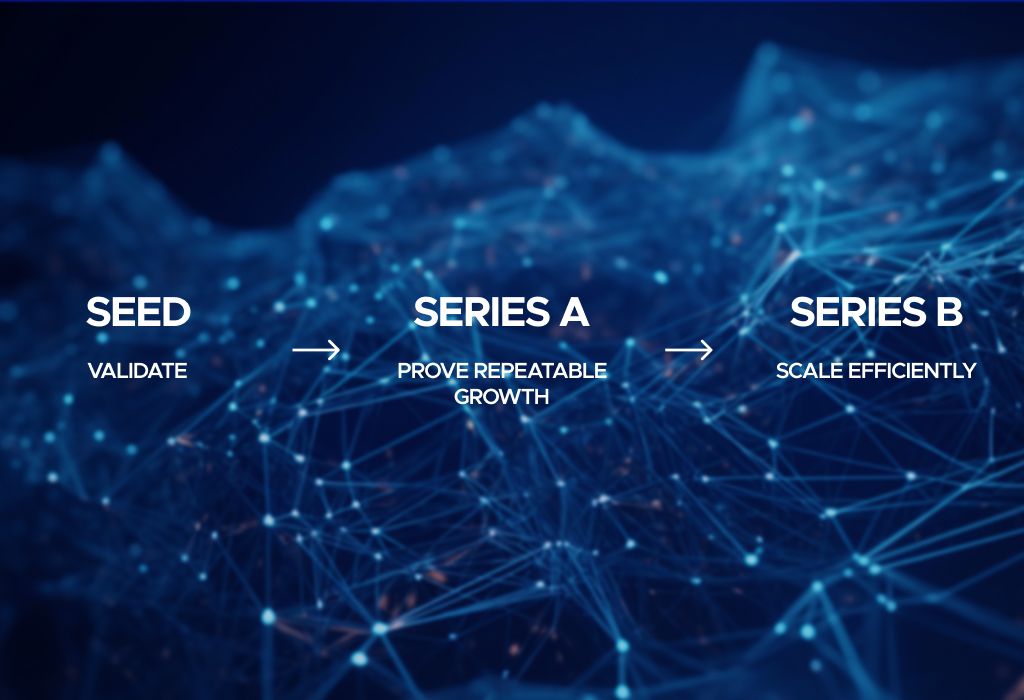
Seed funding supports early validation. Series A asks whether product-market fit and traction can support repeatable growth, while Series B focuses on scaling an already validated model.
Carta describes Series A companies as having a viable product and evidence of traction. By Series B, investors expect a stronger customer base, revenue growth, and a plan for expansion. These boundaries still vary by industry, business model, geography, and market conditions.
What Is Series A Fundraising?
Series A fundraising is commonly the first major institutional financing stage in which investors expect evidence that a company has moved beyond early experimentation. The core question is whether product-market fit, traction, and the go-to-market model can support a larger business. Carta identifies product-market fit, competitive positioning, traction, and growth potential as important considerations at this stage.
Investors often examine customer adoption, retention, revenue, or usage trends, market size, competitive positioning, and team execution. They also test how additional capital will support the next growth milestones.
Core Series A documents may include:
pitch deck and fundraising materials;
financial model and key assumptions;
customer, revenue, retention, or usage metrics;
cap table and financing history;
product roadmap;
material customer contracts;
IP ownership documents;
team and organizational information.
The exact list depends on the company, sector, and investor. Cooley’s sample VC due diligence request list also supports organizing corporate and legal records before financing diligence.
What Is Series B Fundraising?
Series B fundraising is about scaling a business model that has already demonstrated traction. Investors want evidence that growth can continue with credible economics, stronger reporting, and a more mature operating model.
Carta describes Series B as a stage in which companies typically seek capital to expand their customer base, enter new markets, and scale operations. Its Series B guidance also emphasizes using data to demonstrate traction and a sustainable growth trajectory.
Relevant Series B materials may include:
growth and cohort metrics;
unit economics and margin analysis;
budget versus actual reporting;
management accounts and forecasts;
market expansion plans;
board and governance materials;
enterprise sales pipeline data;
material commercial contracts;
workforce and hiring plans.
Series B does not follow one universal template. Diligence depth depends on the business model, investor mix, operating history, and material risks.
Series A vs Series B: Main Differences
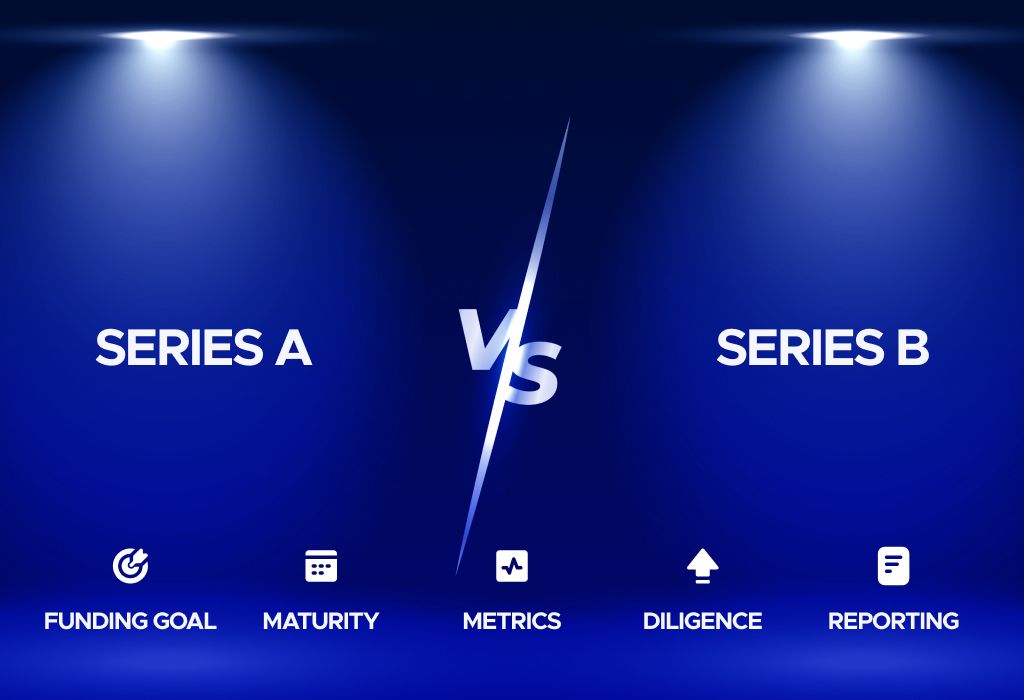
Series A and Series B can involve similar fundraising mechanics, but the evidence expected at each stage is different. Series A asks whether early traction can become repeatable growth; Series B asks whether the organization can scale that growth with discipline.
Funding goal. In a Series A round, the company needs to prove it has a repeatable growth model. By Series B, the goal shifts to scaling a model that's already been validated.
Business maturity. Series A typically involves a company still developing its institutional processes. By Series B, the business usually has more established operations and management systems in place.
Core metrics. At Series A, investors focus on product-market fit, traction, retention, and early unit economics. At Series B, the focus shifts to growth efficiency, cohort analysis, margins, and forecasting accuracy.
Investor expectations. Series A investors want evidence that the market is large enough and that the go-to-market motion can scale. Series B investors want evidence that growth can be sustained predictably and efficiently.
Diligence depth. Series A diligence generally covers the core areas — financial, commercial, legal, product, and ownership review. Series B diligence goes deeper, adding historical performance, operational analysis, governance quality, and growth durability.
Reporting. At Series A, companies typically provide a financial model along with core management metrics. At Series B, reporting expectations expand to include budget-vs-actuals comparisons, deeper forecasts, and fuller management reporting.
Data room scope. Series A data rooms usually include the core set of institutional diligence materials. Series B data rooms are broader, covering more extensive financial, commercial, legal, HR, and governance documentation.
The difference is not simply “more documents” at Series B. Investors have more history to test and more evidence with which to compare forecasts against actual execution.
Legal review can also become more involved as the cap table, financing history, contracts, governance records, and corporate structure develop.
Series A Fundraising Process
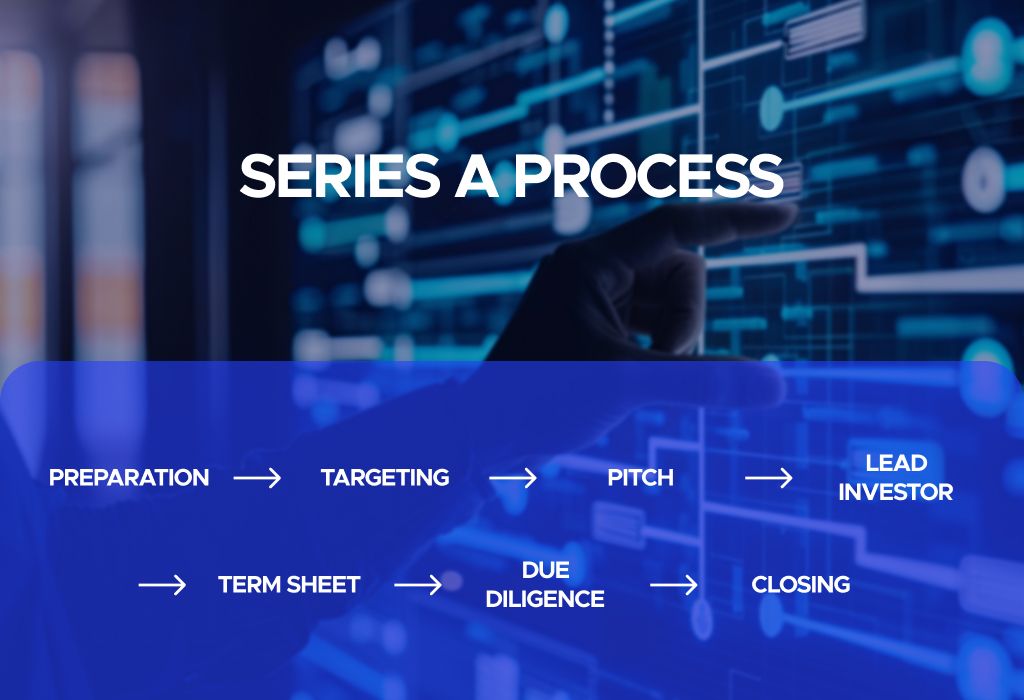
A Series A fundraising process often follows these stages, although the sequence can overlap.
Preparation. Update the financial model, reconcile the cap table, review metrics, and assemble core diligence materials.
Investor targeting. Build a focused investor list based on stage, sector, geography, thesis, and fit.
Pitch meetings. Present traction, team, market opportunity, economics, and the plan for using new capital.
Lead investor process. A potential lead may request deeper meetings, references, and supporting evidence.
Term sheet. The parties discuss principal economic and governance terms.
Investor due diligence. Investors and advisors review financial, legal, commercial, product, and ownership information.
Legal closing. Counsel prepares and negotiates definitive documents, obtains approvals, collects signatures, and finalizes funding mechanics.
Orrick likewise separates investor outreach and pitching from term sheet negotiation. Founders can reduce friction by preparing the financial model, cap table, customer metrics, IP records, contracts, and diligence checklist early.
How the Series B Fundraising Process Becomes More Demanding
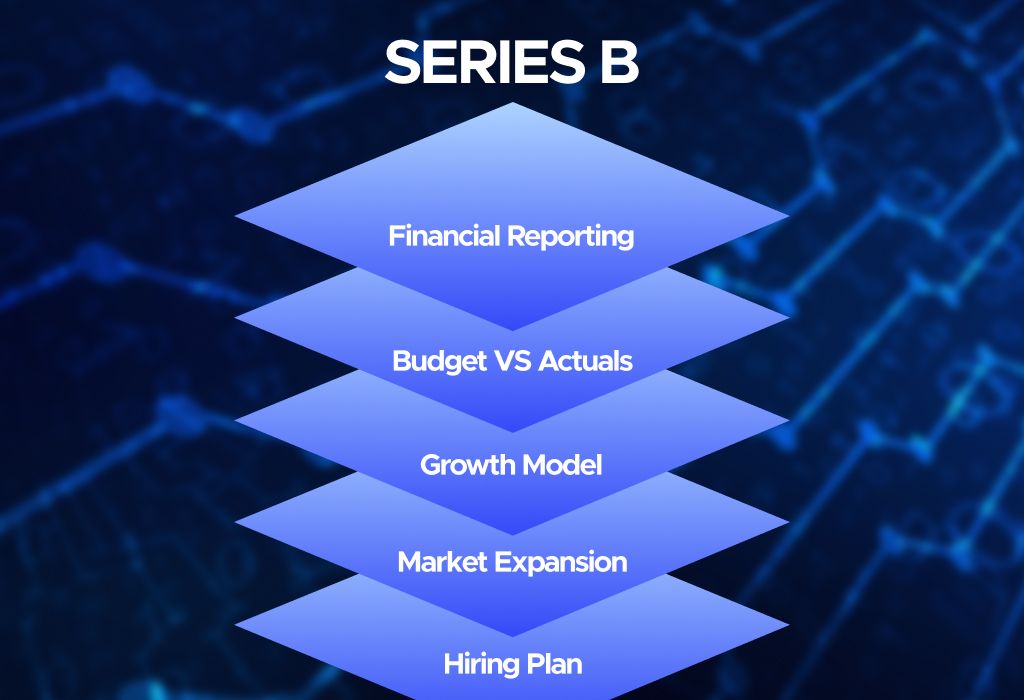
Series B diligence often becomes more demanding because the company has more operating history and more evidence to test. The question shifts toward whether growth can scale with credible economics and operating discipline. This reflects the stronger emphasis on data, sustainable growth, and expansion at Series B.
Investors may look more closely at:
Financial reporting: consistency across management accounts, forecasts, and key metrics.
Budget versus actuals: how prior plans compare with real performance.
Growth model: whether retention, margins, sales efficiency, and unit economics support scale.
Market expansion: evidence behind new geographies, customer segments, or products.
Hiring plan: whether headcount growth matches the operating model and use of funds.
Governance: whether board processes, approvals, reporting, and ownership records have matured.
Scattered documents create more friction at this stage. Separate drives, email threads, and conflicting versions make deeper diligence harder to manage.
Data Room Fundraising Requirements by Stage
A fundraising data room should evolve with the company. Series A usually needs core diligence materials, while Series B often requires deeper financial, commercial, legal, operational, and governance evidence. Cooley’s VC diligence materials support the preparation of corporate and legal records before investors reach the closing stage.
Series A data room checklist
A practical Series A investor data room may include the pitch deck, financial model, cap table, financing documents, customer metrics, product roadmap, material contracts, corporate records, IP documentation, and team information.
The goal is to make fundraising claims easy to verify without exposing every sensitive document too early.
Series B data room checklist
A Series B data room may include the core Series A materials, plus deeper management accounts, budget-versus-actual reporting, cohort analysis, unit economics, expansion plans, enterprise pipeline data, board materials, broader commercial contracts, and HR documentation.
Not every investor should receive identical access. Access should expand as the review becomes more serious and the participant’s role requires it.
How Boundeal VDR Supports Series A and Series B Fundraising
As data room fundraising requirements expand, Boundeal VDR provides a structured environment for documents, participants, confidentiality, and investor review. Boundeal also positions its VDR for venture capital and fundraising workflows.
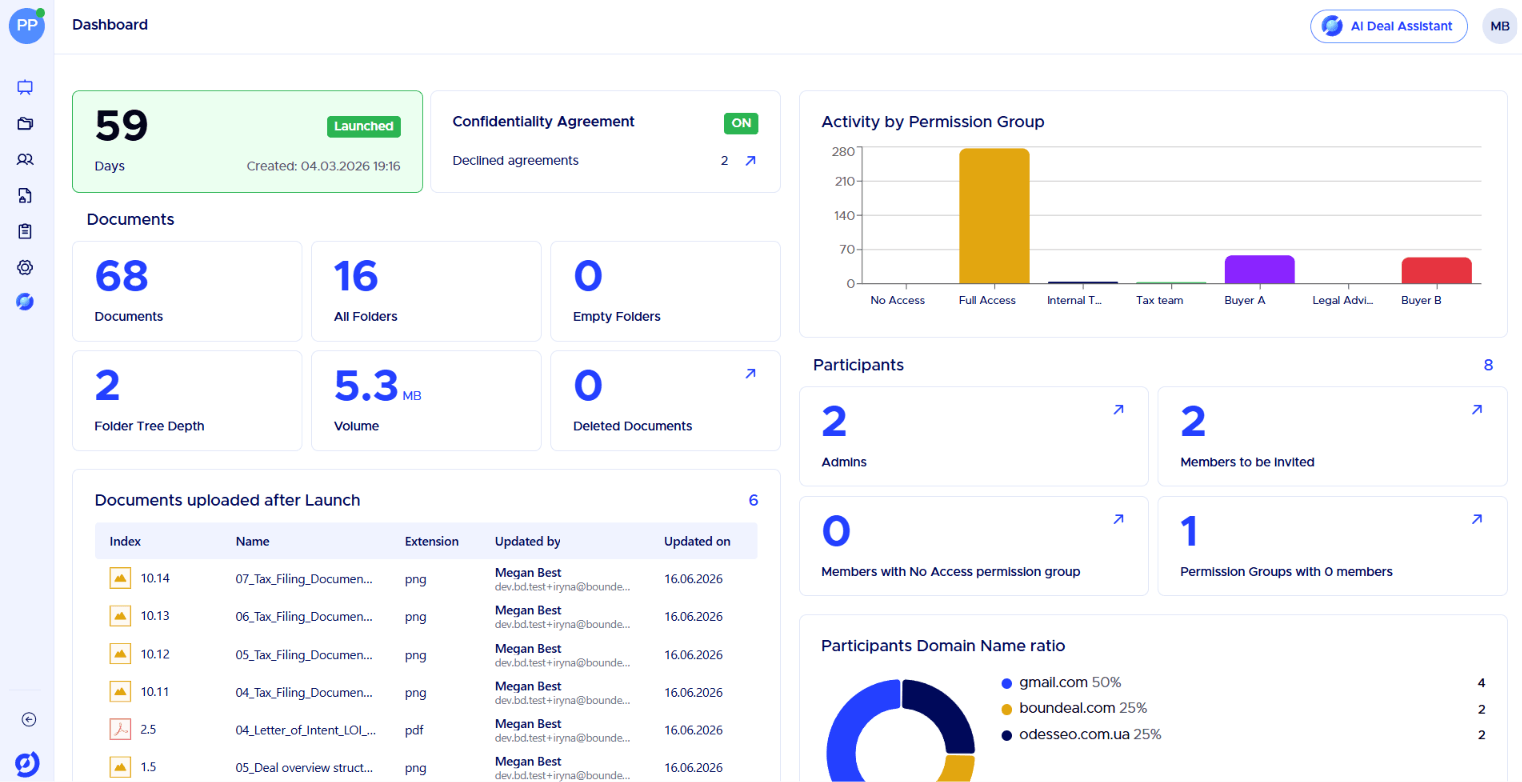
Documents helps teams organize folders and files, use built-in search, and preview documents securely across Series A and Series B rooms. Boundeal’s official VDR page confirms folder and document structure, file information, built-in search, and secure document preview.
Participants let administrators invite users, remove participants, and adjust access levels for investors and advisors. This allows access to change as the investor group or review stage changes.
A Confidentiality Agreement may require participants to accept confidentiality terms before working with project documents.
Watermarking adds dynamic watermarks to view-only previews to help reduce unauthorized sharing, copying, or distribution.
AI Deal Assistant helps users work with document context, locate relevant files, and get an overview across large document sets. Project Dashboard provides administrators with a central view of documents, participants, and the overall project status.
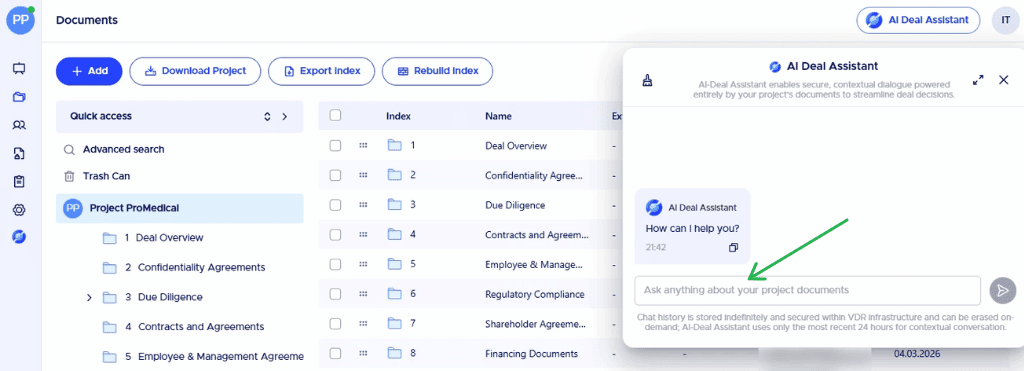
Boundeal VDR does not replace investor relations, legal advice, or management judgment. It provides infrastructure for organized fundraising materials, participant access, confidentiality, and review.
FAQ
What is Series A fundraising?
Series A fundraising is an institutional financing stage focused on whether early traction and product-market fit can support repeatable growth. Investors typically examine the market, team, customer evidence, financial model, and go-to-market plan.
What is Series B fundraising?
Series B fundraising focuses more heavily on scaling a business model that has already demonstrated traction. Investors generally expect stronger evidence of growth, deeper reporting, and a clearer plan for expansion.
How is Series A different from Series B?
Series A focuses on proving that product-market fit and early traction can become repeatable growth. Series B places greater emphasis on scaling that model, growth efficiency, operational maturity, and reporting quality.
What documents are needed for Series A fundraising?
Series A documents commonly include a pitch deck, financial model, cap table, customer metrics, product roadmap, material contracts, IP records, and corporate documents. The final diligence list depends on the company, sector, investor, and transaction.
What documents are needed for Series B fundraising?
Series B commonly requires the core Series A materials plus deeper financial, commercial, operational, HR, and governance documentation. Investors may also request cohort analysis, budget-versus-actuals, board materials, expansion plans, and growth reporting.
Why do startups need a data room for fundraising?
A fundraising data room gives investors structured access to diligence documents while helping founders control sensitive information. A VDR can reduce friction around document organization, confidentiality, participant access, and navigation without determining the investment decision.
Conclusion
Series A and Series B differ in company maturity, investor expectations, diligence depth, and documentation quality. As requirements increase, the fundraising data room should evolve from a focused diligence set into a deeper financial, commercial, legal, and operational repository. Boundeal VDR can support that progression by organizing documents, managing participant access, and providing a controlled environment for investor review.