Key Takeaways
Series C funding shifts the investment focus from narrative potential to proven financial performance, unit economics, and operational scalability.
Growth stage fundraising involves institutional investor scrutiny requiring rigorous financial, legal, commercial, and technical due diligence.
Late stage venture capital and growth equity investors expect clear corporate governance, predictable revenue quality, and a defined path to liquidity or an exit.
A structured fundraising data room prevents document fragmentation, accelerates investor review, and maintains deal momentum across multiple bidding parties.
Granular access permissions, watermarking, and digital non-disclosure agreements protect sensitive corporate materials as external advisers enter the diligence process.
Series C fundraising timelines depend heavily on document readiness, market conditions, team organization, and the clarity of cap table history.
Introduction
Later-stage fundraising is fundamentally different from early funding rounds because investors are no longer evaluating only team potential or early market vision. Series C funding and growth stage fundraising require verifiable evidence of revenue quality, market expansion, corporate governance, repeatable growth, and clear exit logic. As institutional investors conduct rigorous due diligence, thorough document preparation and a controlled information environment become vital components of investor readiness for founders preparing for growth.
What Is Series C and Growth-Stage Fundraising?
Series C fundraising is a later-stage financing round for companies that have already demonstrated product-market fit and repeatable growth. Growth-stage fundraising may include Series C, Series D and other later rounds used for scaling, international expansion, acquisitions, product expansion or preparation for an exit.
Investors may include venture capital funds, growth equity funds, strategic investors, crossover investors and existing shareholders. Later rounds can involve primary capital, secondary transactions or a combination of both.
Compared with earlier rounds, founders face more formal investor due diligence and stronger expectations around financial performance, governance, reporting and risk management.
How Later Rounds Differ from Seed, Series A, and Series B
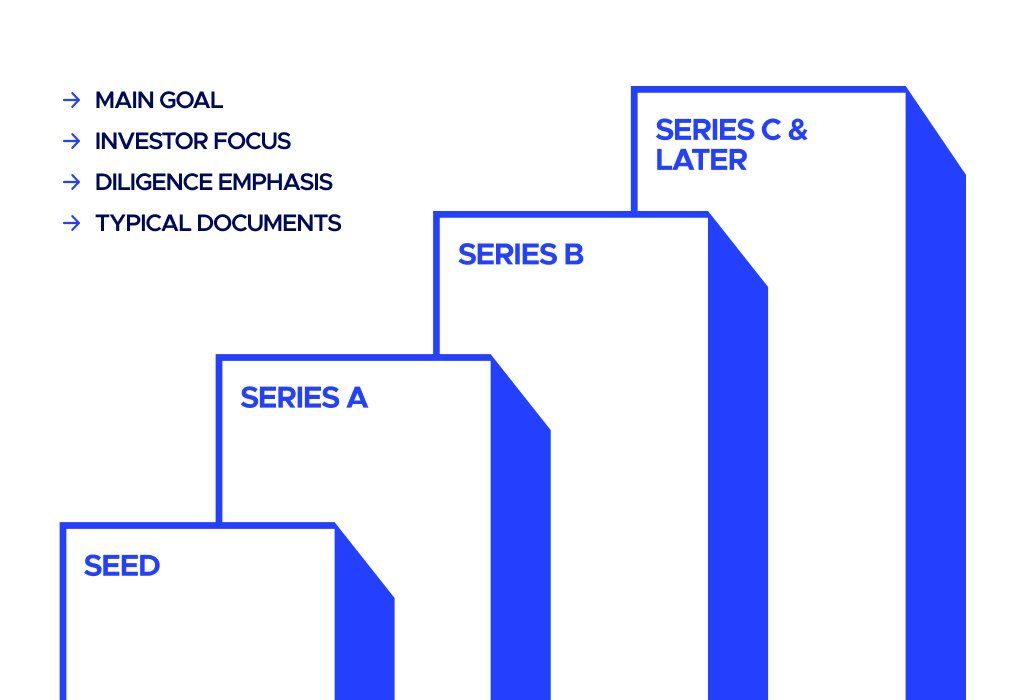
As companies mature, investors typically expect less reliance on narrative and more evidence that growth is repeatable, efficient and well governed.
Seed. Main Goal: Validate product and market. Investor Focus: Team, product, early signals. Diligence Emphasis: Usually limited. Typical Documents: Pitch deck, founder documents, early financing records.
Series A. Main Goal: Build product-market fit and go-to-market. Investor Focus: Early revenue, traction, growth model. Diligence Emphasis: Increasing. Typical Documents: Financial model, cap table, customer contracts, IP records.
Series B. Main Goal: Scale a repeatable model. Investor Focus: Sales efficiency, unit economics, retention. Diligence Emphasis: More structured. Typical Documents: Financial statements, cohort data, pipeline, board materials.
Series C & Later. Main Goal: Scale efficiently and prepare for liquidity. Investor Focus: Mature metrics, governance, risk controls, exit path. Diligence Emphasis: More extensive. Typical Documents: Financial, legal, tax, governance and commercial diligence materials.
In late stage venture capital and growth equity rounds, projections are expected to be supported by stronger historical evidence. Financial models, customer data, board materials and legal documentation therefore become more important.
The fundraising process can begin to resemble an institutional transaction rather than an early founder-led pitch, with external financial, legal, commercial and technical advisers involved in the review.
What Investors Review in Growth-Stage Rounds
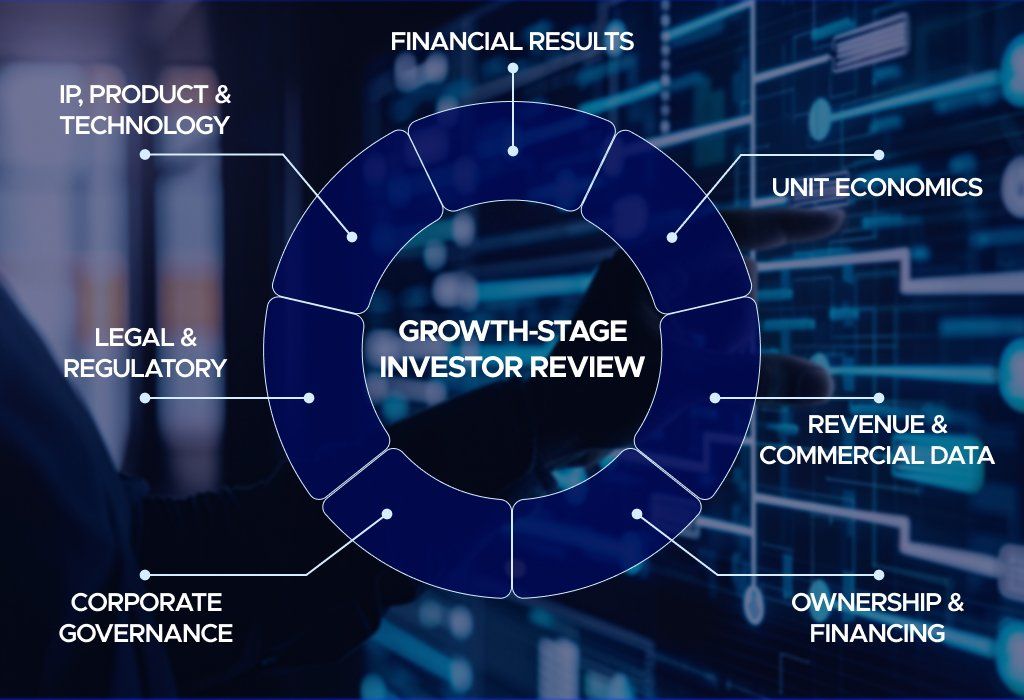
Growth-stage investors want to confirm that financial performance, unit economics, governance, internal controls and expansion plans are supported by reliable evidence. Founders should be ready to provide a structured set of materials across several areas:
Financial Results: Historical financial statements, ARR and MRR development, gross margins, cash burn, runway, forecasts and the assumptions behind them.
Unit Economics: CAC, LTV, payback periods, retention rates, churn patterns and cohort-level performance.
Revenue & Commercial Data: Customer concentration, key agreements, sales pipeline quality and go-to-market efficiency.
Ownership & Financing: Current cap table, option pool records, previous financing documents and existing investor rights.
Corporate Governance: Board records, shareholder approvals and other governance documentation.
Legal & Regulatory Matters: Material contracts, litigation, tax records, regulatory issues and significant employment matters.
IP, Product & Technology: Intellectual property ownership, product materials, technical documentation and data security policies.
Why Series C Fundraising Becomes More Operationally Complex

As companies move into Series C fundraising, the process usually involves a broader group of investors, advisers and internal stakeholders, which makes coordination and document management more demanding.
Investment decisions may involve formal investment committees, while financial, legal, commercial and technical advisers conduct deeper reviews. Existing shareholders, new lead investors and strategic parties may also participate at different stages.
This creates a coordination challenge for founders. Scattered startup documents, inconsistent financial schedules and unclear access can slow investor review and reduce fundraising momentum.
A repeatable process becomes more important than simply having a pitch deck and financial model. Strong document readiness helps teams answer investor questions faster and present a more credible, investor-ready process.
A Realistic Growth-Stage Fundraising Timeline
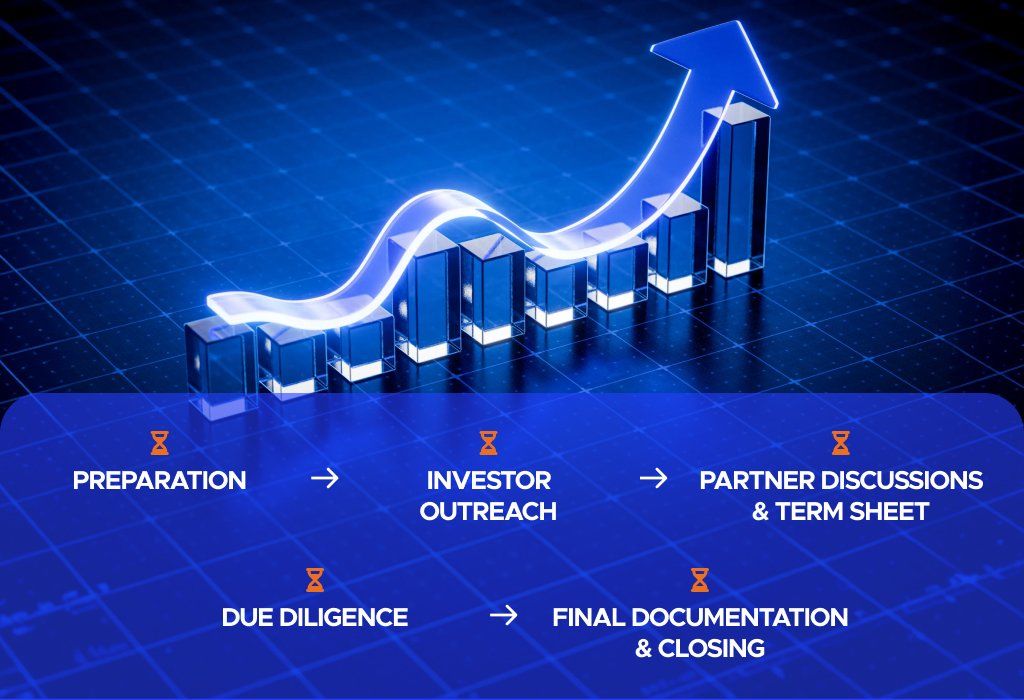
There is no fixed timeline for a growth round. The process depends on company readiness, market conditions, investor demand, deal complexity and documentation quality.
Preparation. Main Activities: Financial model, pitch materials, investor data room and internal readiness. Common Sources of Delay: Missing schedules, inconsistent metrics, incomplete legal documents.
Investor Outreach. Main Activities: Targeting, introductions and initial meetings. Common Sources of Delay: Weak positioning or limited investor demand.
Partner Discussions & Term Sheet. Main Activities: Deeper meetings, investor selection and term negotiation. Common Sources of Delay: Unresolved commercial or valuation questions.
Due Diligence. Main Activities: Financial, legal, commercial and technical review. Common Sources of Delay: Missing documents, cap table issues or unclear data ownership.
Final Documentation & Closing. Main Activities: Final agreements, approvals and completion. Common Sources of Delay: Outstanding diligence findings or documentation gaps.
Some investor due diligence may begin before a term sheet and continue afterwards. The sequence therefore varies between transactions.
Delays can result from missing financial schedules, inconsistent ARR definitions, cap table discrepancies or slow legal document collection. Preparing materials before outreach can help protect fundraising momentum.
When Growth-Stage Fundraising Needs a VDR
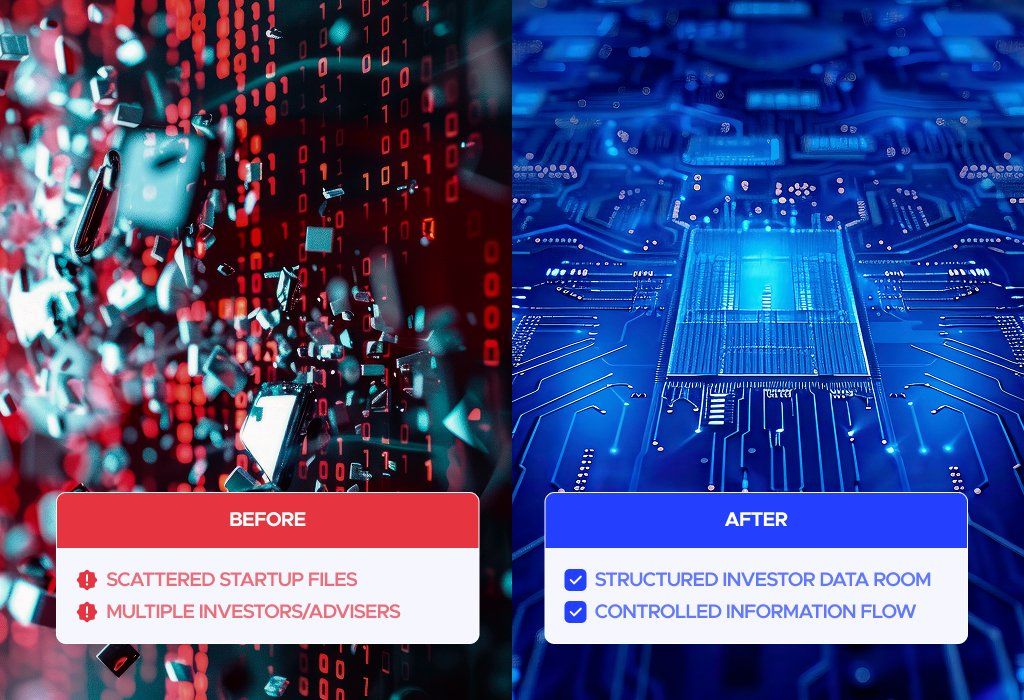
Shared folders and email can become difficult to manage once growth stage fundraising involves multiple investors, advisers and confidential document sets.
Later-stage investors often expect organized access to financial, legal, commercial and governance materials. As more participants join the fundraising process, founders also need stronger control over access, document distribution and confidentiality.
A structured investor data room becomes useful when uncontrolled attachments and disconnected folders start creating version, access or coordination problems. Founders may also want clearer visibility into investor engagement, although the level of activity tracking available depends on the platform being used.
At this stage, a VDR becomes part of investor readiness rather than simply a place to store files.
How Boundeal VDR Supports Series C and Growth Rounds
Boundeal VDR provides a secure, structured workspace for later-stage fundraising and investor due diligence.
Project Dashboard gives administrators a quick overview of project documents, participants and key information. Documents helps organize financial, legal, commercial, HR, product and governance materials within a structured workspace.
Participants helps founders add investors, advisers and internal team members and manage access levels. Watermarking adds protection to sensitive view-only document previews.
The Confidentiality Agreement helps ensure participants accept relevant terms before working with project documents. The AI Deal Assistant helps users navigate large fundraising document sets and find relevant information faster.
Together, these features support a more controlled fundraising process as document volumes, participant numbers and confidentiality requirements increase.
Common Red Flags That Slow Later-Stage Fundraising
Investor due diligence often exposes inconsistencies that require additional explanation or documentation. Common red flags include:
Inconsistent Revenue Definitions: Recurring and non-recurring revenue reported without a clear methodology.
Retention or Churn Issues: Unclear retention metrics, unexplained churn changes or significant customer concentration.
Cap Table Discrepancies: Missing option documents, unclear vesting schedules or incomplete financing records.
Governance Gaps: Missing board minutes, approvals or other corporate records.
Missing Contracts: Important customer or supplier agreements that are unsigned, expired or incomplete.
Unclear Use of Proceeds: Growth plans without a clear connection to operating priorities and financial assumptions.
Unsupported Forecasts: Optimistic projections without sufficient historical data or documented assumptions.
Unprepared Data Room: Important investor materials collected only after due diligence has already started.
FAQ
What is Series C funding?
Series C funding is a later-stage financing round generally used by established startups to support further growth. Capital may be used for expansion, acquisitions, new products or preparation for a future liquidity event.
How is growth-stage fundraising different from Series A and Series B?
Growth-stage fundraising usually involves deeper scrutiny of financial performance, governance, unit economics and risk. Earlier rounds often place relatively more emphasis on product-market fit, traction and the potential to build a repeatable growth model.
What do investors review in a Series C round?
Investors may review financial performance, unit economics, retention, customer concentration, forecasts, the cap table, governance, contracts, IP and compliance. The exact scope depends on the company, investor and transaction.
How long does Series C fundraising take?
There is no fixed timeline for Series C fundraising. Timing depends on company readiness, market conditions, investor demand, deal complexity and the quality of available documentation.
When does a startup need a VDR for growth-stage fundraising?
A VDR becomes useful when multiple investors or advisers need controlled access to confidential documents. It can help when email attachments and ordinary shared folders no longer provide a sufficiently structured fundraising workflow.
What documents should be prepared before a growth round?
Founders should prepare financial information, forecasts, a clean cap table, customer and retention data, governance records, material contracts, IP documentation and other relevant diligence materials. Organizing them in a fundraising data room before investor due diligence begins can reduce unnecessary delays.
Conclusion
Series C funding and growth stage fundraising require stronger evidence, better organization and deeper investor review than earlier rounds. Founders must manage not only the fundraising narrative and valuation, but also documents, participants and confidentiality. A structured workspace such as Boundeal VDR can support investor readiness by keeping later-stage fundraising materials organized within a controlled environment.