Key Takeaways
A competitive bidding process allows multiple qualified buyers to evaluate an opportunity within a structured transaction process, but requires clear control over information and participant access.
Staged disclosure helps sellers share information progressively as bidders move through different stages of the process.
A centralized Virtual Data Room (VDR) reduces reliance on email attachments and scattered file-sharing tools during multi-bidder transactions.
Participant and permission controls help sellers provide different buyer groups with access appropriate to their role and stage.
Confidentiality Agreements and Watermarking add important security controls when sensitive information is reviewed by multiple external parties.
An AI Deal Assistant can help bidders navigate large document collections and find relevant information more efficiently.
Introduction
A competitive bidding process brings several potential buyers into the same M&A process. A private equity sponsor, strategic buyer, their legal advisers, financial teams, and other specialists may all need access to transaction materials — but not necessarily at the same time or to the same information.
This creates a practical challenge for the sell-side team. Information needs to move quickly enough to keep the process progressing, while access must remain controlled as bidders move from initial interest to deeper due diligence.
A Virtual Data Room provides a structured environment for managing this process. Instead of distributing sensitive documents through multiple channels, sellers can organize transaction materials, participants, confidentiality requirements, and access within one controlled workspace.
What Is a Competitive Bidding Process in M&A?
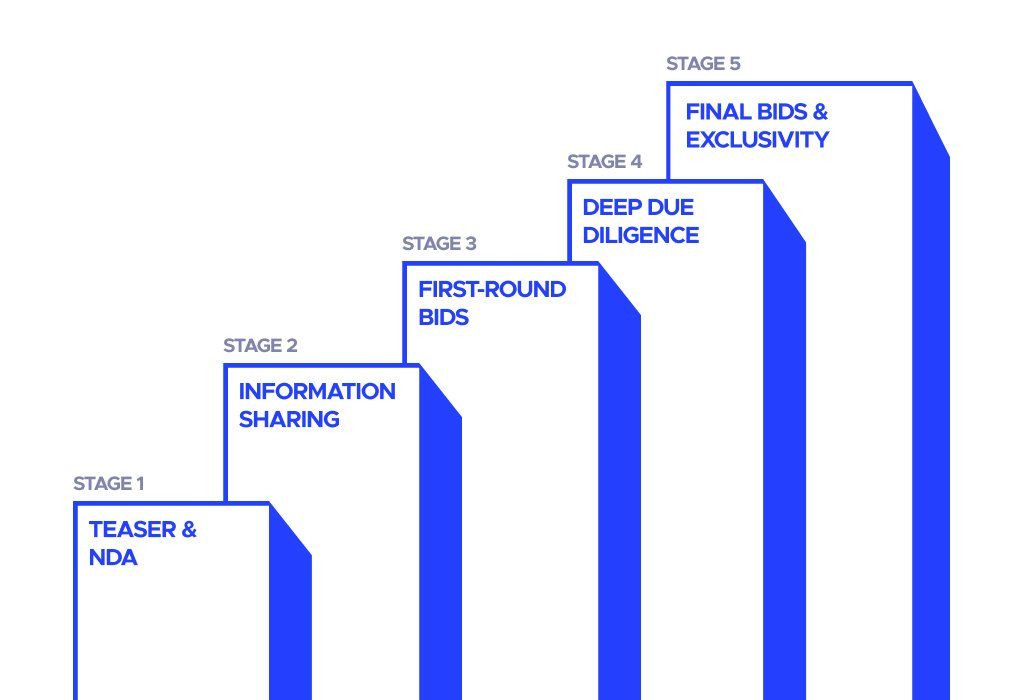
A competitive bidding process is a structured M&A approach in which a seller invites multiple prospective buyers to evaluate an asset and submit offers.
The exact process varies by transaction, but a typical auction may include several stages:
Stage 1: Teaser & NDA. Primary Objective: Generate initial interest and establish confidentiality. Key Materials: Teaser, Confidentiality Agreement. Participant Scope: Initial buyer universe.
Stage 2: Information Sharing. Primary Objective: Give qualified parties an initial view of the opportunity. Key Materials: CIM, Process Letter. Participant Scope: NDA-approved participants.
Stage 3: First-Round Bids. Primary Objective: Identify bidders that will progress. Key Materials: IOI, Bid Instructions. Participant Scope: Shortlisted bidders.
Stage 4: Deep Due Diligence. Primary Objective: Enable detailed business and financial review. Key Materials: Financial, legal, commercial and operational materials. Participant Scope: Finalist buyer teams and advisers.
Stage 5: Final Bids & Exclusivity. Primary Objective: Move towards a preferred bidder and transaction documentation. Key Materials: LOI, SPA drafts and supporting materials. Participant Scope: Selected bidder.
As the process progresses, the amount and sensitivity of information typically increase. This makes controlled disclosure particularly important when several buyer groups are reviewing the same opportunity.
Why Competitive Bidding Is Difficult to Manage Without a VDR
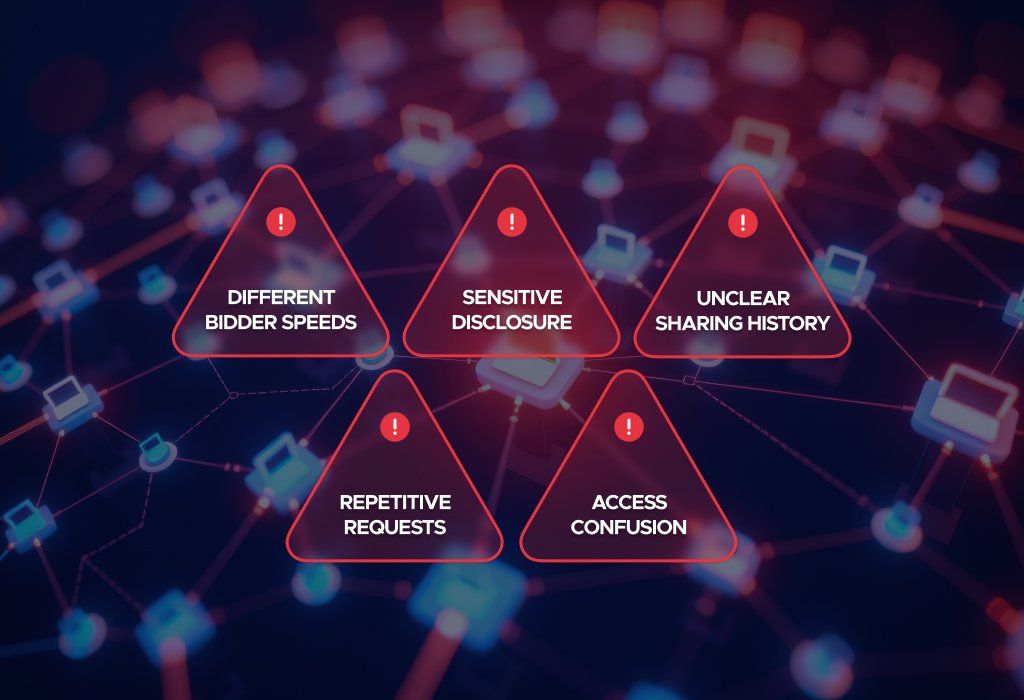
Running a multi-bidder process through email attachments, generic cloud folders, or separate sharing tools can create several problems.
Multiple bidders review the same transaction
Several buyer teams may be reviewing information simultaneously. Without structured access controls, it becomes difficult to ensure that each group sees only the materials intended for them.
Bidders progress at different speeds
One buyer may still be reviewing initial materials while another has already entered detailed financial or legal due diligence. A single access level for everyone does not fit this workflow.
Sensitive information requires controlled disclosure
Financial information, customer contracts, commercial data, HR materials, and intellectual property may become increasingly sensitive as diligence progresses. Sharing everything at the beginning can expose information before it is necessary to the process.
Information becomes difficult to manage
When documents are distributed across email threads and different file-sharing locations, teams can lose track of which materials were shared and with whom.
Seller teams face more repetitive requests
A poorly structured repository can make it harder for buyers to locate information, increasing the number of clarification requests sent to the sell-side team.
A VDR addresses these challenges by providing one controlled environment for the transaction.
How a VDR Supports a Competitive Bidding Process
A VDR can serve as the central workspace for organizing information and participants throughout the auction.
The key is not simply storing documents. It is controlling who can access them, when they can access them, and how information is shared.
Structured Documents
The Documents section provides a central location for transaction materials. A logical folder structure helps bidders navigate the data room and helps the sell-side team maintain a consistent information framework.
A typical structure may include:
Process Materials
Executive Information
Financial & Accounting
Commercial & Sales
Corporate & Legal
Intellectual Property
HR & Governance
Transaction & Closing Materials
The structure can evolve as the transaction progresses, while keeping documents organized by business function and diligence area.
Managing Participants
The Participants section allows the deal team to manage the people involved in the process.
Different participant groups may include:
Strategic bidders
Financial buyers
Legal and financial advisers
Internal deal teams
Separating participants helps the sell-side team apply access according to the role each group plays in the transaction.
For example, a strategic buyer may require access to commercial information, while an external legal adviser may only need relevant legal documentation.
Staged Disclosure: Giving Bidders Access at the Right Stage
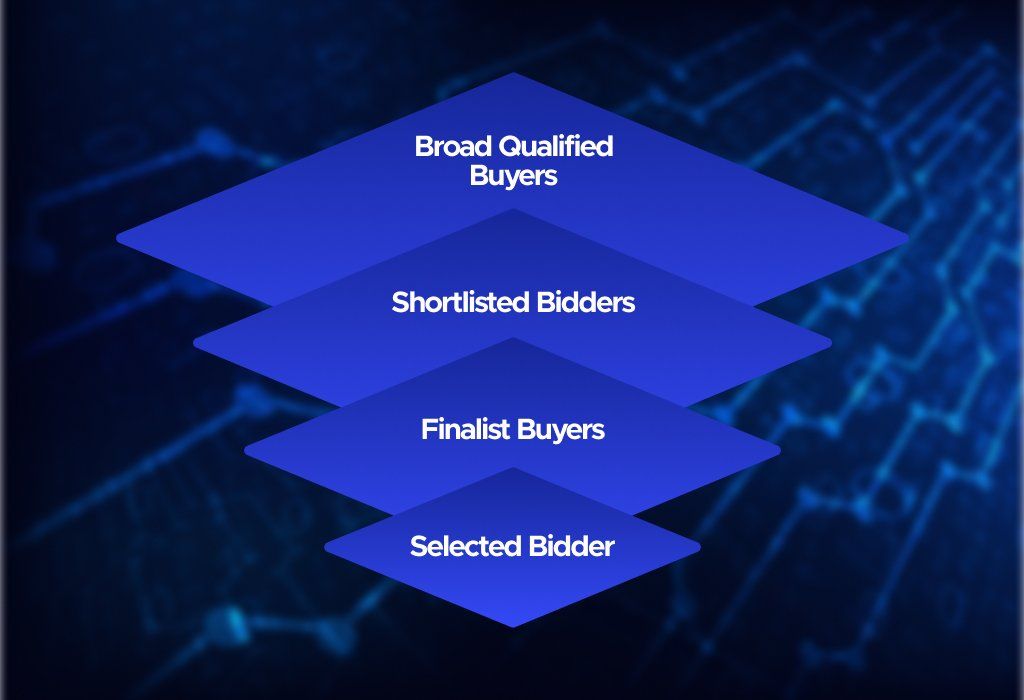
One of the main challenges in competitive bidding is deciding when to disclose particular information.
A seller may initially provide high-level transaction materials to a broad group of qualified buyers. After the first round, shortlisted bidders can receive access to more detailed financial, legal, commercial, or operational information.
This staged approach can help reduce unnecessary exposure while still giving serious bidders the information they need to conduct due diligence.
Boundeal supports this approach through its participant and permission controls, allowing the sell-side team to structure access around different bidder groups and stages of the process.
The result is a more controlled disclosure process rather than giving every participant access to the entire data room from the beginning.
Confidentiality Agreements and Watermarking
Competitive bidding involves sharing sensitive information with parties that may ultimately compete against one another for the same asset.
Confidentiality Agreement
A Confidentiality Agreement can be used as an important access condition before participants begin reviewing sensitive project materials.
This creates a clear confidentiality step within the transaction workflow and helps the sell-side team establish the terms under which information is being shared.
Watermarking
Watermarking adds another layer of control when documents are reviewed or shared.
User-specific information can be included in document previews, helping identify the intended recipient and discouraging unauthorized distribution.
Watermarking should not be treated as a guarantee that information cannot be copied or leaked. Its value is in creating an additional deterrent and traceability layer around sensitive information.
AI Deal Assistant for Large Data Rooms
As due diligence progresses, a data room can contain a large number of financial, legal, commercial, and operational documents.
Finding a specific piece of information manually can take time, particularly for advisers reviewing extensive document collections.
The AI Deal Assistant can help users navigate the data room using natural-language queries.
For example, a bidder may need to locate:
a change-of-control provision in a contract;
information about a particular customer;
a specific financial figure;
relevant information across multiple documents.
Instead of manually opening folders and reviewing files one by one, users can use the AI Deal Assistant to help locate relevant information more efficiently.
AI should support the diligence process rather than replace professional review and analysis.
Project Dashboard: Keeping the Process Organised
The Project Dashboard provides a central overview of the VDR project.
For sell-side teams and advisers, this creates a single place to navigate the project and work with its core components, including documents and participants.
This becomes particularly useful in competitive bidding, where multiple buyer groups and advisers may be involved at the same time.
Rather than managing the process across disconnected tools, the deal team can work from a central project environment.
How Boundeal VDR Supports Competitive Bidding
Boundeal brings the core components of a competitive bidding workflow together in one VDR environment:
Project Dashboard. Provides a central overview of the VDR project and its key components.
Documents. Organises transaction materials in a structured data room.
Participants. Helps manage the users involved in the transaction.
Confidentiality Agreement. Establishes confidentiality requirements before sensitive information is reviewed.
Watermarking. Adds a deterrent and traceability layer to document sharing.
AI Deal Assistant. Helps users find relevant information across large document collections.
Together, these capabilities support a more structured approach to managing information throughout a competitive M&A process.
Common Red Flags in Competitive Bidding Workflows
Deal teams should pay particular attention to several common problems:
Giving every bidder the same access despite differences in stage or role.
Disclosing sensitive information too early before a bidder has progressed in the process.
Sharing documents through uncontrolled email attachments instead of a central environment.
Poor document organisation that makes information difficult to locate.
Allowing access before confidentiality requirements are accepted.
Failing to maintain clear control over participants as bidders enter or leave the process.
These issues can create unnecessary operational friction and make a competitive process harder to manage.
Frequently Asked Questions
What is a competitive bidding process in M&A?
A competitive bidding process is an M&A process in which multiple prospective buyers evaluate an opportunity and submit offers within a structured timetable.
Why do sellers use a VDR for competitive bidding?
A VDR helps sellers organise transaction documents, manage participant access, support staged disclosure, and maintain confidentiality while multiple buyer groups review the opportunity.
How should documents be organised in an M&A bidding process?
Documents should be structured into clear categories such as financial, commercial, legal, IP, HR, and transaction materials. This makes the data room easier for bidders and advisers to navigate.
Why is staged disclosure important in M&A?
Different bidders may reach different stages of the process at different times. Staged disclosure allows sellers to provide more sensitive information as a bidder progresses through the transaction.
How does watermarking help protect M&A documents?
Watermarking adds identifying information to document previews, creating a deterrent against unauthorized distribution and an additional traceability layer.
How can AI help buyers review a VDR?
An AI Deal Assistant can help users search large document collections using natural-language queries, making it easier to locate relevant information during due diligence.
Conclusion
Managing a competitive bidding process requires more than collecting documents in one place. Sellers need a structured way to organise information, manage participants, control disclosure, and protect sensitive materials as the process develops.
A VDR such as Boundeal provides this structure through Project Dashboard, Documents, Participants, Confidentiality Agreement, Watermarking, and AI Deal Assistant.
For sell-side teams, the goal is straightforward: give qualified bidders the information they need, at the right stage, while keeping control over the data room throughout the transaction.