Key takeaways
Virtual data rooms allow companies to run deals without physical presence, which is critical in countries with limited infrastructure.
VDRs reduce the risk of data breaches through access control, encryption, and full transparency of user activity.
Automation and AI tools speed up due diligence and reduce the workload on internal teams.
In cross-border transactions, VDR platforms create a single workspace for all parties and simplify communication.
Adoption of VDRs is growing faster in emerging markets due to digitalization and increasing international investment activity.
In the coming years, VDRs will evolve toward AI-driven solutions and full transaction management systems, not just document storage.
In many emerging markets, deals are delayed not because of a lack of interest, but because of infrastructure gaps, higher risks, and complex coordination. Virtual Data Rooms solve these problems by enabling secure document sharing, faster due diligence, and smoother cross-border transactions without unnecessary travel or administrative overhead.
The rise of VDR in emerging markets
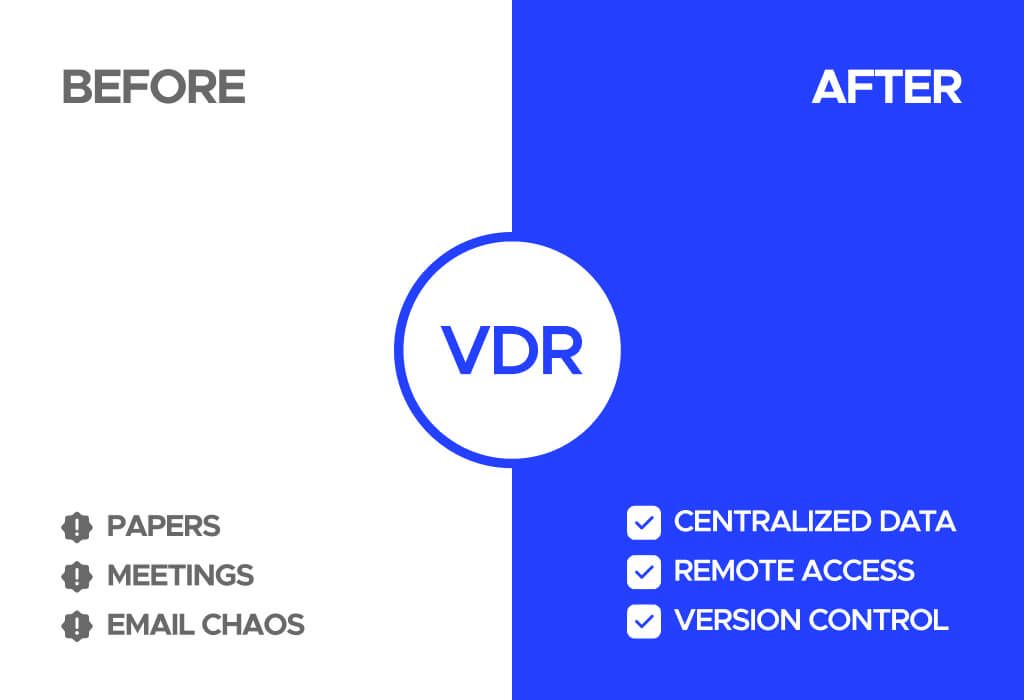
If you look at emerging markets, there is a clear pattern — doing things offline is becoming harder and less efficient. Meetings, travel, and paper-based processes slow deals down and increase costs.
This is exactly why VDRs have become such an important tool. They allow companies to store all documents in one place and provide access to deal participants from anywhere in the world. It doesn’t matter whether the investor is in London and the target company is in Brazil or India — everything happens in one digital environment.
Another important factor is asynchronous work. People in different time zones can log in and review documents when it’s convenient for them, without blocking the process. Deals no longer depend on everyone being available at the same time.
VDRs also help bring structure to what is often a chaotic process. Instead of hundreds of emails and multiple document versions, there is a clear system, version control, and full visibility. This reduces mistakes and makes the process easier to manage for everyone involved.
For many companies in emerging markets, VDRs are essential for competing in international deals.
Real cases and key numbers
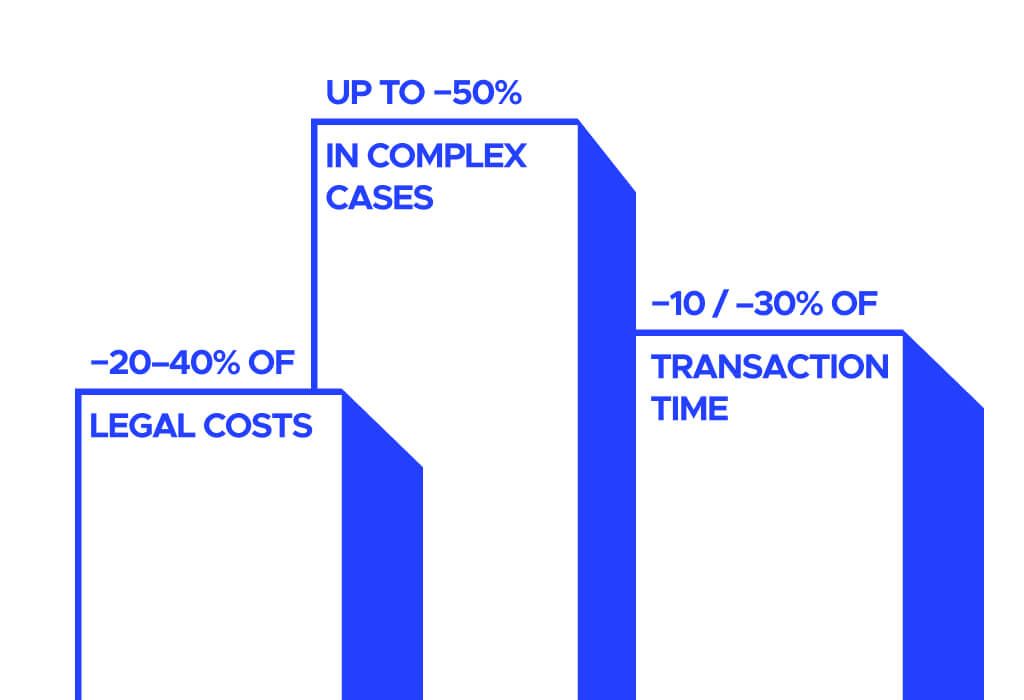
Industry data shows that implementing virtual data rooms can reduce M&A transaction timelines by 10–30% on average, and by up to 50% in document-heavy deals. This impact is especially noticeable in regions with limited infrastructure, where a significant amount of time was previously spent on logistics and coordination.
In one example, a private equity fund in Southeast Asia used a VDR to process more than 15,000 documents during due diligence without requiring physical presence. As a result, the deal was completed nearly one month faster.
In Latin America, financial advisors report a 20–40% reduction in legal costs due to automated document review and centralized communication. At the same time, the number of errors and duplicate requests dropped significantly.
Security and compliance in emerging markets
One of the biggest challenges in emerging markets is data security. Cyber threats are increasing, while resources for protection are often limited.
VDR platforms address this through built-in security features, including:
Data encryption.
Two-factor authentication.
Granular access permissions.
Full activity tracking.
This means companies can clearly see who accessed a document, when it was opened, and what actions were taken. This level of transparency significantly reduces the risk of data breaches and improves overall data room security.
Beyond security, compliance is another critical factor. If a company is working with international investors, it must meet standards such as GDPR or SOC 2. Without this, many deals simply cannot move forward.
VDR security and compliance capabilities help solve this on a technical level:
Data can be stored in specific jurisdictions.
Access can be restricted by country or user role.
Permissions can be revoked instantly.
This is especially important in cross-border transactions, where multiple legal frameworks apply simultaneously.
As a result, VDR platforms are no longer just storage tools — they become a foundation for trust between parties. And in M&A transactions, trust often determines whether a deal moves forward.
How VDRs streamline due diligence and risk management
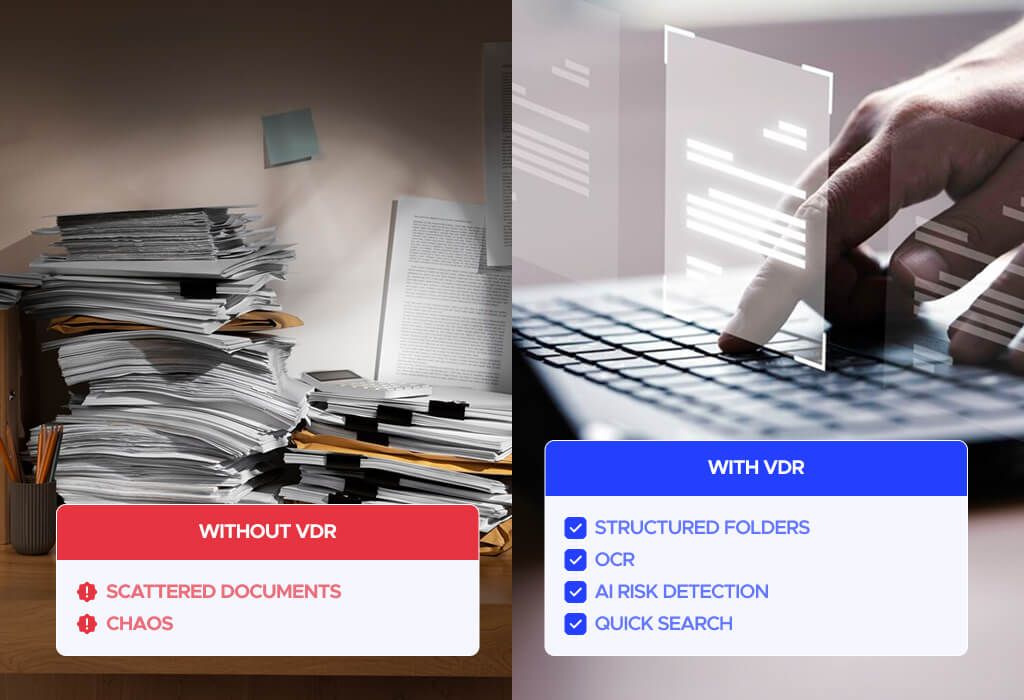
In emerging markets, due diligence often turns into a slow and fragmented process. Documents are scattered, the structure is missing, and access to experienced professionals can be limited.
VDR for M&A in developing countries helps solve these issues by centralizing all data in one place. This alone saves a significant amount of time, as teams no longer need to search for files across emails or messaging platforms.
Modern VDRs also include automation and AI-driven tools that:
Organize and index documents automatically.
Use OCR to recognize text.
Quickly locate relevant information.
Highlight potential risks.
This is especially valuable when dealing with large volumes of documents and limited internal resources.
Another major advantage is transparency. Teams can track:
Who accessed the system.
Which documents were reviewed.
Where the process is slowing down.
This makes it easier to identify bottlenecks early and address them before they impact the deal. Communication also becomes more structured. Built-in Q&A modules allow participants to ask and answer questions directly within the platform, without losing context. Everything is recorded and easy to track.
As a result, VDRs in transaction management make due diligence faster, more structured, and easier to control — reducing the risk of errors and deal delays.
The role of VDRs in cross-border M&A transactions

When deals involve multiple countries, complexity increases significantly. Different legal systems, document standards, and expectations can quickly turn the process into chaos without the right tools.
This is where VDR in cross-border M&A becomes essential. It creates a single, structured environment for all participants involved in international deals.
Within a VDR platform, teams can:
Organize documents by jurisdiction.
Grant access only to relevant parties.
Track changes and maintain version control.
This removes confusion and makes the entire process more manageable.
Time is another critical factor. When deal participants are located in different countries, constant synchronization is almost impossible. VDR platforms solve this by enabling asynchronous work — each participant can log in when convenient, and the process continues without delays.

VDRs also help address regulatory differences across regions by allowing companies to:
Store data in specific jurisdictions.
Control who can access sensitive information.
Track and log all critical actions.
This is especially important in cross-border transactions between regions such as Europe, Asia, and Latin America, where legal requirements can differ significantly.
As a result, VDRs reduce operational friction and make international deals more predictable and easier to manage.
The future of VDRs in emerging markets
Today, VDRs are already a standard tool in deal execution, but their role will continue to grow.
The main drivers are clear: increasing cross-border transactions and ongoing digital transformation. Companies in emerging markets are expanding globally, and without tools like VDRs, this process becomes difficult to scale.
At the same time, VDRs are evolving beyond simple document storage. They are becoming full platforms for VDRs in transaction management, with features that:
Automatically analyze documents.
Identify potential risks.
Support decision-making.
This shift will accelerate further with the integration of AI.
Accessibility is also improving. Many providers are moving to SaaS models, making VDR solutions available even for small and mid-sized companies. This is particularly important in developing countries, where budgets and resources are often limited.
From a regional perspective:
Asia remains the fastest-growing market.
Africa and Latin America are rapidly catching up.
The Middle East is strengthening its position through investment growth.
All of this indicates that Virtual Data Rooms in emerging markets will become a core part of the infrastructure for any serious business transaction.
Conclusion
Virtual Data Rooms in emerging markets have evolved from a convenient tool into a critical component of modern deal-making. They improve deal speed, reduce operational risks, and simplify international collaboration.
VDR for M&A in developing countries enables structured workflows, secure data sharing, and better coordination across stakeholders. Strong VDR security and compliance capabilities help companies meet global standards and build trust.
As VDR in cross-border M&A and transaction management continues to develop, it is becoming essential for executing complex international transactions and supporting long-term business growth.
FAQ
What is a VDR in simple terms?
A VDR is a secure online platform where companies store and share sensitive documents during transactions. Unlike standard cloud storage, it includes advanced access control, activity tracking, and built-in protection against data leaks.
How is a VDR different from Google Drive or Dropbox?
The key difference is control and security. A VDR allows you to restrict access to specific documents, prevent downloads, add watermarks, and track every user action — features that are critical for high-stakes transactions.
Why are VDRs especially important in emerging markets?
Because they remove the need for physical infrastructure. Companies can run deals entirely online without travel, paper documents, or in-person meetings, which makes the process faster and more scalable.
How do VDRs speed up transactions?
By structuring data and automating workflows. All documents are stored in one place, search is fast, and many tasks are handled automatically, reducing time spent on review and coordination.
How secure are VDR platforms?
When properly configured, they are significantly more secure than traditional file-sharing methods. They use encryption, multi-factor authentication, and strict access controls to protect sensitive data.
Will VDRs continue to evolve?
Yes, and rapidly. The main direction is AI-driven analysis, automation, and integration with other business systems.