Get access
  1. Home
  2. Blog

A Step-by-Step Guide to Conducting a Security Audit

2025-11-24

Conducting a company security audit is a crucial step in protecting business assets, ensuring regulatory compliance, and mitigating risk. A thorough information security audit examines policies, processes, infrastructure, and applications to ensure that sensitive data is secure. Organizations of all sizes can benefit from a structured approach to identify vulnerabilities, validate controls, and prioritize remediation.

1. Define scope and objectives

security auditing

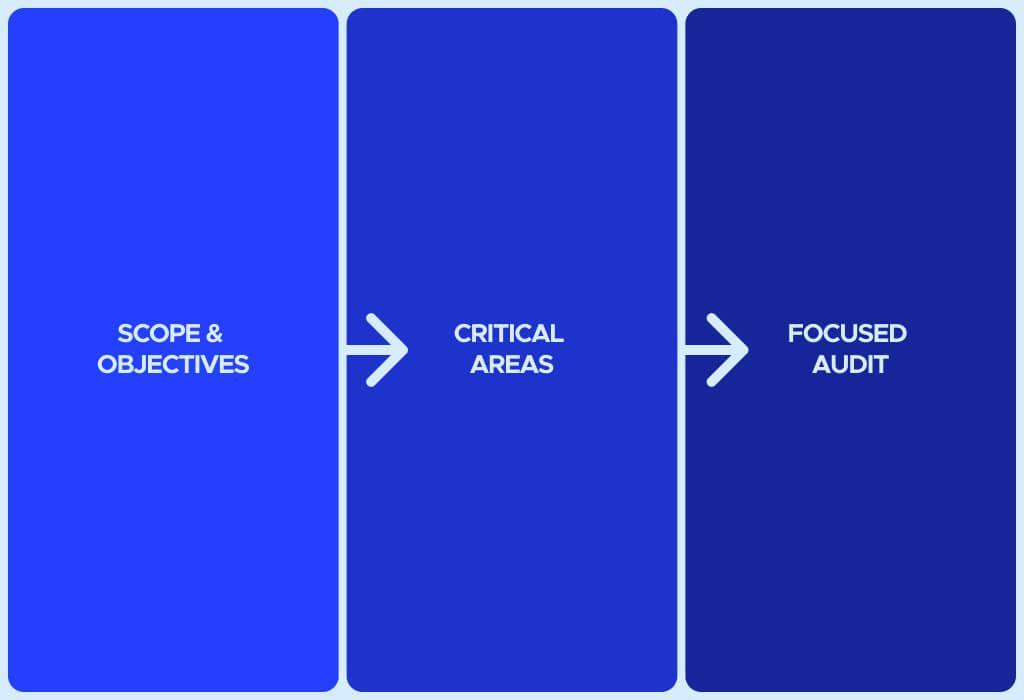
The first step in security auditing is establishing the scope and objectives. Clearly defining what systems, departments, and processes will be included ensures the audit is focused and effective. Objectives should align with business priorities, regulatory requirements, and risk appetite.

Typical goals include:

  • Identifying gaps in controls and procedures

  • Verifying compliance with industry standards

  • Assessing readiness for potential cyber threats

  • Providing actionable recommendations to management

A well-defined scope prevents wasted resources and ensures auditors address the most critical areas.

2. Map the environment


security auditing-2.jpg

Mapping the organization’s IT environment is crucial before beginning testing. This involves documenting networks, servers, endpoints, cloud services, applications, and data flows. Accurate environment mapping helps auditors understand interdependencies and potential security weaknesses.

Key steps include:

  • Creating an asset inventory

  • Identifying data classification and sensitive information locations

  • Understanding network architecture and segmentation

  • Listing third-party services and integrations

A comprehensive map ensures all relevant components are considered during the security audit.

3. Select the audit toolkit and methods

security auditing-3.jpg

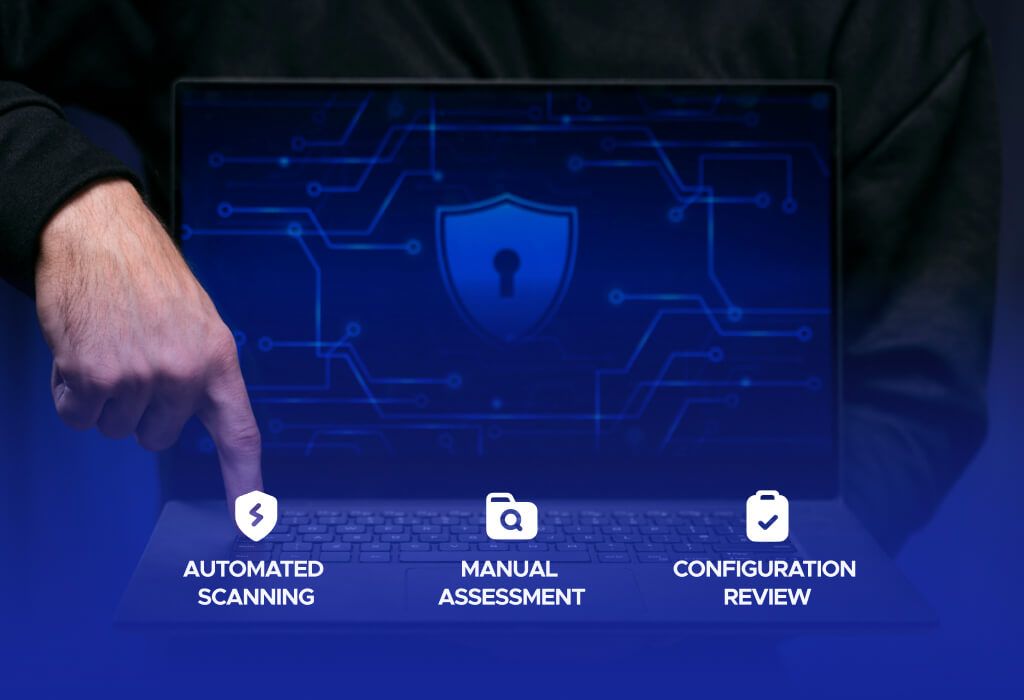
Choosing the right tools and methods is crucial for a successful audit. Auditors should use a combination of automated scanning software, configuration analyzers, and manual assessment techniques.

Common approaches include:

  • Automated vulnerability scanning to quickly detect known issues

  • Configuration reviews to ensure settings comply with best practices

  • Policy and procedure analysis for governance compliance

  • Interviews and observation to verify operational controls

Selecting appropriate tools tailored to the organization’s environment ensures accurate and actionable audit results.

4. Evaluate governance and policies

A strong governance framework is the backbone of effective security auditing. This step reviews organizational policies, standards, and procedures to ensure they align with regulatory requirements and industry best practices.

Key areas to examine include:

  • Information security policies and their enforcement

  • Data protection and privacy compliance

  • Incident response and reporting protocols

  • Risk management and internal audit processes

Assessing governance helps identify gaps in accountability, oversight, and formalized processes that could expose the company to threats or compliance issues.

5. Test identity and access controls

Identity and access management (IAM) is a critical component of any company's security audit. Testing access controls ensures that only authorized personnel can access sensitive systems and data.

Steps include:

  • Reviewing user roles, permissions, and access logs

  • Verifying multi-factor authentication (MFA) and password policies

  • Checking segregation of duties and administrative rights

  • Conducting account provisioning and de-provisioning audits

Proper IAM reduces the risk of insider threats and limits the potential impact of compromised credentials.

6. Review infrastructure and configuration


company security audit

Infrastructure and system configuration are common sources of vulnerabilities. During a security audit, auditors review servers, networks, endpoints, and devices to ensure they are securely configured and maintained.

Key considerations include:

  • Patch management and update processes

  • Firewall, router, and switch configuration

  • Secure configuration of operating systems and applications

  • Network segmentation and access restrictions

Regular infrastructure reviews ensure that technical controls support organizational security goals and mitigate potential attack vectors.

7. Assess cloud and SaaS posture

Cloud and SaaS platforms are integral to modern businesses, but they introduce unique security challenges. During a security audit, evaluating cloud posture ensures that data storage, access, and configurations meet organizational standards.

Key steps include:

  • Reviewing cloud service configurations and access controls

  • Ensuring encryption for data at rest and in transit

  • Assessing third-party vendor compliance and security certifications

  • Monitoring logs and activity for unusual patterns

Proper assessment of cloud and SaaS environments reduces exposure to misconfigurations and data breaches.

8. Validate application security

Applications are often the entry point for cyber threats. Testing application security ensures that software, whether internally developed or third-party, does not contain vulnerabilities.

Steps typically involve:

  • Source code review for secure coding practices

  • Testing authentication, session management, and input validation

  • Checking for common vulnerabilities like SQL injection or XSS

  • Assessing patch management and update processes

Application validation protects sensitive information and reinforces the organization's overall security posture.

9. Run vulnerability and penetration testing


security audit

Vulnerability scanning and penetration testing simulate real-world attacks to uncover weaknesses. These methods provide actionable insights for remediation during a company security audit.

Key activities include:

  • Automated vulnerability scanning to detect known security issues

  • Manual penetration testing to exploit potential gaps

  • Prioritizing findings based on risk and business impact

  • Creating remediation plans with timelines and responsibilities

Combining scanning and penetration testing ensures that both systemic and exploitable vulnerabilities are addressed.

10. Verify monitoring and incident readiness

Effective monitoring and incident response are essential for a proactive security posture. During a security audit, auditors evaluate whether systems can detect, respond to, and recover from security events efficiently.

Key checks include:

  • Reviewing security information and event management (SIEM) tools

  • Ensuring alerting thresholds are correctly configured

  • Verifying incident response plans, roles, and escalation procedures

  • Conducting tabletop exercises to test readiness

Validating monitoring and readiness ensures that the organization can minimize damage and respond swiftly to threats.

11. Present findings and recommendations

The final step in how to do a security audit is compiling and presenting the results. Clear reporting ensures that management and stakeholders understand risks and required actions.

  • Effective reports include:

  • Executive summary highlighting key risks and priorities

  • Detailed findings with evidence and impact assessment

  • Actionable recommendations for remediation

  • Suggested timelines and responsible teams for follow-up

Communicating audit results clearly facilitates informed decision-making and strengthens the organization’s overall security posture.

A thorough company security audit provides a clear view of an organization’s strengths and vulnerabilities. By systematically evaluating governance, infrastructure, applications, cloud services, and incident readiness, businesses can prioritize remediation, enhance protection, and reduce risk exposure. Regular audits not only ensure compliance but also build confidence among stakeholders, supporting long-term operational resilience and security maturity.


Related posts

ai m&a

AI in M&A: A New Era of Efficiency and Accuracy

Artificial intelligence is transforming mergers and acquisitions. What was once a slow and fragmented process is becoming more precise, structured, and scalable. AI now supports every stage of dealmaking by delivering efficiency, improving accuracy, and reducing uncertainty for decision-makers. The Current State of M&A Processes Global M&A activity continues to reach trillions of dollars annually, yet the core process remains highly manual. Legal teams must review large volumes of contracts, financial experts evaluate historical data, and compliance officers examine complex regulatory requirements. Each stage demands extensive hours and exposes transactions to risks of human oversight. Errors in document review or valuation often lead to mispriced deals, unanticipated liabilities, or regulatory delays. Research shows that 60% of failed acquisitions cite poor due diligence or flawed assumptions as a cause. On average, the due diligence phase consumes up to 12 weeks, creating costs that can exceed millions of dollars for large transactions. Companies now seek methods to streamline this process while ensuring accuracy. Where AI Fits in the M&A Lifecycle Artificial intelligence is not limited to a single function. It is now present across the M&A lifecycle, from sourcing new opportunities to managing post-deal integration. AI applications include automated contract analysis, predictive financial modeling, and real-time compliance checks. AI in Due Diligence Due diligence demands review of contracts, intellectual property, liabilities, and litigation history. Manual review is both costly and time-consuming. AI-powered due diligence tools automate this stage by scanning thousands of pages, identifying critical clauses, and highlighting anomalies. For example, AI can detect change-of-control provisions in supplier agreements, flag pending lawsuits, or compare employee contracts for hidden obligations. In cross-border transactions, AI can also review compliance with labor, tax, and antitrust regulations. By reducing manual workload, AI shortens timelines and improves the reliability of findings. AI in Deal Sourcing and Target Identification Identifying acquisition targets requires assessing thousands of companies across industries. Traditional sourcing relies on personal networks and static reports. AI M&A platforms can analyze structured and unstructured data, detect signals of market growth, and rank potential targets based on strategic fit. For instance, AI can monitor patent filings to identify technology firms with strong innovation pipelines or scan regulatory databases to highlight pharmaceutical companies with approved treatments. This gives dealmakers early visibility into opportunities that may not yet be on the market. AI in Valuation and Financial Modeling Valuation determines whether a deal creates shareholder value. Traditional models depend on static assumptions that may not capture real-world volatility. AI enhances valuation by integrating real-time market data, customer trends, and competitor performance. Machine learning can run thousands of stress-test scenarios, highlight sensitivity in assumptions, and uncover hidden correlations between indicators. In global transactions, AI can model currency risks and regional regulatory costs. This produces forecasts with higher accuracy and gives negotiators stronger leverage. Benefits of AI Integration in M&A The adoption of AI in mergers and acquisitions is reshaping how organizations plan, evaluate, and close deals. Its benefits go beyond efficiency to include improved accuracy, stronger governance, and long-term value creation. Accelerated document review: AI systems can process thousands of pages of contracts and compliance documents within hours, compared to weeks of manual work. This not only reduces transaction time but also cuts legal expenses and minimizes bottlenecks during negotiations. Beyond these measurable advantages, the impact of AI is strategic. Companies report not only faster closings but also higher success rates in achieving post-deal objectives. Automation of repetitive analysis frees human experts to focus on negotiation tactics, cultural integration, and long-term growth planning. In effect, AI shifts resources away from administrative burden and toward strategic value creation, helping organizations capture synergies more effectively. Real-World Applications Several industries already demonstrate the impact of AI-driven dealmaking. In the technology sector, AI tools help evaluate intellectual property portfolios and code repositories, accelerating software firm acquisitions. In pharmaceuticals, AI reviews regulatory approvals, clinical trial results, and patent protections, providing clearer assessments of long-term risks. Private equity firms also leverage AI to screen thousands of small and mid-sized businesses. Algorithms identify firms with strong digital adoption or customer growth, enabling investors to prioritize high-potential targets. These practical uses confirm that AI is no longer experimental but a competitive advantage in active transactions. Challenges and Limitations Despite clear advantages, adoption of AI also presents challenges. Firms must ensure compliance, transparency, and cultural readiness. Data Privacy and Regulatory Compliance AI requires large volumes of sensitive data. Regulations such as GDPR and CCPA impose strict controls on collection and processing. Mishandling confidential information can lead to fines and reputational harm. Companies must establish strong governance and monitor AI-driven systems to remain compliant across jurisdictions. Model Bias and Interpretability Machine learning reflects the data on which it is trained. If data is biased, outcomes may mislead decision-makers. Transparency is critical: executives and regulators must understand how results are generated. Without interpretability, stakeholders may lose trust in AI-driven conclusions, limiting adoption. Integration with Existing Tools and Culture AI in M&A: A New Era of Efficiency and Accuracy Many organizations still depend on outdated systems. Integrating AI into these frameworks requires investment in infrastructure. Cultural resistance is also a barrier. Professionals may perceive automation as a threat to their roles. Successful adoption depends on training, workflow redesign, and leadership support. The Future of AI in M&A Analysts forecast that by 2030, most transactions above $500 million will rely on AI support in every stage. Global investment in AI for corporate transactions is projected to grow at double-digit rates. Natural language processing will review negotiation transcripts, predictive analytics will forecast post-deal performance, and real-time monitoring will track integration progress. Cross-border transactions will see major gains. AI can map complex regulatory differences, identify antitrust risks, and simulate compliance costs before execution. Secure collaboration platforms will allow teams in multiple regions to work simultaneously within AI-enhanced virtual data rooms, reducing delays and improving alignment. In the long term, M&A capabilities will expand from operational support to strategic guidance. AI will help boards identify consolidation opportunities, forecast industry-wide synergies, and even simulate competitor responses to acquisitions. Conclusion – A Smarter, Faster Deal Environment Artificial intelligence is redefining how mergers and acquisitions are executed. From AI for contract analysis to predictive financial modeling, its impact is measurable: faster timelines, lower costs, and improved accuracy. Firms adopting AI now gain a decisive competitive edge in global dealmaking. In this environment, platforms such as Boundeal demonstrate the future of transaction management. They create a smarter, faster deal ecosystem by combining advanced automation with practical usability. AI does not replace human expertise but strengthens it, enabling decision-makers to act with greater confidence, precision, and strategic foresight.

Read more
blog image

Best Practices for Safe and Secure File Sharing

Secure file sharing is critical in today’s interconnected world, where data breaches and cyberattacks threaten sensitive information. Businesses, professionals, and individuals must protect confidential data to avoid financial losses, legal consequences, and reputational damage. Organizations can ensure safe file sharing by adopting robust tools, implementing clear security policies, and fostering a culture of vigilance. This guide provides actionable strategies to safeguard data integrity, confidentiality, and compliance during file transfers and collaboration. Why Secure File Sharing Matters Today The rise in cyber threats underscores the importance of secure file sharing. Sophisticated attacks, such as phishing, ransomware, and man-in-the-middle exploits, target unprotected data. Key risks include: Secure file sharing practices mitigate these risks, ensuring data protection and regulatory adherence while fostering stakeholder confidence. Use a Secure File Sharing Service A reliable file-sharing platform forms the foundation of data security. Choose services designed with advanced security features to protect sensitive information. Essential criteria include: Platforms like Boundeal offer secure file collaboration with robust encryption and intuitive design, enabling efficient and protected workflows for businesses of all sizes. Enable Encryption for Data in Transit and at Rest Encryption is a non-negotiable safeguard for secure file sharing. It ensures files remain unreadable to unauthorized parties. Implement these measures: These steps ensure that documents remain protected during transfer and storage, supporting secure sharing practices across networks. Implement Access Controls and Permission Settings Granular access controls restrict file access to authorized users, reducing exposure risks. Best practices include: These controls ensure precise access rights management, minimizing the risk of data leaks. Use Strong Passwords and Multi-Factor Authentication (MFA) This is due to weak passwords, the main cause of security breaches. Enhance the security of your account with: MFA adds a critical layer of protection, significantly reducing unauthorized access to secure file sharing storage. Tools and Technologies That Support Secure Sharing Selecting the right tools is essential for implementing file share best practices. Two prominent solutions stand out: Virtual Data Rooms (VDRs) VDRs are purpose-built for high-stakes scenarios like mergers, acquisitions, legal reviews, or financial audits. They offer: Solutions like Boundeal provide secure VDR environments, balancing robust security with user-friendly interfaces for efficient collaboration. Encrypted Cloud Storage Providers Cloud storage solutions offer scalability and accessibility for secure file sharing. Choose providers with: These platforms enable secure sharing of documents across geographically dispersed teams and organizations. Set Expiration Dates and Access Time Limits Limiting the duration of file access reduces the risk of unauthorized exposure. Implement these strategies: This approach ensures files remain accessible only for the necessary duration, enhancing security. Regularly Audit and Monitor File Sharing Activity Continuous monitoring and auditing detect potential threats and ensure compliance. Key actions include: Regular audits maintain accountability and strengthen secure file-sharing practices over time. Backup Your Files with Version Control Backups protect against data loss from cyberattacks, human errors, or system failures. Implement: Version control ensures critical files remain accessible and intact, supporting secure file collaboration. Educate and Train Teams on Secure Practices Human error is a leading cause of data breaches. Comprehensive training programs should cover: Training fosters a security-conscious culture, reducing risks across the organization. Stay Updated with Security Patches and Software Updates Outdated software creates exploitable vulnerabilities. Best practices include: Keeping software current minimizes risks and strengthens secure file sharing storage. Integrate Secure File Sharing into Workflows Embedding security into daily operations ensures consistent adoption. Key steps include: Final Thoughts – Secure Sharing Is Everyone’s Responsibility Secure file sharing is a collective effort requiring commitment from organizations and individuals. Businesses must deploy advanced tools, enforce encryption, and maintain strict access controls. Employees must adhere to best practices and remain vigilant against threats. Regular audits, backups, training, and updates further strengthen defenses. By prioritizing these file share best practices, organizations can protect sensitive data, ensure compliance.

Read more
blog image

Due Diligence Report: A Complete Guide

Before any merger, acquisition, or investment, companies must confirm that their decisions are based on verified facts and information. A due diligence report provides this foundation by summarising findings from a detailed review of the target business. It helps identify potential risks, assess value, and ensure transparency before formal agreements are signed. What Is a Due Diligence Report? A due diligence report is a structured document that summarizes verified information collected during an investigation of a company, project, or investment target. It helps stakeholders assess value and identify potential risks. Such a report typically outlines the scope of the review, sources of information, and analytical methods used during the evaluation. It then presents a summary of findings, conclusions, and recommendations for next steps in the transaction process. Why Do We Need a Due Diligence Report? A due diligence report serves as a foundation for informed business decisions. It ensures that investors, buyers, and partners understand the actual condition of a company before completing a deal. This process also protects against hidden liabilities and regulatory breaches that may appear after closing. The main reasons for preparing such a document include: By completing this review, businesses reduce uncertainty and establish a factual base for negotiations, contract drafting, and long-term planning. It also strengthens investor trust and improves the quality of decision-making at every stage of a transaction. Types of Due Diligence Reports Due diligence examines various areas depending on the deal, industry, and company size. Each type focuses on a specific aspect of business operations, providing a comprehensive view of performance, stability, and compliance. Financial Due Diligence Assesses resource management and financial stability, including: audited/unaudited statements, cash flow, tax compliance, debt, forecasts, and accounting policies. It confirms whether numbers are reliable and obligations can be met. Legal Due Diligence Reviews legal standing, contracts, licenses, IP, litigation, and regulatory compliance to prevent hidden claims and post-deal conflicts. Operational Due Diligence Evaluates efficiency and sustainability of daily operations: production, cost control, maintenance, technology use, and reporting structures. It ensures the business model can deliver stable performance. Commercial / Market Due Diligence Analyzes market position, growth potential, competition, pricing, sales channels, and customer retention to define realistic targets and reduce valuation risks. HR / Management Due Diligence Examines leadership, workforce stability, turnover, compensation, compliance, and succession planning, revealing if people and culture support strategic goals. IT / Cybersecurity Due Diligence Assesses software, hardware, network security, data privacy, IT governance, and incident response to prevent disruptions and protect sensitive data. Vendor / Supplier Due Diligence Focuses on third-party relationships, supplier contracts, delivery, quality, concentration risk, and ethical compliance to safeguard operations and reduce interruptions. How to Write a Due Diligence Report Sample Writing a due diligence report of a company requires a clear process, structured analysis, and consistent documentation. The report should present verified data in a manner that enables decision-makers to assess risks and draw informed conclusions. Each section must be fact-based, objective, and supported by credible sources. The preparation of a due diligence report usually involves several stages: Each part of the report must lead logically to the next one. The financial review supports the legal and operational sections, while the risk summary connects all findings into a complete picture. When writing, clarity and structure are essential. Each section should start with a short overview, followed by detailed findings and a concise conclusion. Tables, bullet points, and visuals may be used to make complex information easier to read and interpret. The final version of the report should undergo internal review and fact-checking before being shared with investors or management. It ensures that the document is accurate, balanced, and suitable for decision-making. What Should Be in a Due Diligence Report? A comprehensive due diligence report for a company should encompass all information that enables investors or partners to assess its financial health, legal standing, and operational capabilities. The document must be structured so that readers can easily trace conclusions back to verified data sources. Typical sections of a due diligence report include: Each section should clearly state both strengths and weaknesses of the reviewed company. The goal is to present facts that help decision-makers assess overall stability and prospects. A well-organised structure also helps ensure comparability between different reports. When due diligence is performed for multiple targets, consistency in layout and terminology facilitates easier cross-analysis and informed decision-making. What Is a Due Diligence Questionnaire? A due diligence questionnaire (DDQ) is a structured list of questions sent to a target company before or during the review process. It helps gather essential information quickly and ensures that the same areas are covered in each transaction. The questionnaire simplifies data collection and reduces the risk of missing critical details. Common topics covered in a due diligence questionnaire include: Using a questionnaire ensures a consistent and systematic approach to due diligence. It also helps both parties understand expectations and prepare supporting documents in advance. A completed DDQ serves as the foundation for a deeper analysis. The answers highlight where further verification or clarification is needed, helping the reviewing team focus on high-risk or complex areas during the next stage of the process. Conclusion A due diligence report consolidates financial, legal, operational, commercial, HR, IT, and supplier insights into a structured document. Proper preparation enhances transparency, mitigates risks, and supports strategic planning. Using a consistent format and referencing sample reports ensures reliability and clarity, enabling stakeholders to assess opportunities and challenges effectively before finalizing any transaction.

Read more
View All