Raising capital is a fundamental step for companies seeking to grow, innovate, or enter new markets. The process involves selecting the right funding type, understanding investor expectations, and balancing valuation with ownership control. This guide explains what a capital raise is, outlines key stages and investor profiles, and shares practical insights to help businesses execute effective and transparent fundraising campaigns.
What is a capital raise?
A capital raise definition is the process of securing external funds to support a company’s growth, operations, or strategic goals. This may involve issuing equity, taking on debt, or using hybrid instruments that combine features of both. The main objective is to attract financial resources that allow a business to expand faster than it could through internal cash flow alone.
In simple terms, raising capital means exchanging part of future profits or ownership for immediate financial support. It helps a company scale production, enter new markets, or fund innovation. Whether through venture capital, private equity, or corporate bonds, every raise reflects a trade-off between control, cost, and growth potential.
Understanding what a capital raise entails is essential for entrepreneurs, CFOs, and investors alike. It defines how risk, reward, and governance are distributed and how the company positions itself for future funding rounds.
Funding types and when to use them
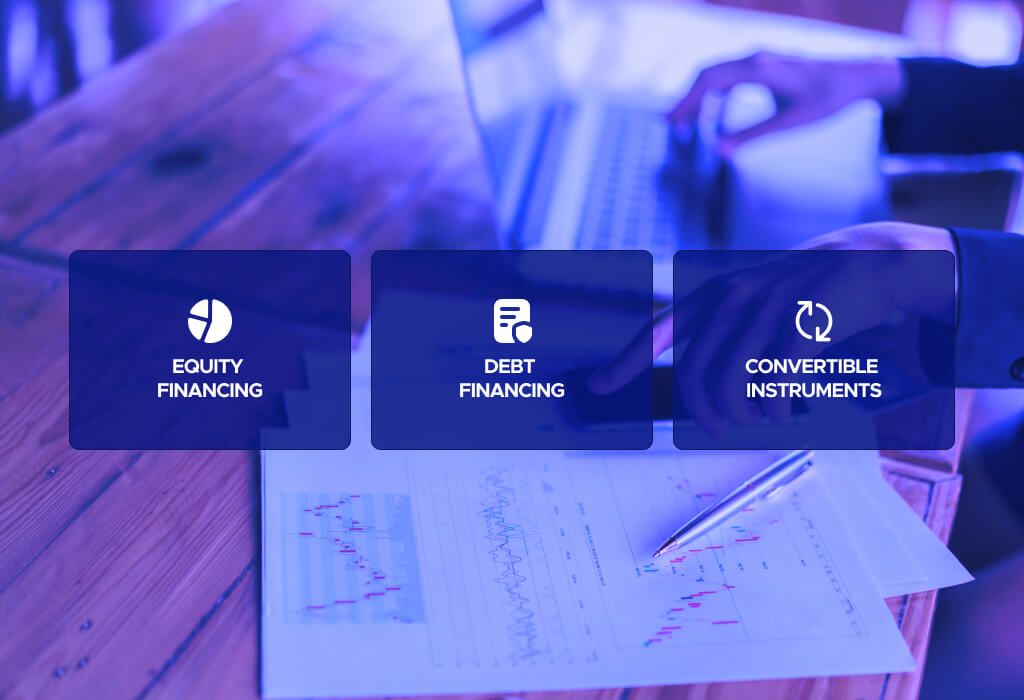
There are several types of capital raising, each suited to different business stages and risk profiles. Choosing the right form of funding depends on cash-flow stability, ownership goals, and investor expectations.
Equity financing. This involves selling company shares to investors. It’s ideal for startups and growth-stage firms that prioritize expansion over short-term profitability. Equity investors take on higher risk but expect substantial returns if the business succeeds.
Debt financing. Debt raising means borrowing capital with the obligation to repay it with interest. It’s suitable for companies with predictable revenue and a strong balance sheet. The key benefit is that ownership remains unchanged, but repayment terms must be carefully managed.
Convertible or hybrid instruments. These include convertible notes, SAFEs, or preferred shares that blend features of equity and debt. They are often used during early or bridge rounds when valuation is uncertain but funding needs are urgent.
Alternative financing. Crowdfunding, revenue-based financing, and strategic partnerships can complement traditional methods. These options are gaining popularity for businesses seeking flexible, often non-dilutive capital sources.
Selecting the right type of funding shapes not only short-term liquidity but also long-term investor relations and the valuation trajectory.
Stages and investor profiles
The capital-raising process typically follows a staged path that aligns with a company’s maturity and growth potential. Each stage attracts different types of investors with distinct expectations and risk tolerance.
Pre-seed and seed stage. The business model is still being validated. Founders often rely on personal savings, family, friends, or angel investors. Funding is used to develop a prototype, conduct early market testing, and reach the first users.
Series A and growth rounds. Once traction is proven, startups approach venture capital firms. These investors focus on scalability, product-market fit, and revenue potential. Capital raised here usually funds team expansion, marketing, and product improvement.
Late-stage and pre-IPO. Companies with established revenues attract private equity funds or institutional investors. Financing supports global expansion, acquisitions, or preparation for a public listing. Investors expect structured reporting, strong governance, and a clear exit strategy.
Public markets and strategic capital. The final stage includes IPOs or strategic partnerships with corporates. These investors provide not only funds but also industry expertise and distribution channels, helping businesses secure long-term stability.
Understanding investor profiles helps founders target the right partners—those whose goals, timelines, and capital types match the company’s current phase.
Valuation, dilution, and cap table design

Valuation defines how much a company is worth before and after investment. It determines how ownership is distributed among founders, employees, and investors. A realistic valuation builds trust and ensures that both sides benefit from future growth.
Dilution occurs when new shares are issued. While dilution is inevitable during growth, managing it properly maintains motivation and governance balance.
A cap table (capitalization table) is a structured record of all ownership stakes. It shows who owns what portion of the company, how different rounds affect equity, and what rights each class of shares carries. A clear, transparent cap table is critical for investor confidence.
Key principles of effective cap table design include:
Maintaining founder control over strategic decisions
Providing equity incentives for key team members
Forecasting dilution scenarios before closing a round
Using professional legal and financial tools for updates and audits
Sound valuation and cap table management ensure sustainable growth and prevent conflicts during future raises.
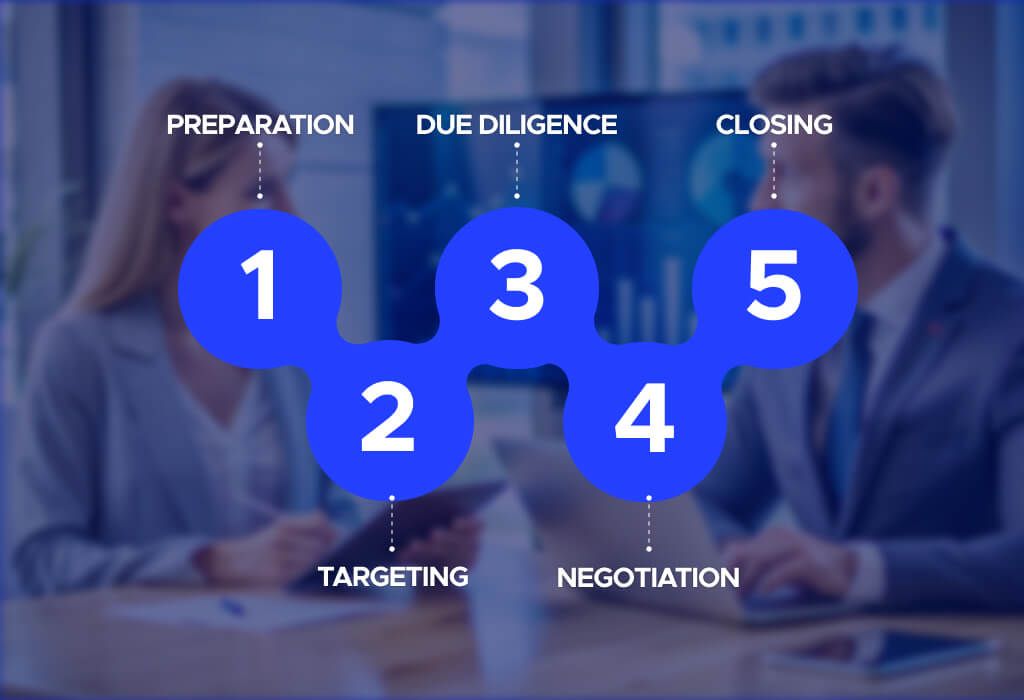
Process and timeline from preparation to closing
Why is raising capital important? A successful capital raise follows a structured process that can take anywhere from several weeks to several months, depending on the company’s maturity and investor type. Proper preparation significantly increases efficiency and credibility.
Preparation and documentation. Before approaching investors, founders prepare a data room, business plan, and financial model. The goal is to ensure transparency, demonstrate traction, and anticipate potential questions. Using virtual data rooms helps streamline due diligence and document sharing.
Targeting and outreach. Identify investors whose mandates align with the company’s sector and stage. Outreach should be personalized and focused on long-term fit, not just immediate funding. Warm introductions through trusted networks often yield higher conversion rates
Due diligence and negotiation. Once interest is secured, investors conduct a detailed analysis of financials, legal structure, and operations. Founders negotiate valuation, terms, and governance rights. It’s important to balance capital needs with control preservation.
Closing and post-investment integration. After agreements are signed, funds are transferred, and share allocations are updated. Post-closing, companies must maintain structured communication, provide periodic reports, and execute agreed milestones.
A clear process and realistic timeline reduce uncertainty, prevent investor fatigue, and strengthen the company’s professional reputation.
Best practices for an effective raise

An effective raise depends not only on strong metrics but also on disciplined execution. The following practices help build investor confidence and optimize outcomes across every stage.
Investor targeting: fit, thesis alignment, and check-size strategy
Not every investor is the right one. Founders should target those whose investment thesis, check size, and portfolio focus align with their business. Quality over quantity is key—five well-matched investors are more valuable than fifty cold leads.
When mapping potential partners, consider:
Industry specialization and stage focus
Historical investment behavior and follow-on participation
Cultural fit and communication style
Strategic alignment ensures smoother negotiations and a more supportive long-term partnership.
Building a balanced syndicate and setting lead/follow dynamics
In multi-investor rounds, syndicate composition determines decision-making dynamics. A strong lead investor anchors valuation, terms, and due diligence. Supporting investors (followers) contribute additional capital and expertise.
A balanced syndicate avoids overconcentration of power and promotes collaborative governance. Founders should define roles early, agree on reporting cadence, and manage expectations to maintain transparency.
Negotiation hygiene: trading across terms, not just price
Experienced founders negotiate across a set of interlinked terms—not only valuation. Liquidation preferences, board seats, and anti-dilution clauses can have a long-term impact.
A best practice is to trade across multiple dimensions: if investors push for a lower valuation, founders can request better control terms or milestone-based vesting. A holistic approach protects company interests while preserving goodwill.
Communication discipline: updates during the raise and after closing
Consistent, concise communication builds investor trust. During fundraising, updates should summarize traction, pipeline, and next steps. After closing, monthly or quarterly reports maintain transparency and signal accountability.
Recommended reporting structure includes:
Key performance indicators and financial results
Product updates and strategic milestones
Risks, mitigation actions, and hiring plans
Structured communication reduces uncertainty and strengthens investor relationships.
Post-money governance and reporting cadence
After funding closes, governance becomes a shared responsibility. Founders must establish clear decision-making frameworks, board meeting schedules, and financial reporting standards.
Post-money governance focuses on alignment—ensuring that investors add value through strategy, not micromanagement. Setting a predictable reporting cadence (e.g., quarterly updates) promotes professionalism and prepares the company for future rounds or exit.
Short case briefs from global practice
Real-world examples illustrate how companies approach capital raising at different stages and under varying market conditions. Each case highlights distinct strategies, investor dynamics, and execution lessons.
Early-stage technology startup (Series A)
A European SaaS (software-as-a-service) company based in Berlin, Monda, raised $5 million in a seed funding round. The round was led by Senovo and Acrobat Ventures with participation from Techstars. The company focuses on data monetisation for businesses. The capital was used to expand operations in the US, grow its partner ecosystem, and enhance the platform. While not Series A, this real case illustrates the principle of raising external capital early to scale operations. The key takeaway is that a transparent business model and clear growth use of funds are critical when raising capital for a business.
Growth-stage e-commerce / D2C brand
A direct-to-consumer skincare brand in India, Foxtale, has raised $18 million in its Series B funding round. The round was led by Japanese cosmetics giant KOSÉ Corporation, with participation from Panthera Growth Partners, Z47, and Kae Capital. The strategic investor (KOSÉ) brings not only capital but also R&D capabilities, brand leverage, and global distribution channels. The capital raised was used to expand the brand's market presence in India, scale its R&D efforts, and form strategic partnerships. The lesson here is that when raising capital for business, non-dilutive strategic value (such as brand, distribution, and partnerships) can matter just as much as valuation.
Summary
These examples show that while raising capital for business varies across industries and stages, consistent principles remain. A clear strategy for how funds will be used, disciplined communication with investors, realistic valuation (or at least realistic growth expectations), and alignment between founders (or management) and investors on goals and timelines are essential in ensuring a successful capital raise.