Key takeaways of the article
Secure sharing of ICO documentation directly affects investor trust, valuation expectations, and the outcome of technical and legal due diligence processes.
Early disclosure of whitepapers exposes tokenomics and architecture, allowing competitors or fraudulent actors to replicate or distort the project concept.
Uncontrolled file distribution leads to phishing risks, credential compromise, and loss of visibility over document usage.
Structured access control and encryption reduce the probability of data misuse and provide verifiable records of all interactions.
Virtual data rooms allow projects to manage permissions, track activity, and maintain consistent document versions across all stakeholders.
Technologies such as MFA and blockchain verification support document integrity and prevent unauthorized access in distributed environments.
Secure sharing of ICO documentation requires controlled access, encryption, and traceable workflows, since early disclosure or unauthorized distribution can damage investor confidence and expose projects to fraud. Proper document handling ensures consistent communication and protects sensitive materials throughout the fundraising process.
A practical example is CoinDash, where a compromised website during the token sale led to the replacement of the official wallet address. As a result, investors sent funds to attackers, and the project lost approximately $7 million within minutes.
Importance of securing ICO whitepapers and technical documents
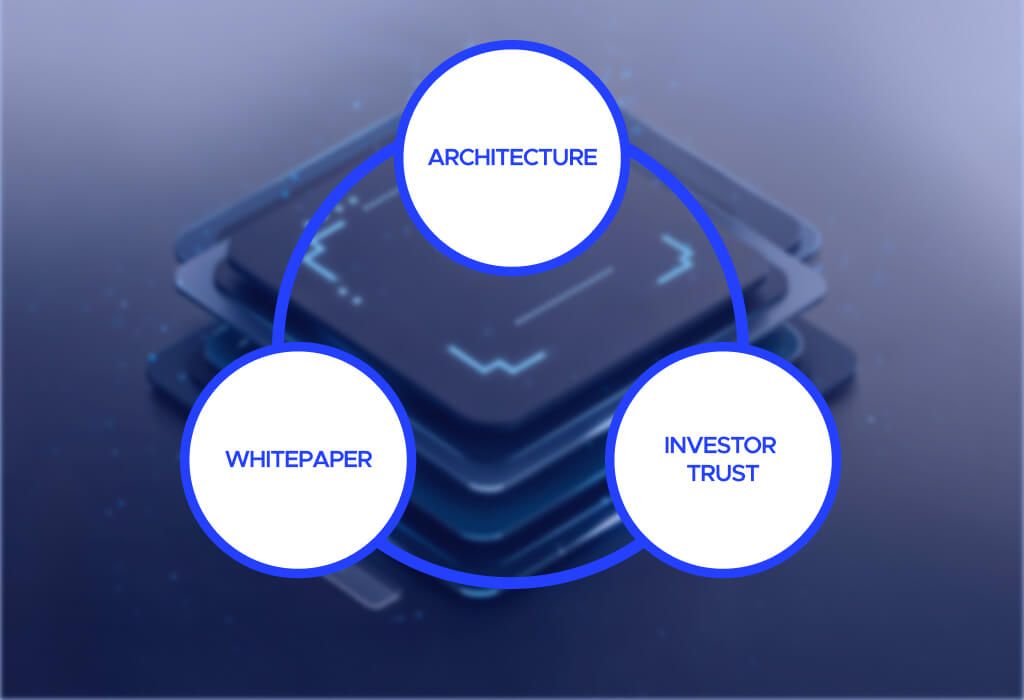
ICO whitepapers and technical documents form the foundation of any blockchain project. They describe tokenomics, technical architecture, governance logic, and financial assumptions. Any loss of control over these materials affects both internal strategy and external perception.
Before a public release, these documents are often shared with a limited group of investors, advisors, and partners. If access is not controlled, information spreads beyond the intended audience. This creates a situation where different market participants operate with different levels of knowledge, which distorts the evaluation of the project.
Timing also matters. Early access to token allocation models or pricing logic may influence investor behavior before the official announcement. In some cases, this leads to speculative activity or misinterpretation of project goals. Once such information appears in public channels, it becomes difficult to manage expectations.
Another issue is document integrity. When multiple versions circulate without control, discrepancies appear. Investors may compare outdated drafts with final versions and interpret differences as inconsistencies. This reduces confidence and slows down decision-making.
The main risks associated with unsecured ICO documentation include:
exposure of tokenomics and financial assumptions before official release
distribution of outdated or incomplete document versions
unauthorized reuse of technical or conceptual elements
reduced trust caused by inconsistent information across sources
From a compliance perspective, document handling also affects ICO due diligence. Investors expect consistent and verifiable information. If documentation is distributed without structure, it becomes difficult to confirm that all participants received identical materials. This creates legal and operational risks during fundraising.
Key security risks in sharing ICO documents
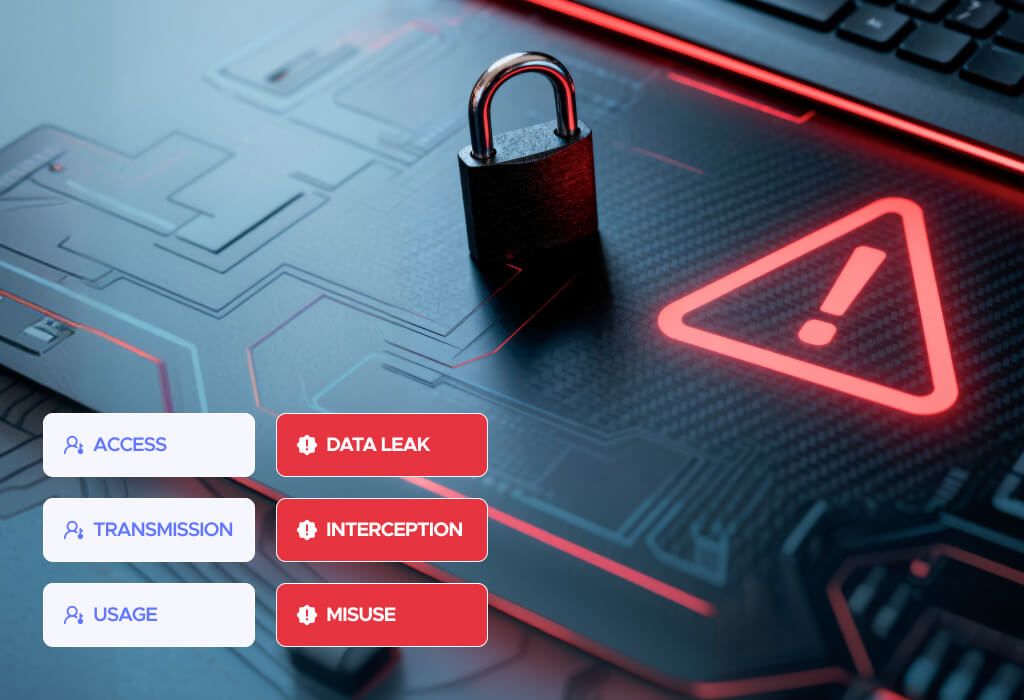
The process of ICO document sharing creates several risks that affect both technical integrity and financial outcomes. These risks depend on how files are stored, transmitted, and accessed by different participants.
The main risk vectors include:
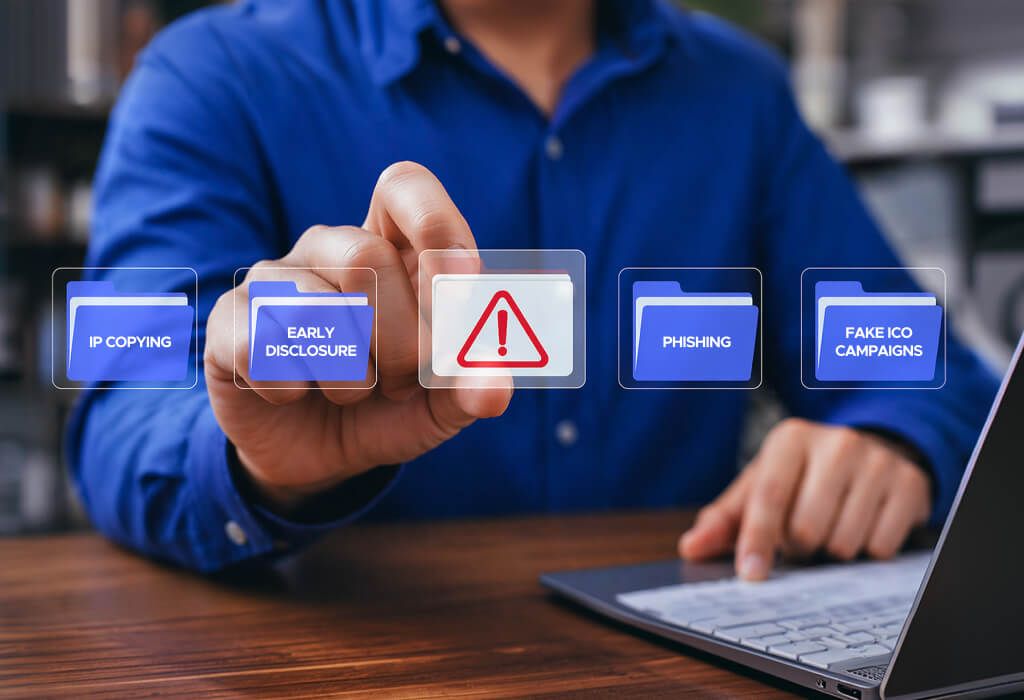
early disclosure of financial and technical data
copying of intellectual property
creation of fake ICO campaigns using original materials
phishing attempts to obtain access credentials
uncontrolled file distribution through open links
A well-documented example is Centra Tech. The project raised over $25 million by using misleading documentation and promotional materials that resembled legitimate whitepapers. According to the U.S. Securities and Exchange Commission, the team provided false claims about partnerships and product capabilities. This case illustrates how documentation can be used to mislead investors when there is no reliable verification of source and authenticity.
These risks show that ICO document sharing security depends on both technology and access control. Without structured processes, even technically advanced projects remain exposed to relatively simple attack scenarios.
Best practices for secure sharing of ICO whitepapers
Secure document exchange during an ICO requires a structured process where access, storage, and communication channels are controlled from the first interaction with investors. Using generic cloud tools without restrictions often leads to loss of control over files and no visibility into how they are distributed after access is granted.
Сentralizing all materials in a single controlled environment. A virtual data room eliminates the need to send files via email or messaging platforms, where documents can be forwarded without limits. Each participant receives access based on their role, which reduces unnecessary exposure of sensitive data.
Encryption protects documents both at rest and in transit. Even if infrastructure is compromised or data is intercepted, files remain unreadable without decryption keys. This is especially relevant when documents are shared across different countries, devices, and networks.
Access segmentation ensures that each group interacts only with relevant materials. Investors typically review whitepapers and financial models, while technical partners access architecture documents. Legal advisors require a separate set of files related to agreements and compliance. This separation reduces the likelihood of unintended disclosure.
Version control maintains consistency across all participants. Without it, outdated drafts continue circulating, leading to discrepancies in tokenomics or timelines. A single controlled repository ensures that all stakeholders work with the same version of the document.
This approach allows teams to manage document flow in a predictable and traceable way, reducing exposure to both technical and operational risks.
Technologies to ensure secure ICO document sharing
Secure ICO document sharing relies on a combination of technologies that address different types of threats. Each layer focuses on a specific vulnerability, and together they form a controlled system for handling sensitive information.
Multi-factor authentication adds an extra verification step during login. Instead of relying on a password alone, users confirm access through a second factor, such as a one-time code or device confirmation. This reduces the risk of unauthorized access, especially in cases where credentials are exposed through phishing.
Blockchain-based verification can be used to confirm document integrity. A hash of the file is generated and stored on a distributed ledger. When the document is accessed later, its hash can be compared with the original record to confirm that no changes have been made. This is particularly useful when sharing an initial coin offering white paper with multiple external parties.
Encryption technologies operate at both the file and network levels. Data at rest is typically protected using standards such as AES-256, while data in transit is secured through protocols like TLS. This ensures that intercepted data cannot be interpreted without the correct decryption keys.
Monitoring systems provide visibility into how documents are accessed and used. Every login, file view, or download attempt is recorded. This allows teams to detect unusual behavior and respond quickly to potential threats.
When these technologies are integrated within a virtual data room, they create an environment where access is verified, data is protected, and every action is traceable. This supports both internal control and transparency for external stakeholders.
Why use virtual data rooms (VDR) for ICO document sharing?
Virtual data rooms are used in ICO processes to create a controlled environment where documents are accessed and managed under predefined rules. Unlike standard file-sharing tools, a VDR for ICO provides visibility into how information is distributed and used by each participant.
The main advantage is centralized control. All ICO materials, including whitepapers and technical documents, are stored in one place, which eliminates uncontrolled forwarding and reduces duplication risks. Access is configured at a granular level, allowing teams to assign permissions based on roles such as investors, technical partners, or legal advisors.
Activity tracking adds another layer of control. Each interaction with a document is recorded, including views and downloads. This creates an audit trail that can be used during investor review or compliance checks. If unusual behavior is detected, access can be restricted immediately.
Collaboration becomes more structured, as all participants work within a single environment instead of exchanging files through email or messaging tools. This reduces delays and prevents inconsistencies across document versions.
According to IBM, the average cost of a data breach reached $4.45 million globally in 2023. This highlights the financial impact of weak document control and explains why structured environments such as VDRs are widely used in high-risk transactions.
Final summary
Secure sharing of ICO documentation requires controlled access, encryption, and continuous monitoring of user activity. Projects that rely on structured systems reduce the risk of data leaks, fraud, and inconsistencies in investor communication.
Using virtual data rooms and modern protection technologies allows teams to manage secure sharing of ICO processes with predictable control, maintain the integrity of ICO whitepapers, and support transparent ICO due diligence while aligning with compliance requirements.
FAQ
What is the safest way to share ICO whitepapers with investors?
The safest way is to use a controlled environment such as a virtual data room with encryption and access restrictions. This approach ensures that documents are not distributed through open links or email attachments. Access can be limited to specific users, and all interactions are logged. It works best when permissions are configured per role and documents are protected with both encryption and authentication controls.
Can ICO documents be shared through Google Drive or Dropbox?
Yes, but this method carries a higher risk if not configured properly. Public or weakly protected links may be forwarded without control, and access tracking is limited compared to dedicated platforms. This option may work for early internal collaboration, but for investor-facing communication, it is safer to use systems that provide detailed permission settings and audit logs.
How does encryption protect ICO documentation?
Encryption converts documents into unreadable data that can only be accessed with a decryption key. This protects files both during storage and while being transmitted between users. Even if data is intercepted or accessed without authorization, it cannot be used without the correct credentials. Encryption is most effective when combined with access control and monitoring tools.
Why is version control important in ICO document sharing?
Version control ensures that all participants work with the same and most recent version of a document. Without it, outdated drafts may continue circulating, leading to inconsistencies in tokenomics or technical details. This may cause confusion during investor discussions and slow down decision-making. A centralized system with version tracking eliminates these issues.
How do VDRs support ICO due diligence?
VDRs support due diligence by providing structured access to all relevant documentation in a single environment. Investors and advisors can review materials in a consistent format, while activity logs confirm who accessed which documents and when. This improves transparency and reduces the risk of disputes related to missing or inconsistent information.