Key Takeaways
Disjointed corporate files across multiple storage platforms slow down investor due diligence and risk breaking transaction momentum.
Serious institutional investors expect a structured repository covering capitalization, financials, intellectual property and corporate governance.
Permission Groups help founders restrict early-stage access, separating angels, venture funds, lead investors and legal advisers.
Dynamic watermarking and secure browser-only previews prevent the unauthorized distribution of proprietary code, designs and agreements.
Real-time Reports & Insights provide critical engagement signals, letting founders prioritize follow-ups with highly active venture capitalists.
Securing capital for venture-backed startups becomes significantly more demanding once early conversations transition from a pitch deck presentation to formal investor due diligence. Many founders compile early-stage business documents organically across personal cloud storage, email, corporate wikis and local desktop directories.
However, when institutional venture capital (VC) funds or angel syndicates request complete access to company records, this loose approach fails. Fundraising readiness requires robust fundraising document control. Founders must protect sensitive files, organize structures cleanly and track investor engagement using a secure virtual data room (VDR).
Why Fundraising Becomes Harder Once Investors Move Beyond the Pitch Deck
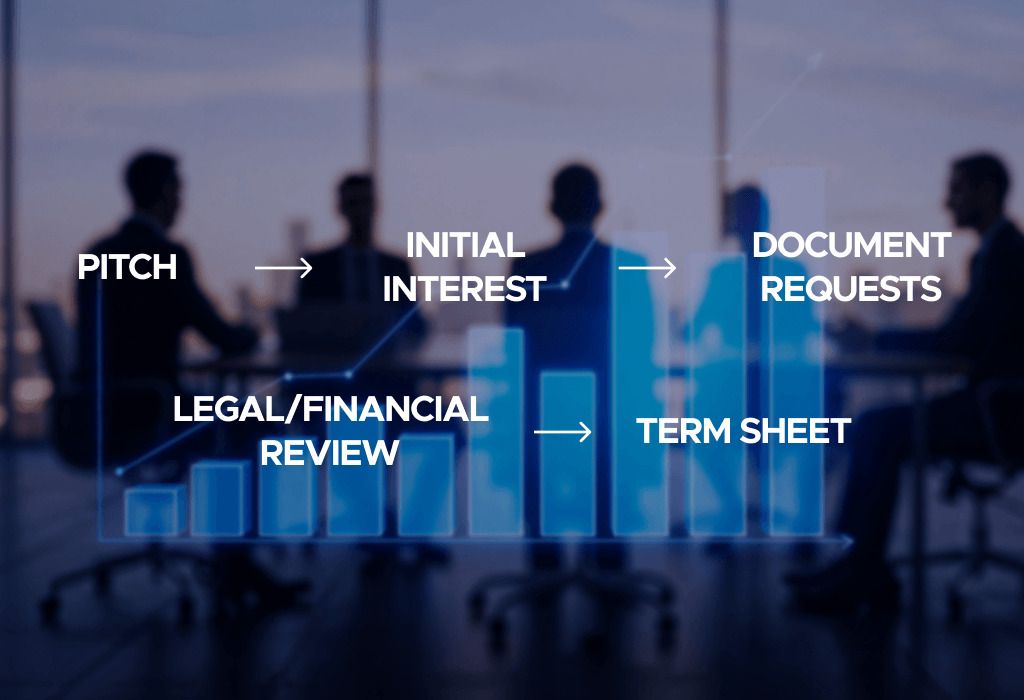
Fundraising becomes more difficult when investors move beyond the pitch deck because they transition from high-level vision to intensive, multi-layered document analysis. General file-sharing methods fail to support this detailed review phase, which requires structured verification of financial, legal, commercial and technological claims.
Early investor conversations focus on market size, product-market fit, user traction and founder narratives. These details fit neatly inside a pitch deck or standard email attachments. However, moving toward a term sheet requires deep operational evidence.
At this stage, VCs bring in analysts, legal advisers and technical experts to audit your business. This cross-examination requires access to cap tables, intellectual property (IP) assignments, historical audits and commercial contracts.
Sellers who lack systematic control struggle to keep up with these multi-party information requests. Consequently, true fundraising readiness means preparing a secure, transaction-ready infrastructure before deep diligence starts. This preparation ensures that founders can share files safely without slowing down the funding round.
Common Startup Fundraising Document Problems
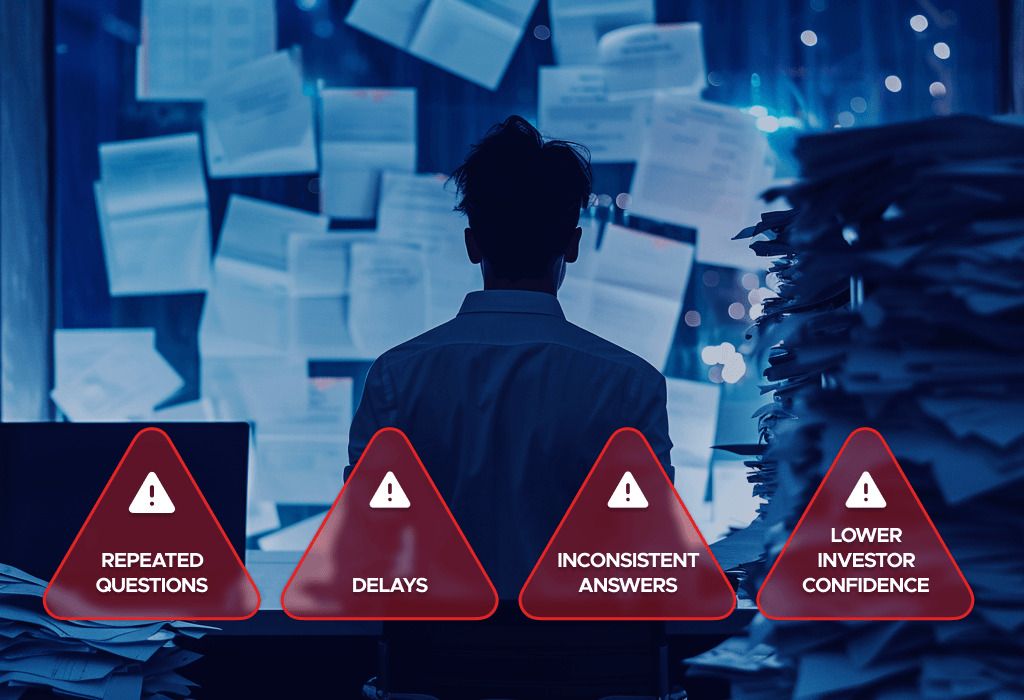
Typical startup fundraising document problems occur when important records are scattered across fragmented tools, leading to version confusion, lost files and repeated investor queries. This lack of organization signals poor operational discipline and can cause investors to question the company's maturity.
Startups routinely adopt multiple software tools to maintain agility. They store bylaws on corporate drives, cap tables on spreadsheets, agreements in email chains and roadmaps on project management platforms.
When serious diligence begins, gathering these scattered files creates immense operational friction. Founders frequently face several classic administrative problems:
Repeated investor questions: Analysts ask for files that are buried or poorly named.
Outdated files: Investors review old versions of financial projections or cap tables.
Missing documentation: Critical founder IP assignments or board minutes cannot be located quickly.
Inconsistent naming: Folder paths are disorganized, confusing external reviewers.
While standard cloud tools work well for daily teamwork, they are not built to handle structured, external corporate audits. Transitioning to a dedicated system resolves these issues, allowing the team to prepare files smoothly before diligence begins.
What Investors Usually Expect to See Before Serious Diligence
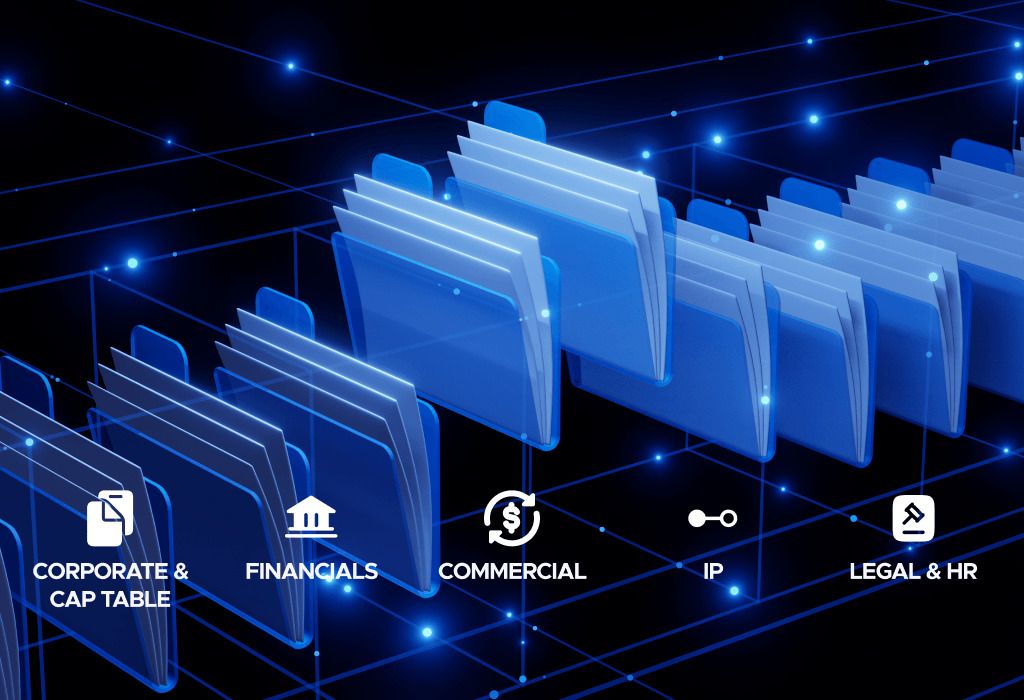
Before initiating serious diligence, venture capital funds and lead angel syndicates expect to see a comprehensive, logical archive of your corporate history and financial forecasts. This checklist varies by fundraising stage but always demands deep legal and operational clarity.
Sustaining competitive tension during a round requires having your documents organized and ready. If a founder takes weeks to locate essential corporate structures, investor interest can quickly cool.
The standard investor data room checklist depends on your startup's maturity:
Seed Stage: Basic corporate bylaws, incorporation certificates, current capitalization table (SAFEs and convertible notes), initial IP assignments and high-level financial forecasts.
Series A: Audited financial statements, material customer contracts, employee agreements, complete IP filings, marketing pipelines and board meeting minutes.
Series B & Growth Stage: Detailed regulatory filings, localized employment records, tax compliance histories, complex debt structures and comprehensive cyber security architecture reports.
Providing a structured, stage-appropriate checklist allows founders to satisfy investor inquiries immediately. Organizing these directories early shows operational maturity and helps speed up the path to signing a term sheet.
Sensitive Startup Materials and Why Access Should Be Controlled
Sellers must control access to sensitive startup documents to protect proprietary software, commercial contract details and private shareholder cap tables from competitive exposure. Exposing these high-value files too early to unverified bidders threatens your core market advantage.
A startup’s intellectual property, key customer contracts and employee compensation models represent its primary value. For example, your cap table outlines precise shareholder percentages and employee option pools, which must remain highly confidential.
Similarly, sharing proprietary code bases, product roadmaps or margin models with early-stage investors carries significant commercial risk. If a fund backs a direct competitor and pulls out of your round, they could use your strategic plans to their advantage.
For this reason, founders must implement staged disclosure in M&A and fundraising. Highly sensitive files should remain hidden until investors demonstrate clear seriousness, such as submitting an initial term sheet. This protective approach minimizes risk while keeping the diligence process moving.
How a Structured VDR Helps Founders Prepare Investor Materials
A virtual data room simplifies preparation by housing all fundraising materials inside a single, secure documents section with clear directories. This centralized approach ensures that all parties work from the exact same files, reducing repeated questions and administrative delays.
Using a dedicated startup fundraising data room eliminates the need to manage multiple external file-sharing links. All pitch decks, cap tables and financials live in one secure environment.
When a founder updates an investment memorandum or financial forecast, the system updates the file for all authorized users instantly. This eliminates version confusion and ensures everyone has the latest information.
Boundeal provides this controlled, structured workspace. By organizing files in a single, secure environment, startups can reduce repeated questions, simplify investor reviews and show they are ready for institutional investment.
Permission Groups for Different Investor Types and Fundraising Stages

Permission Groups allow founders to categorize participants by investor type or transaction stage and define exactly which folders each group can access. This keeps sensitive documents hidden from early-stage reviewers while allowing lead investors to conduct complete diligence.
Fundraising rounds often involve various participants. Early angel investors, VC analysts, lead investors, board members, lawyers and internal management teams all require different levels of visibility.
Giving every reviewer identical access creates significant confidentiality risks. Permission Groups solve this by separating users based on their role and the progress of the deal:
Angel Investors: Access is limited to high-level pitch decks, basic historical financials and product overviews.
Venture Funds: Access expands to detailed financial models, key client contracts and core IP filings during active diligence.
Lead Investors: Full visibility is granted to the capitalization table, executive employment contracts and regulatory compliance reports during final reviews.
Legal & Advisers: Isolated access is provided to litigation folders, corporate bylaws and transaction agreements.
Boundeal’s Permission Groups help founders manage these relationships easily. Startups can assign new users to pre-configured groups in seconds, ensuring that sensitive documents are only visible to authorized parties at the appropriate stage of the transaction.
Permission Groups define access for categories of participants, while Granular Permissions allow founders to restrict particular folders or documents. A legal adviser may receive access to corporate and contractual materials without seeing detailed product roadmaps, customer pricing or employee compensation data. These controls help align visibility with each participant’s role, diligence task and fundraising stage.
Secure Preview, Watermarking, AI Deal Assistant and Search
Dynamic watermarking, secure browser preview and AI-assisted search protect sensitive files from being copied while helping investors find key information quickly. These features keep your proprietary data secure and accelerate the overall diligence timeline.
Access control is only the first step; founders must also protect files while they are being reviewed. If a participant can download a sensitive PDF or contract, they can easily share it. To prevent this, founders can use secure browser-only preview settings. This option allows investors to read files in their web browser but disables original-file downloads.
Boundeal’s AI Deal Assistant helps investors and internal teams navigate large sets of fundraising documents and locate relevant information more efficiently. Together with document search, it can reduce repeated questions caused by complex folder structures or difficult-to-find materials. The tool supports document navigation and initial review but does not replace legal, financial, technical or investment analysis.
Furthermore, dynamic watermarking overlays the viewer's email address, IP address and a timestamp onto each page. This visible trace discourages unauthorized sharing and makes any leaked files traceable back to the source.
For investors, navigating thousands of pages can be slow and frustrating. Boundeal’s advanced document search allows them to locate specific clauses or terms across all folders in seconds.
Reports & Insights: How Founders Understand Investor Engagement

Reports & Insights and detailed audit trails track investor activity in real-time, giving founders valuable signals to identify active leads and plan follow-ups. These metrics show which files are viewed, which folders attract attention and where the review process has stalled.
Fundraising is a time-sensitive process, and founders must prioritize their warmest leads. Real-time reports show exactly when an investor logs in, which documents they view and how much time they spend analyzing specific folders.
If a venture capital fund spends hours analyzing your financial models, IP files and cap table, it indicates strong interest. This engagement signal lets the founder know it is a great time to schedule a follow-up meeting.
Conversely, if an investor has not logged in for weeks, it suggests their interest has stalled. This data-driven insight helps deal teams manage their time effectively, focusing on the buyers who are most likely to move forward.
FAQ
What should founders prepare before investors enter a data room?
Founders should organize their corporate charter, capitalization table, historical financial statements and detailed forecasts. They should also compile intellectual property assignments, major customer agreements, employee contracts and product roadmaps into a clean, structured directory before launching their round.
What documents do investors expect in startup fundraising?
Investors expect a structured repository covering capitalization, financials, intellectual property and corporate governance. VCs will demand current balance sheets, patent filings, customer contract details, shareholder agreements and board minutes to verify the business's legal and financial health.
How can founders protect sensitive fundraising documents?
Founders can protect sensitive files by using secure, browser-only previews and dynamic watermarking, which deters unauthorized sharing. Implementing staged disclosure also helps, as it allows you to reserve high-value IP, cap tables and margin data until investors submit a serious term sheet.
When should a startup use permission groups?
Startups should implement Permission Groups at the beginning of their fundraising round. This system allows you to organize users into functional teams, ensuring that early angels, active venture capital funds, lead investors and legal advisers only view the directories relevant to their specific diligence stage.
How can a VDR show investor engagement?
A VDR tracks all user activity to provide real-time Reports & Insights and audit trails. Founders can see exactly when an investor logs in, which folders they open and how much time they spend reviewing specific financial models. These engagement signals help you identify and prioritize your most promising leads.
Conclusion
Fundraising readiness is not just about having a great pitch deck; it is also about maintaining robust document control. As serious investors begin their due diligence, founders must protect their proprietary intellectual property, cap tables and financial forecasts. By using a centralized VDR equipped with Permission Groups, Granular Permissions, dynamic watermarking and real-time activity reporting, startups can manage their fundraising rounds securely. These professional controls build investor trust, accelerate due diligence and help founders close deals successfully.