Data is everywhere, and how a business uses it can make all the difference. The right techniques turn mountains of information into clear insights, helping companies make better decisions and spot opportunities before others do. The following methods show how big data can create real value in everyday business.
Overview of Big Data and Its Importance in Business
Businesses today operate in a world overflowing with data—from customer interactions and social media activity to IoT sensors and financial transactions. The challenge is no longer collecting information but turning it into insights that actually drive results. This is where big data analytics techniques come in. By applying the right methods, companies can uncover trends, predict outcomes, improve processes, and make decisions with confidence.
The impact of big data goes far beyond dashboards or reports. Organizations use big data analytics business solutions to discover new opportunities, reduce risk, and innovate faster. From enhancing customer experiences to streamlining supply chains or preventing fraud, the ability to analyse complex datasets gives companies a competitive edge. Choosing the right big data analysis techniques turns raw information into actionable intelligence, helping businesses move from reactive problem-solving to proactive, strategic decision-making.
Key Big Data Techniques Driving Business Value
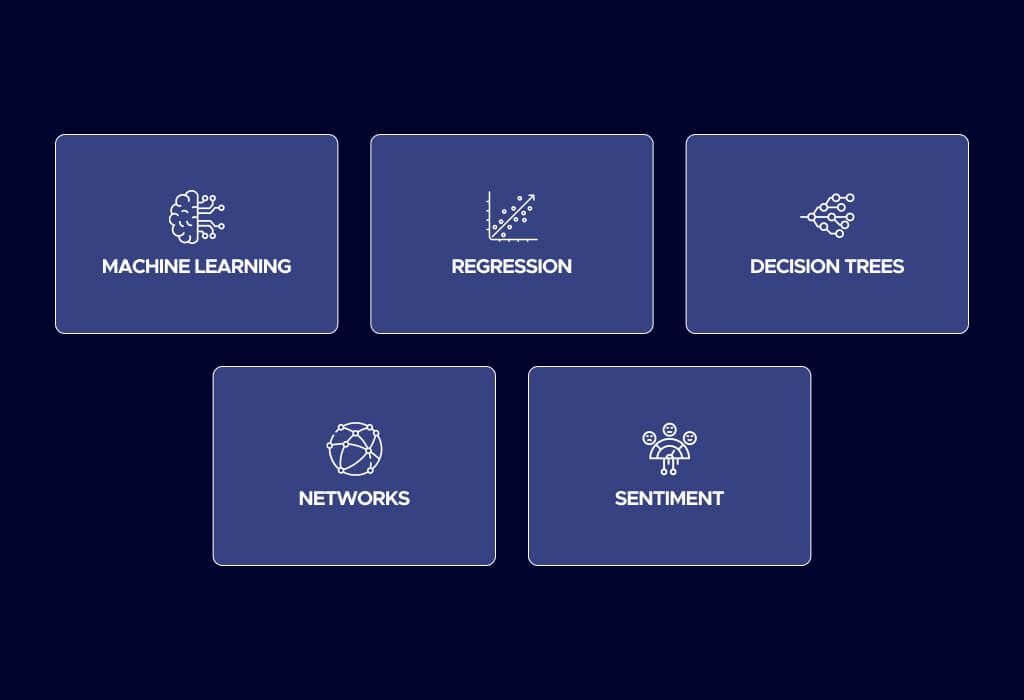
Collecting data is just the first step. The real value comes from knowing how to analyse it effectively. Businesses rely on a variety of big data analytics methods to transform raw numbers into meaningful insights. These techniques allow companies to detect patterns, understand behaviors, forecast trends, and optimize operations across every part of the organization. The following methods have proven especially impactful in delivering measurable business value.
Optimization through Genetic Algorithms
Genetic algorithms are inspired by the principles of natural selection and evolution. In business, they are used to optimize complex problems where traditional methods may struggle, such as supply chain scheduling, resource allocation, or pricing strategies. By iteratively generating and selecting solutions based on performance, companies can find highly efficient outcomes without testing every possibility manually.

This big data analyse method helps organizations adapt quickly to changing conditions, reduce costs, and improve operational efficiency. It’s particularly valuable in environments where variables interact in unpredictable ways, allowing decision-makers to explore multiple scenarios and identify the best paths forward.
Advanced Machine Learning Techniques
Machine learning has become a cornerstone of big data analytics techniques. From recommendation engines and fraud detection to predictive maintenance, advanced algorithms can identify complex patterns across vast datasets. Supervised, unsupervised, and reinforcement learning methods allow businesses to forecast trends, segment customers, and automate processes with remarkable accuracy.
Implementing these techniques provides actionable insights that drive growth, increase revenue, and enhance customer satisfaction. The ability to continuously learn from new data ensures that solutions remain relevant and adaptive in fast-changing markets.
Predictive Regression Models
Predictive regression models are widely used for forecasting and decision support. By analyzing historical data, these models estimate future outcomes, helping businesses anticipate demand, sales, or operational bottlenecks. They are a fundamental big data analysis technique that translates complex information into quantifiable predictions.
For example, retailers can use regression models to predict seasonal demand, while manufacturers might forecast equipment failures before they occur. These insights allow companies to act proactively, optimize resources, and minimize risk.
Analyzing Social Networks

Social network analysis examines the relationships and interactions among individuals, groups, or organizations. Businesses use this technique to understand customer communities, influencer impact, and information flow. By mapping connections and measuring engagement, companies gain insights into behavior patterns and market trends.
This approach supports marketing campaigns, product development, and customer retention strategies, making social network analysis one of the most practical big data analytics methods for understanding human behavior at scale.
Decision Trees in Classification Analysis
Decision trees are a powerful big data analysis technique used to classify data and support decision-making. By breaking down complex datasets into hierarchical structures based on specific criteria, businesses can visualize potential outcomes and understand key influencing factors.
This technique is especially useful for risk assessment, customer segmentation, and operational decision-making. Companies can quickly identify patterns, predict behavior, and make informed choices without relying solely on complex statistical models, making decision trees a practical and interpretable tool for big data analytics.
Opinion and Sentiment Mining

Opinion and sentiment mining focuses on extracting subjective information from text, such as customer reviews, social media posts, or survey responses. By analyzing positive, negative, or neutral sentiments, businesses gain a clearer understanding of public perception, brand reputation, and customer preferences.
This big data analytics business method helps organizations refine marketing strategies, improve products, and respond proactively to customer concerns. Sentiment analysis is especially valuable in fast-moving markets where real-time feedback can influence decisions and drive competitive advantage.
Discovering Patterns with Association Rules
Association rules are used to identify relationships between variables within large datasets. Retailers, for example, might analyze purchase histories to discover which products are frequently bought together. This big data analyse methoden supports cross-selling, upselling, inventory planning, and personalized recommendations.
By uncovering hidden patterns and correlations, businesses can optimize offerings, improve customer experience, and enhance operational efficiency. Association rules transform raw transactional data into actionable insights, making them an essential technique in the toolkit of modern data-driven organizations.
Challenges of Big Data Implementation
Despite the enormous potential of big data analytics techniques, implementing them effectively comes with several challenges. One of the main hurdles is data quality. Incomplete, inconsistent, or unstructured data can lead to inaccurate insights, undermining decision-making. Organizations must invest in robust data cleaning and validation processes to ensure reliability.
Another common challenge is the technical complexity of big data systems. Integrating diverse data sources, maintaining scalable storage, and managing computational power can be resource-intensive. Companies also face talent shortages; skilled data scientists and analysts are crucial for interpreting results and translating them into actionable strategies.
Additionally, governance and privacy concerns are significant. As businesses collect more personal and operational data, compliance with regulations like GDPR or industry-specific standards becomes critical. Balancing innovation with ethical and legal responsibilities is essential to avoid reputational or financial risks.
The Future of Big Data and Business Value
The future of big data lies in greater automation, real-time analytics, and predictive intelligence. Emerging technologies such as AI-driven analytics, augmented analytics, and cloud-based platforms are making it easier for organizations to process complex datasets quickly and cost-effectively.
Businesses that leverage these big data analytics methods will be better positioned to anticipate customer needs, optimize operations, and innovate continuously. Integration with IoT, edge computing, and advanced machine learning models will further enhance decision-making speed and precision. In essence, the ability to extract meaningful insights from large datasets will continue to be a major driver of competitive advantage.

Conclusion
Big data has transformed the way organizations make decisions, optimize operations, and engage with customers. By applying big data analysis techniques, companies can uncover hidden patterns, predict trends, and create measurable business value. From genetic algorithms and machine learning to sentiment mining and association rules, the right combination of big data analytics techniques enables businesses to turn complexity into clarity.
While challenges such as data quality, technical complexity, and regulatory compliance remain, the opportunities far outweigh the obstacles. Organizations that embrace these methods strategically will be able to make smarter decisions, innovate faster, and sustain growth.