Key takeaways from the article
Virtual data rooms help General Partners and Limited Partners manage deal execution, due diligence, reporting, and investor communication through a secure, structured, and centralized document environment.
Virtual data rooms accelerate information exchange between GPs and LPs during fundraising, portfolio transactions, and investor reviews.
Structured document management reduces review delays by helping investors, advisors, and legal teams quickly find the materials they need.
Permission-based access controls protect sensitive information by separating financial, legal, and operational data across different stakeholder groups.
Centralized reporting improves LP transparency through secure access to quarterly reports, capital calls, portfolio KPIs, and compliance updates.
Real-time activity tracking helps GPs manage deal momentum by showing which investors, buyers, or advisors are reviewing specific documents.
VDR security features support cross-border transactions through encryption, audit trails, watermarking, MFA, and role-based permissions.
Virtual data rooms are now core infrastructure for General Partners and Limited Partners in private equity, venture capital, and broader private capital markets. GPs and LPs use them to manage fundraising, due diligence, investor communication, portfolio reporting, and transaction documentation. When a deal involves large volumes of confidential information and multiple stakeholders, secure document infrastructure directly affects execution speed and decision quality.
The role of GPs and LPs in private market transactions
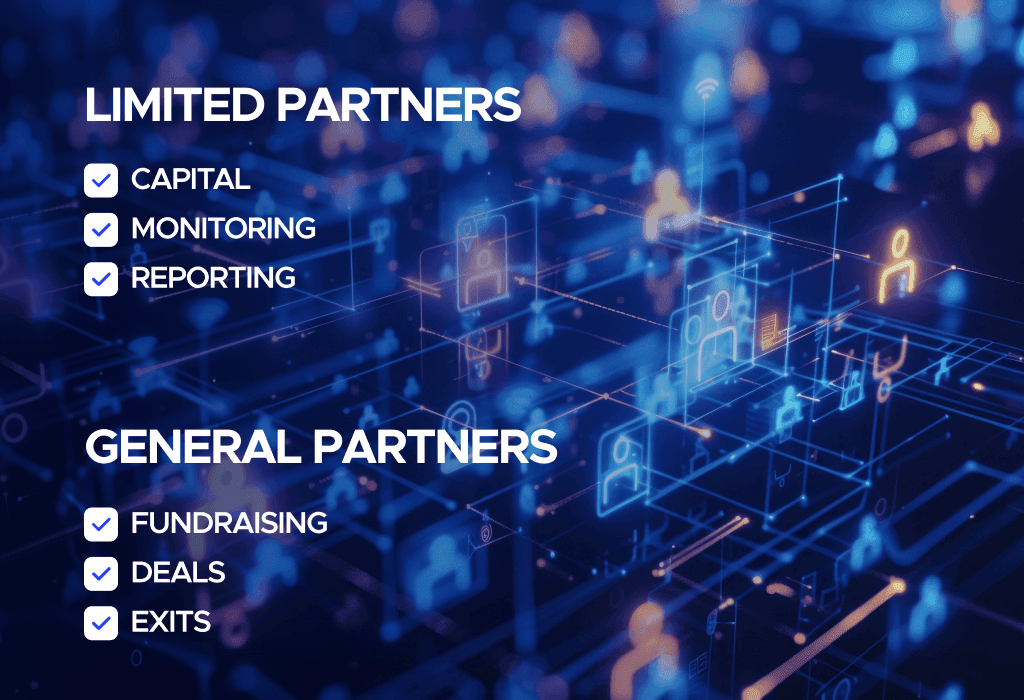
Private market transactions depend on the relationship between General Partners and Limited Partners. GPs manage the fund: they raise capital, source deals, conduct due diligence, negotiate terms, coordinate advisors, manage portfolio companies, and plan exits. Their role is to turn the fund’s strategy into specific transactions.
LPs provide capital. They may include pension funds, endowments, family offices, sovereign wealth funds, insurers, funds of funds, and high-net-worth individuals. LPs usually do not manage daily investment decisions, but they monitor performance, review reports, assess risks, and participate in advisory matters when required.
GP-LP interaction begins during fundraising, when GPs share fund documents, strategy materials, track record materials, legal files, and due diligence materials. After closing, GPs execute deals and keep LPs informed. During portfolio management and exits, LPs rely on structured reporting to understand performance, risks, timing, and expected returns. Clear document workflows help both sides stay aligned.
Why does deal execution become complex in private markets
Deal execution in private markets can be complex because each transaction involves many participants, extensive document sets, strict confidentiality requirements, and varying levels of access. GPs need to coordinate LPs, advisors, co-investors, lenders, auditors, and portfolio company teams while maintaining control and traceability.
The main sources of complexity include:
Multiple stakeholders: GPs, LPs, co-investors, legal advisors, financial consultants, auditors, lenders, buyers, and portfolio company teams may all participate in one transaction.
Fragmented communication: When updates and questions are handled through email, teams lose context, duplicate requests, and struggle to track decisions.
Cross-border transactions: International deals involve different jurisdictions, tax rules, reporting standards, privacy laws, and approval timelines.
Legal and compliance requirements: Deal teams must manage investor records, regulatory documents, sanctions checks, privacy obligations, and disclosure controls.
Large transaction files: Financial statements, legal agreements, valuation materials, KPI reports, tax records, contracts, and due diligence requests can create a heavy document workload.
Co-investments: Additional investors often require separate access rights, tailored reporting, and transaction-specific diligence materials.
Secondary deals: Transfers of fund interests or portfolio stakes require careful review of ownership, valuation, consent rights, and investor documentation.
Fundraising rounds: GPs must share fund materials, subscription documents, track record data, and compliance files with different investor groups.
Portfolio exits: Sales, IPOs, recapitalizations, and strategic transactions require buyer due diligence, management presentations, legal review, and controlled document disclosure.
Without a structured workflow, these factors lead to repeated requests, version confusion, delayed reviews, and higher operational risk.
How VDRs improve deal execution for GPs and LPs
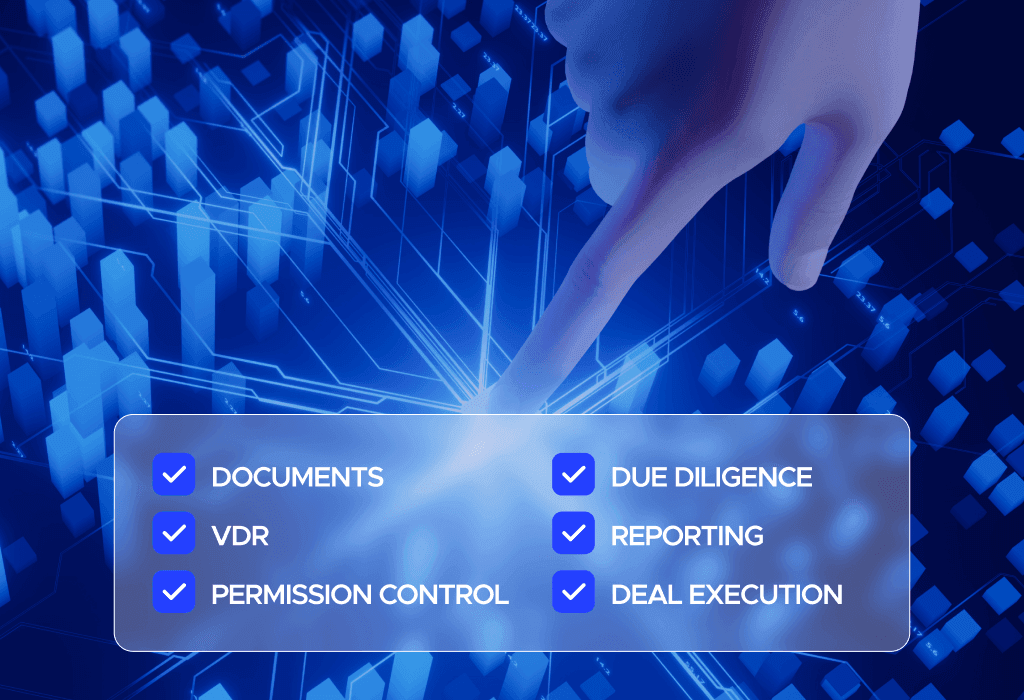
A virtual data room improves deal execution by turning document exchange into a controlled transaction workflow. Instead of using scattered folders, emails, and separate advisor requests, GPs can manage document sharing, investor reviews, Q&A, activity tracking, and reporting in a single secure workspace. For LPs, this creates a clearer process for reviewing opportunities, monitoring fund activity, and assessing risks.
A useful real-world example is the strategic review of Pioneer Investments, launched by UniCredit Group. The process required a virtual data room where a wide range of bidders could access more than 120,000 pages of information, with access provided to more than 400 individual users. The case shows why structured document management, permission control, and centralized access are essential when a financial transaction involves many reviewers, advisors, and confidential materials.
Centralized document management
The virtual data room serves as a unified repository for transaction documents. Instead of disparate folders, the GP organizes them into a logical index (finance, legal, HR, cap table, etc.), allowing LPs and consultants to quickly find the files they need. Forbes emphasizes that text search and a consistent structure reduce information retrieval time and delays.
Faster investor due diligence
Investor due diligence depends on complete, accurate, and well-organized information. Delays often appear when documents are missing, poorly named, duplicated, or spread across different channels.
A VDR for limited partners reduces these delays by giving LPs immediate access to approved materials, including fund terms, fund administration, track record data, investment memos, portfolio updates, financial statements, risk disclosures, and legal documents. For GPs, this reduces manual work and helps keep the fundraising process or transaction workflow moving.
Permission-based access control
Not every stakeholder should see the same documents. A prospective LP, existing LP, co-investor, legal advisor, or buyer may each need a different level of access.
As a deal execution platform, a VDR solves this through role-based and permission-based controls. GPs can decide which folders or documents each user group can view, download, print, or comment on.
Real-time reporting and updates
Private market transactions change quickly. New financial statements, legal documents, KPI data, or buyer materials may need to be added before a deadline.
A VDR allows GPs to update documents in real time and notify relevant users. Reporting tools also show which users entered the data room, what they viewed, and which sections received the most attention.
Streamlined communication between stakeholders
Complex transactions often involve questions from LPs, legal counsel, tax advisors, auditors, consultants, and portfolio company teams. If these questions are handled only by email, the process becomes difficult to track.
A VDR with integrated Q&A provides a single place for questions and answers. This reduces duplicate requests, maintains a clear record of communication, and provides LPs and advisors with a more transparent review process.
Audit trails and activity monitoring
Audit trails record key actions such as logins, document views, downloads, uploads, permission changes, and Q&A responses.
For GPs, this creates a defensible record of disclosure. For LPs, auditability supports confidence that sensitive information is managed in a controlled environment rather than passed through informal channels.
VDRs in fundraising, portfolio monitoring, and exit processes
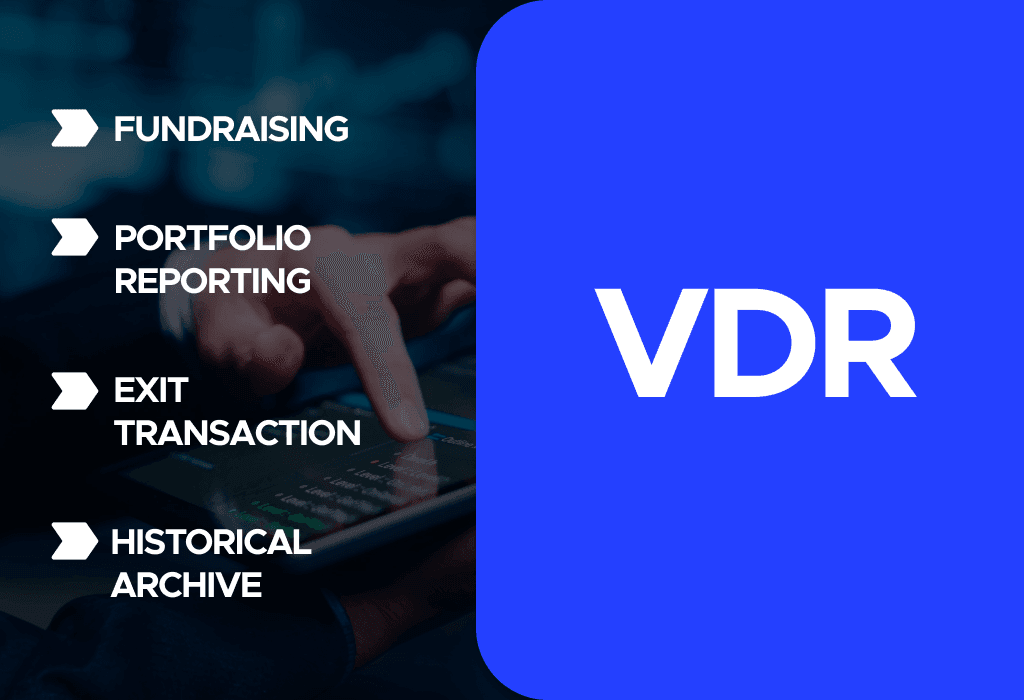
A VDR is useful throughout the full investment lifecycle, not just during a single transaction. For GPs, it creates a repeatable process for sharing sensitive documents with investors, advisors, and buyers. For LPs, it provides a controlled place to review fund materials, monitor performance, and assess major events such as exits or secondary sales.
Fundraising. During the capital raising phase, GPs use VDRs to post offering memoranda, PPMs, presentations, and legal documents. The system allows for document subscriptions, NDA signing, and monitoring which investors have access and when. DFIN emphasizes that compliance with GDPR, CCPA, and other regional regulations builds LP trust and facilitates international fundraising.
Portfolio monitoring. After capital is raised and invested, LPs need regular visibility into fund and portfolio performance: quarterly reports, capital account statements, capital calls, distributions, valuations, KPIs, ESG updates, and compliance materials. A VDR can serve as a secure reporting hub.
Exit transactions. Exit processes usually require the most intensive document exchange. When a GP prepares a portfolio company for sale, recapitalization, IPO, or another transaction, buyers and advisors need access to financial statements, contracts, tax files, legal documents, IP records, cybersecurity reports, and management presentations.
A single data infrastructure for the full investment lifecycle. The main advantage of using a VDR across fundraising, portfolio monitoring, and exits is the continuity it provides. The GP does not need to rebuild the document process from scratch for every new stage.
This continuity improves the quality of execution. Documents are easier to update, access rights are easier to manage, and historical records are easier to retrieve. For LPs, the process becomes more predictable because they know where to find information and how updates will be shared.
Security and compliance requirements in GP-LP transactions

Because GP-LP transactions involve highly sensitive institutional data, fundraising materials, and proprietary portfolio KPIs, standard cloud storage is insufficient. Virtual data rooms mitigate operational and legal risks by combining enterprise-grade infrastructure security with strict regulatory compliance frameworks.
Data encryption and infrastructure security. Advanced VDRs protect data. Documents uploaded to the platform are encrypted using AES-256, while data in transit is secured via Transport Layer Security (TLS).
International compliance and privacy standards. Cross-border private equity and venture capital transactions require strict adherence to global privacy regulations. Leading VDR providers comply with frameworks such as the GDPR (General Data Protection Regulation) in Europe and the CCPA (California Consumer Privacy Act) in the US.
Security certifications and dynamic watermarking. To guarantee operational integrity, VDR infrastructure relies on data centers certified under ISO/IEC 27001 and SOC 2 Type II standards.
To prevent insider leaks, GPs can apply dynamic watermarking to sensitive files. These watermarks automatically overlay the viewer’s email address, IP address, and access timestamp onto the document, discouraging unauthorized screenshots or external sharing.
Conclusion
A VDR helps GPs and LPs manage complex transaction workflows through secure, centralized document infrastructure. A well-organized VDR for general partners improves due diligence speed, transparency, and execution quality, while giving LPs controlled access to materials for review and monitoring. In private equity and venture capital, a private equity virtual data room supports fundraising, reporting, portfolio management, and exits across the full investment lifecycle. It makes it easier to manage sensitive information across private market transactions.
FAQ
Why do private equity firms use VDRs?
Private equity firms use VDRs to share confidential documents during fundraising, due diligence, portfolio monitoring, and exits. A VDR gives GPs a controlled space for sensitive materials and gives LPs a more reliable way to review fund and transaction information.
How do VDRs help LP due diligence?
VDRs help LPs review fund documents, financial reports, legal materials, track record data, risk disclosures, and subscription documents in one structured environment. This reduces manual follow-up and helps LPs assess the fund or transaction faster.
What documents are usually stored in a GP-LP data room?
A GP-LP data room may include fund agreements, private placement memorandums, subscription documents, capital call notices, quarterly reports, portfolio KPIs, tax documents, compliance files, valuation materials, and transaction records. For exits, it may also include buyer due diligence files, management presentations, and deal documentation.
How do VDR permissions work for investors?
VDR permissions allow GPs to control which investors, advisors, or internal users can view, download, print, or comment on specific documents. Access can be assigned by user role, investor group, folder, or document level.
What security features are important for GP-LP transactions?
The most important security features for GP-LP transactions include encryption, MFA, role-based permissions, dynamic watermarking, download restrictions, secure document viewing, and full audit trails.